Last updated: November 24, 2026
Quick facts
Everest Base Camp Trek: duration is 15 days, price starts from us$1,430 per person, difficulty is challenging.
The Everest Base Camp Trek - 15 Days is a classic Himalayan journey to the foot of the world's highest mountain. Counted from arrival in Kathmandu to departure, the trip lasts 15 days. It begins with a day of sightseeing in Kathmandu. A flight to Lukla and eleven nights in the Khumbu, passing through Sherpa villages such as Phakding, Namche, Tengboche, Dingboche and Lobuche on the way to Everest Base Camp (5,364 m). Two acclimatization days at Namche Bazaar and Dingboche give your body time to adjust. You also climb Kala Patthar (5,545 m) at sunrise, the highest point of the trek and the best viewpoint for Everest, Lhotse, Nuptse and the Khumbu Glacier.
The best seasons are spring (March to May) and autumn (September to November), when the skies are clear and the trails are dry. The trek is challenging, but it requires no climbing skills. Hence, it suits first-time Himalayan trekkers who prepare well, as well as experienced walkers. Prices start at US$ 1,430 per person and include airport transfers, three nights in a Kathmandu hotel with breakfast, the flights to and from Lukla, a licensed guide, porter support, permits, trek meals and teahouse stays. Send us your dates and group size to book your place.
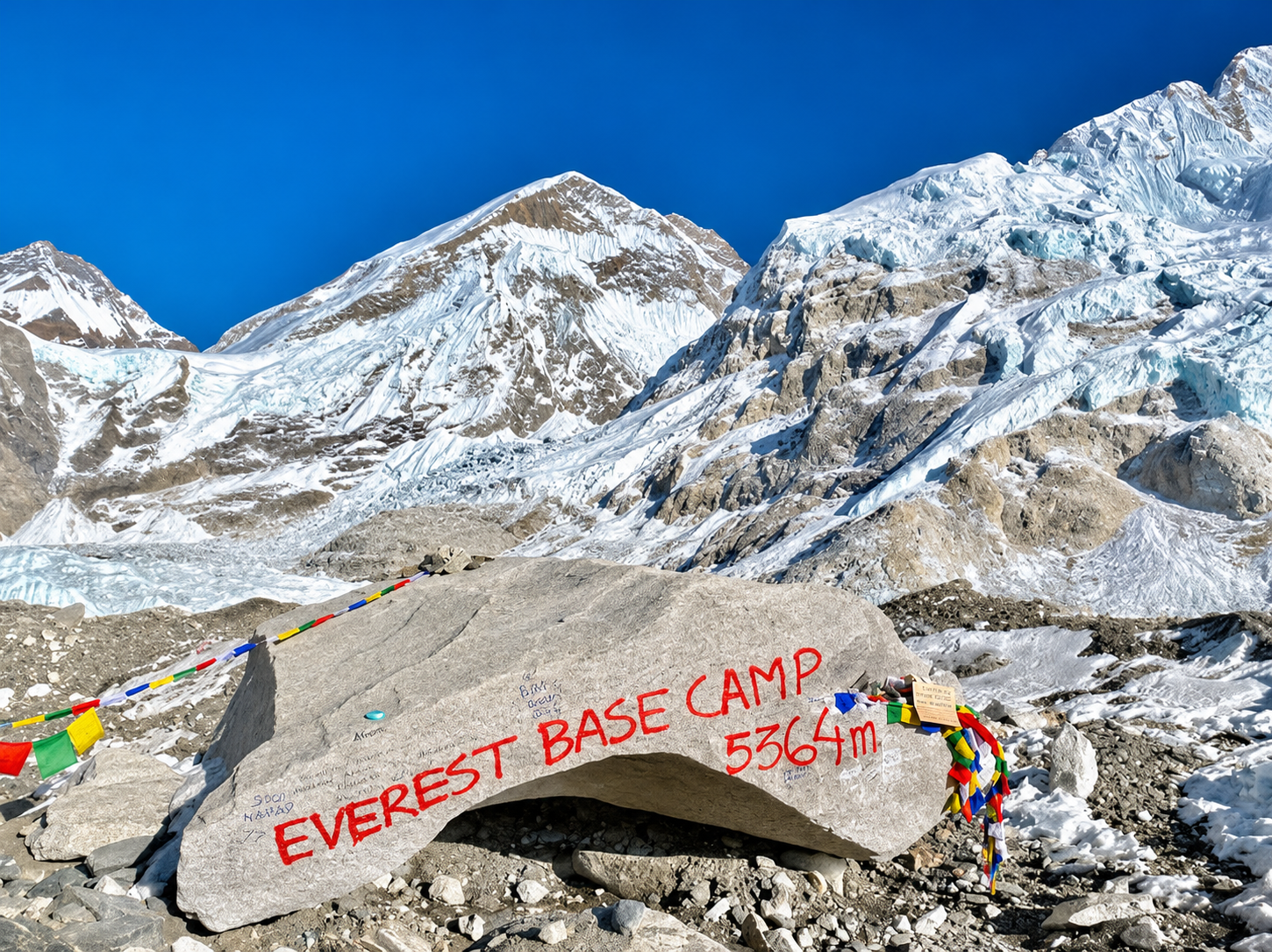
Everest Base Camp sits at the foot of Mount Everest, the tallest mountain in the world. It lies at 5,364 m in the Khumbu region of Solukhumbu District, in north-eastern Nepal. Walking to this spot is a classic Himalayan journey. It lets you stand in the shadow of the highest peak on Earth, with giants such as Everest, Lhotse, Cho Oyu, and Makalu around you, all above 8,000 m.
The Everest Base Camp Trek - 15 Days is our full, unhurried version of the trek. You can reach Base Camp in as few as 9 to 12 days, but this itinerary gives you more time to enjoy it. It includes a Kathmandu sightseeing day, two proper acclimatization days, a sunrise on Kala Patthar and a walk back down the valley instead of a flight out. It suits trekkers who want to take their time, give their body every chance to adapt to the height and see the villages twice.
The trek begins with a short morning flight to Lukla, landing at the Tenzing-Hillary Airport, from either Kathmandu or Ramechhap. From there, you walk to Phakding and then on through Namche Bazaar, Deboche, Dingboche and Lobuche to Gorak Shep, with rest days at Namche and Dingboche. On the way, you see Everest, Lhotse, Ama Dablam, Nuptse, Thamserku and Pumori, and the huge Khumbu Glacier. After Base Camp and Kala Patthar, you walk back through Pheriche, Namche and Lukla, and fly to Kathmandu.
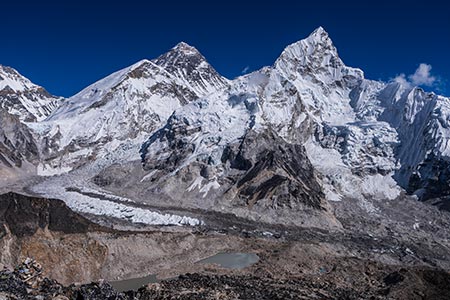
The highest point of the trek is Kala Patthar, at 5,545 m. You climb it early on Day 11, in the cold and the dark, when the air is thin, and every step is slow. However, the reward is the grandest view of the tallest mountain in the world. Everest is partly hidden behind Nuptse from Base Camp; Kala Patthar gives the best view of it, along with Lhotse and the glacier below, as the sun rises.
Another special part of the trek is the chance to visit Sagarmatha National Park, a UNESCO World Heritage Site. You enter Sagarmatha National Park, where you may spot animals like Himalayan tahr, blue sheep or the colourful Himalayan monal. Besides the exciting wildlife encounters, you can also walk through Sherpa villages with prayer flags and mani walls. For better cultural and traditional immersion, you can also visit Tengboche Monastery, the largest in the Khumbu, where Ama Dablam rises across the valley.
The best seasons for the Everest Base Camp Trek are spring (March to May) and autumn (September to November), when the skies are clear and the trails are dry. The trek is challenging, so you need good fitness, but you do not need climbing skills. It can suit first-time Himalayan trekkers who prepare well, photographers, or anyone who wants a complete, unhurried walk to EBC. To book, send us your dates and group size, and Himalaya Heart will take care of your flights, guide, porters, and permits.
Max altitude: 1,360 m
Time: Free day
Transport: Private vehicle
Meals: Breakfast
Overnight: Hotel in Kathmandu
Welcome to Nepal. Your Himalayan journey begins at Tribhuvan International Airport in Kathmandu. Our team representative will meet you at the arrival terminal. Then, you will take a ride in an air-conditioned car to your hotel in Thamel, which takes around 20 to 30 minutes depending on the traffic. You will reach a 3-star hotel. After check-in, you can take some rest and refresh for the day. After that, you can take a walk around the local streets where you'll find local restaurants, cafés and trekking shops.
In the late evening, our team representative will guide you through the plan for the next day. We will also check your trekking logistics for the next day, coordinate your preparations and make sure every detail is in place. This is the best time when most trekkers ask the same questions: about trekking gear and equipment, your rooms, the Lukla flight and the journey ahead. Your overnight stay will be at Kathmandu Hotel.
Do you need any urgent trekking gear? You can buy or rent it in Kathmandu. Do this before you go to the mountains.
Max altitude: 1,360 m
Time: Full day
Transport: Private vehicle
Meals: Breakfast
Overnight: Hotel in Kathmandu
Your day begins with a hot breakfast served at the Kathmandu hotel. After that, you will meet our guide in the hotel lobby. Then, we will take you on a tour ride in our private jeep to Kathmandu Durbar Square. This is the royal palace area of the oldest city in Kathmandu; here, you will get to see the tall wooden temples with finely carved windows and the Kumari Ghar, which is the home of the Living Goddess. Here, you will get to visit some of the major attractions of Kathmandu Durbar Square, which are as follows:
Next, you visit Swayambhunath Stupa, which most people call the Monkey Temple, where you can see the monkeys playing and jumping on the steps and around the hill. The top of the stupa will offer a wide view of Kathmandu city. Here, you can see both Hindus and Buddhists praying. Here are some major attractions of Swayambhunath Stupa to visit:
After exploring Swayambhunath Stupa, you will have lunch nearby at a traditional Nepali restaurant. Here, you can try our most popular Nepali food like Dal Bhaat, Momos, Thukpa, Noodles, and more cuisine dishes.
After enjoying your lunch, you will head towards Boudhanath Stupa, which is one of the largest stupas in the world, where most Tibetans, Sherpas and other visitors come for a walk every day. Always walk clockwise, spin the prayer wheels and listen to the soft mantras. Also, here are some of the main attractions to explore in Boudhanath Stupa; details are as follows:
And the last stop for the day will be at Pashupatinath Temple, which is a holy Hindu site on the bank of the Bagmati River. It is also known as one of the oldest Hindu temples and the most religious site in South Asia. Small temples and old statues fill the complex. Only Hindus can enter the main temple. Everyone can watch the river rituals from the opposite bank. You may see sadhus in saffron robes holding tridents and also see open cremations. Please watch with respect. For more, you can visit some of the best places in Pashupatinath Temple:
Later in the afternoon, after you reach the hotel, our guide will brief you about the Everest Base Camp Trek itinerary and also check your trekking equipment before moving onto the trek. You can also buy or rent your trekking gear at the shop in Kathmandu. For Dinner, it will be outside at a nice local restaurant or at a live music cafe. Your overnight stay for the day will be at Kathmandu Hotel in Thamel.
Max altitude: 2,860 m
Time: 40 min flight, 3 to 4 hrs walk
Transport: Flight and then on foot
Meals: Breakfast, lunch and dinner
Overnight: Teahouse in Phakding
Today, your trek begins with an early morning breakfast. Then, our team representative will drop you off at the domestic airport, where you will take a flight to Lukla, which usually takes 30 to 40 minutes. You will also enjoy the stunning views of the hills and the Himalayas of Nepal. In the high trekking season, your flight may leave from Manthali Airport in Ramechhap. We will then arrange a road transfer that will match your flight schedule.
After you arrive at Lukla Airport, also called Tenzing-Hillary, this is the beginning of the Everest Base Camp trail. From here, you will meet your porter team, who will arrange your luggage for the trek, and your very first hike begins. The path passes through small villages like Chheplung and Ghat. Here, you will also see prayer wheels and carved mani stones. After that, you will cross suspension bridges over the Dudh Koshi River to reach Phakding.
You will reach Phakding in the afternoon and have your overnight stay at a teahouse or lodge. In the evening, you relax beside the Dudh Koshi Valley.
Max altitude: 3,440 m
Time: 5 to 6 hrs
Transport: On foot
Meals: Breakfast, lunch and dinner
Overnight: Teahouse in Namche Bazaar
After completing your early morning breakfast, we'll begin the day. Here, you will cross the Dudh Koshi River, where the trail goes through wooded areas and passes through the small Sherpa villages. Toktok, Benkar and Monjo are on the way, and soon you will enter Sagarmatha National Park, where your necessary permits are checked. The check is a short stop. After that, you will walk to Jorsalle, where the trail follows the river, and then you will cross many suspension bridges. Jorsalle will be your lunch stop. Then, after lunch, you will move further to come across the iconic Hillary Bridge. The Hillary Suspension Bridge is one of the best, and it is above the Dudh Koshi River.
As you finish crossing the bridge, the long climb to Namche Bazaar begins, which may be challenging for your body. The path will continuously rise and go through pine trees. On a clear day, you may see the first great view of Mount Everest through the trees.
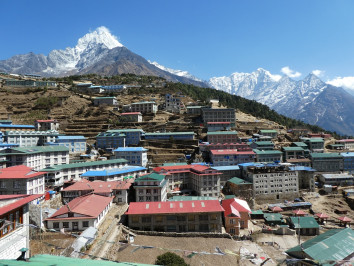
Finally, you will reach Namche Bazaar, which is the main trade and trek centre of the Khumbu region. It has shops, cafés, bakeries and lodges, and you will also explore the grand views of the surrounding mountains. Here, you will have your overnight stay at a local teahouse in Namche Bazaar. It will also give your body time to adjust for the next day's acclimatization activities.
Max altitude: about 3,880 m
Time: 4 to 5 hrs
Transport: On foot
Meals: Breakfast, lunch and dinner
Overnight: Teahouse in Namche Bazaar
Today is your first acclimatization day. So, you will not sleep at a higher spot, but you will stay in Namche while spending the day with a short hike to a higher point to adjust your body to the lower oxygen levels. Depending on your health and the weather, the route is decided, so you can hike towards the Everest View Hotel area, where the trail passes the upper parts of Namche and also the higher viewpoints in the Khumbu Valley. On a clear day, the mountain views are grand, and you can see Everest, Lhotse, Ama Dablam and Thamserku.
After a short hike, you will come back to Namche for lunch, and the rest of the day is free for you. You can also visit the local shops, enjoy a warm drink in a café and learn more about Sherpa culture and the history of mountaineering. Most trekkers often call it a rest day, but you will stay active for the day. After enjoying it, you will have an overnight stay at a teahouse in Namche and begin your walk in the morning for the next day.
Before moving forward to Tengboche, our team guide will check how each trekker feels, which is also very important for the next day.
Max altitude: 3,860 m
Time: 5 to 6 hrs
Transport: On foot
Meals: Breakfast, lunch and dinner
Overnight: Teahouse in Deboche
After enjoying your breakfast, you will begin to leave Namche Bazaar. A short, steep climb takes you out of town. Then the trail is fairly flat. You walk through forest past the small villages of Kenjoma and Sanasa, where you may see Mount Everest rising on some clear days. After the junction to Gokyo Valley and Everest Base Camp, the trail drops to the Dudh Koshi River. You cross several high suspension bridges, and you will reach Phunke Tenga, where the water-driven prayer wheels mark the resting place.
After resting for a while, your slow climb towards Tengboche begins. Here, the trail twists up through the rhododendron forest for about two hours, so walk slowly and drink plenty of water. At the top, visit the old Tengboche Monastery, which is famous for the Mani Rimdu festival. Inside the monastery, you will see a huge Buddha statue, detailed wall paintings and chanting monks. Outside the monastery, you will get to experience the views of stunning mountains like Everest, Lhotse, Nuptse, Ama Dablam and Thamserku that fill up the sky. During the spring season, the rhododendrons add more bright colors.
After visiting the monastery, you walk down to Deboche, which takes around 30 to 45 minutes. Deboche is a small Sherpa village just below Tengboche. The trail goes down through the rhododendron and pine trees. This part of the Everest region feels quiet and sheltered. The wind is softer than on the open mountain paths. It's an easy and relaxed walk after a long day. So, take your time and enjoy the forest.
Many trekkers choose Deboche for the rest instead of choosing Tengboche, where most of them arrive early, visit the monastery and then walk down. Also, sleeping at a little lower altitude than the highest point will help your body adjust. At Deboche, a small nunnery nearby is worth a quiet visit. Here, you will stay overnight at a simple teahouse or a lodge. So, rest well and keep drinking water.
Max altitude: 4,410 m
Time: 5 to 6 hrs
Transport: On foot
Meals: Breakfast, lunch and dinner
Overnight: Teahouse in Dingboche
After enjoying a warm breakfast at your teahouse in Deboche, you will begin to walk towards Dingboche. Your morning walk begins with the trail passing through the peaceful rhododendron and pine forests, along with the beautiful mountain views of Everest, Ama Dablam, Lhotse and Nuptse. While moving forward, keep your eyes open for wildlife where you may spot musk deer, Himalayan monals and blue sheep. You may also see the Himalayan monal, which is the national bird of Nepal, also known as Danphe. Soon, you will cross a suspension bridge over the Imja River. From here, the trail then climbs to the village of Pangboche, so begin with a slow walk because the air gets thinner with every step you take.
In the upper Pangboche, you may see an ancient stupa among the trees, which is worth a short visit. Beyond the village, the landscape changes. Tall trees give way to scrub juniper and tundra. The air feels cooler and drier. The path through Somare is fairly flat. After Somare, you cross another suspension bridge which follows the Imja River upstream. Then, the trail to Pheriche splits off, and from there you keep on moving towards Dingboche.
At last, you will finally reach Dingboche at 4,410 m, which is a small village with stone-walled houses and farm fields. Here, you see the villagers growing barley and potatoes. Here, the Lhotse, Island Peak and Ama Dablam rise above the village, which is a superb view. Trails to Lobuche and Island Peak branch off from here. The evening gets cold quickly, so wear warm layers and drink hot fluids. Tell your guide at once about any symptoms. Lastly, for the overnight stay, you will stay in a local teahouse in Dingboche.
Max altitude: about 5,083 m on the hike
Time: 3 to 5 hrs
Transport: On foot
Meals: Breakfast, lunch and dinner
Overnight: Teahouse in Dingboche
This is your second acclimatization day; you will sleep at the same altitude in Dingboche. During the day, you can take an optional hike to a higher place. The hike will also depend on good weather and your health. You may climb partway up Nangkartshang Hill, which is a viewpoint above the village. At the top of the hill, you can get to explore the stunning views of Ama Dablam, Lhotse, Island Peak and the Imja Valley. You may even reach the highest point, which is optional, and your guide will adjust the hike to suit everyone's health.
After the hike, you will return to Dingboche, where you can drink plenty of water, have your overnight stay at a lodge and again get ready for the rest of the hike by reaching high. Your guide will look for signs of altitude sickness and also talk about the climb to Lobuche. While it is a second night, it does not promise a problem-free trek. Still, this acclimatization day is vital for your 15-day journey.
Max altitude: 4,940 m
Time: About 5 hrs
Transport: On foot
Meals: Breakfast, lunch and dinner
Overnight: Teahouse in Lobuche
After breakfast, you will leave Dingboche, where the trail climbs gently into the upper Khumbu Valley. It crosses through the open alpine fields on a wide path leading towards a stop at Thukla, also called Dughla, where you will have your lunch or a short rest. Then, a steeper climb leads to a memorial area above the village. Many stone monuments stand here and honour the mountaineers and climbers who were lost in the Everest area.
After passing the memorials, the ground is rough and rocky. You will walk next to the lateral moraine of the Khumbu Glacier, and you can explore the other mountains like Pumori, Nuptse and other high mountains.
Soon, you will reach Lobuche, where you will have your overnight stay at a lodge or a local teahouse. The accommodation is simple, and during the night, it can be very cold after dark. Resting early tonight will be given before you head out to Everest Base Camp the next day.
Max altitude: 5,364 m
Time: 7 to 8 hrs in total
Transport: On foot
Meals: Breakfast, lunch and dinner
Overnight: Teahouse in Gorak Shep
Today is the day you have waited for. You will start early with a hike over glacial moraine and uneven ground beside the Khumbu Glacier, where the trail leads to the final destination of Gorak Shep. After reaching Gorak Shep, you will pause at the teahouse, have your meal and leave behind anything you do not need before heading on to Everest Base Camp.
The path to Base Camp is rocky. The ground rises and falls again and again. Walking at this height is challenging. So you will go at a comfortable pace, and you can stop if needed. At Everest Base Camp, you will stand at 5,364 m, and here you will have a few hours to look around the surrounding mountains, see the Khumbu Icefall from far away and take some photos at the famous landmark. In the spring season, you may also see expedition tents.
After spending your time at the Everest Base Camp, you head back to Gorak Shep for your overnight stay at a local teahouse. The next day, the trail will be long and challenging. So, stay hydrated, warm and rest well.
Max altitude: 5,545 m
Time: 2 to 3 hrs climb and 5 to 6 hrs trek
Transport: On foot
Meals: Breakfast, lunch and dinner
Overnight: Teahouse in Pheriche
The day will start early, before sunrise. You will climb to Kala Patthar from Gorak Shep. It is one of the best viewpoints for Mount Everest and for early sunrise. The path is steep and rocky. The distance is not long, but it is a challenging climb because the elevation is high, air is cold, and the path goes up and down. For most trekkers, it usually takes around 2 to 3 hours to go up and 1 to 1.5 hours to come down, but you don’t need to rush. So, walk slowly and take breaks if you really need to.
Near the top of Kala Patthar, the cold air will hold about half of your oxygen at sea level. Most trekkers will feel out of breath, their heart will beat fast, and their legs will begin to feel heavy. At this height, it’s normal for you, so walking at a slow, steady pace works best. Before sunrise, the temperature can also drop, and the wind can make you feel very cold at the top. Wearing warm layers, thick socks and a padded jacket will make a difference. Some trekkers will start to feel symptoms of altitude sickness like headache, body tiredness or nausea. So, tell your guide about the signs or if you feel dizzy and unwell. For most trekkers, it feels tiring but also makes them proud.
After reaching Kala Patthar, you get a close-range view of the highest surrounding mountains like Mount Everest, Nuptse, Pumori and the nearby peaks. The weather must allow it. The early morning light makes the view really special for you and also makes it the most memorable moment of this trek. After that, you will go back to Gorak Shep for breakfast, gather your gear and walk down past Lobuche and Thukla to Pheriche. The lower altitude can make your breathing easier.
Then, you will arrive at Pheriche in the afternoon or evening, depending on the weather. Here, you will have an overnight stay at a local lodge. The next day, you will return to Namche Bazaar to mark a wonderful journey to the end of your trek.
Max altitude: 4,371 m at the start
Time: 7 to 8 hrs
Transport: On foot
Meals: Breakfast, lunch and dinner
Overnight: Teahouse in Namche Bazaar
After having a hot breakfast, you will begin your return journey to Namche Bazaar, where the trail goes through the lower Khumbu Valley while enjoying alpine scenery. The path leads back past Pangboche and the Tengboche area. As you walk down, the land turns greener, and you slowly enter the rhododendron and pine woods again. The mountains look close and clear along the way.
The trail mostly goes downhill, but some stretches go uphill, especially where the river is crossed and on the forested slopes. You will stop to rest and have your lunch. At the end of the day, you will reach Namche Bazaar, where you will have your overnight stay.
Max altitude: 3,440 m at the start
Time: 6 to 7 hrs
Transport: On foot
Meals: Breakfast, lunch and dinner
Overnight: Teahouse in Lukla
This will be your last trekking day in the Everest region. After breakfast, you will leave Namche Bazaar and head towards a steep forest track that leads down to the Dudh Koshi River. You will cross the familiar suspension bridges that pass through Jorsalle, Monjo and other villages of the lower Khumbu Valley. On the way, you can experience village life, traditional houses and prayer wheels. The mountains stay in view on the return trip.
The trail passes through Phakding and smaller villages before climbing up to Lukla. After reaching Lukla, you will check in at your lodge, where you will spend the last overnight stay with other trekking groups. It is a great moment to thank your guide and porter for their help along the way.
Max altitude: 2,860 m at Lukla
Time: 35 to 40 min flight
Transport: Flight and private vehicle
Meals: Breakfast
Overnight: Hotel in Kathmandu
After breakfast, get ready for your return flight from Lukla. Flights usually start in the morning. The weather and airport operations determine the time. You will also take a direct flight to Kathmandu, which takes about 30 to 40 minutes. We will take you back to the capital, where you will return to your hotel.
In the high trekking season, flights may also go from Lukla to Manthali Airport in Ramechhap. We will then drive you back to Kathmandu, which usually takes 4 to 6 hours depending on the traffic and road quality. After enjoying a long trekking section of the trip, you will rest and have an overnight stay at the Kathmandu hotel. If time allows, you can visit local eateries, stores or markets.
Meals: Breakfast
Today your 15-day Everest Base Camp trek with Himalayan Heart comes to an end. You may spend any spare time before your flight in Kathmandu, take a walk around the local streets and shops or enjoy our Nepali food in a good restaurant or café. Our agent will arrange your hotel-to-airport transfer with enough time to finish your airport formalities.
You will take home many memories of the Khumbu Valley, the traditional Sherpa villages, the Himalayan mountains and a wonderful experience at Everest Base Camp and Kala Patthar.
We hope to see you again on another trek in Nepal.
Trip duration: 15 Days
Choose any available date on the calendar to start your trip.
Pick a departure — your 15-day trip will be highlighted on the calendar.
This creates a private or flexible-date booking and does not join a fixed departure.
The best seasons are spring (March to May) and autumn (September to November), when the skies are clear and the trails are dry. April and October are the ideal months. Both seasons are busy. Please book early for your dates and flights.
The Everest Base Camp Trek lasts 15 days. The days are counted from arrival in Kathmandu to departure. You spend three nights in a Kathmandu hotel and eleven nights in Khumbu. In some cases, trekkers may also reach the Everest Base Camp in just 9 to 12 days. This plan is slower and gives you more time to enjoy the trek.
The highest point is Kala Patthar at an altitude of 5,545 m. Here on day 11, you will climb it early in the morning, which will give you the best sunrise view and also let you enjoy the stunning mountain views of Mount Everest, Lhotse, Nuptse and the Khumbu Glacier.
No, you do not need trekking experience or climbing skills. You do need good fitness and good preparation. Start training eight to twelve weeks before your trip. Hill walking, stair climbing, cycling and jogging build the stamina you need.
The price includes airport pick-up and drop-off, three Kathmandu hotel nights with breakfast and the flights to and from Lukla. It also covers a licensed guide, porter support, all permits, trek meals and teahouse stays. A Kathmandu sightseeing tour is part of the package. Insurance for the guide and porters and a first-aid kit are included too.
The 15-day plan is built for slow and safe height gain. It has two rest or acclimation days, first at Namche Bazaar and second at Dingboche. During the trek, the plan can change with weather or health. So, the guide can adjust the hike to suit the group. So, send us your dates and group size to talk about your trip.
The nights near the Everest Base Camp are very cold. At Lobuche and Gorak Shep, the spring nights fall at -15 to -8 °C. During the season of autumn, nights can drop to -18 to -10 °C. On some days, it is around -2 to 6 °C in spring and -3 to 6 °C in autumn. Rooms are not heated at night, so you should also carry a warm sleeping bag.
The trek is challenging, so you do not need any technical climbing skills. The difficulty of the trek comes from the height, the cold and the long trekking days. You will have 9 walking days in a row. Altitude is the biggest challenge.
Yes, beginners with good fitness can complete this trek. They need determination and a willingness to listen to the guide. The trek is harder than a beginner walk such as Ghorepani Poon Hill. The plan gains height slowly and has two rest days. Training for eight to twelve weeks helps a lot.
Most walking days take about four to seven hours. Day 3 is short, with a three- to four-hour walk to Phakding. The two long return days, Pheriche to Namche and Namche to Lukla, take six to eight hours each. Day 10 takes seven to eight hours in total. The Kala Patthar climb takes two to three hours.
Yes, there are two. The first is at Namche Bazaar (3,440 m) on Day 5. The second is at Dingboche (4,410 m) on Day 8. On both days, you hike high and return to sleep low. The hikes reach about 3,880 m and 5,083 m.
Altitude sickness can affect anyone. Age, fitness and experience do not protect you. Headache, nausea, dizziness and poor sleep are early signs. The slow 15-day plan lowers the risk. Tell your guide early about any symptoms.
Yes, our guides carry emergency oxygen. They also carry a first-aid kit. They check your health every day. Emergency oxygen is charged as an extra when used. The guide arranges a helicopter evacuation in serious cases.
The trail goes up and down all the way. It has stone steps, loose rocks and narrow paths. You cross high suspension bridges above the Dudh Koshi River. Near Gorak Shep and Base Camp, you walk on uneven glacier moraine. The trail is not technical. It is long and tiring.
You see Everest, Lhotse, Nuptse, Ama Dablam, Thamserku and Pumori. You also see the Khumbu Glacier and the Khumbu Icefall. The trail passes Sherpa villages, mani walls and Tengboche Monastery. In Sagarmatha National Park, you may spot Himalayan tahr, musk deer and the colourful Himalayan monal.
Yes, there is time for rest or acclimatization days at Namche Bazaar and Dingboche that include only a short hike. In Namche, you are free after the hike to visit shops and cafés. At Base Camp, you have a few hours to look around and take photos. For dream photographers, the sunrise view is the best time at Kala Patthar.
The weather in the Khumbu can change quickly. Mornings are often clear. Clouds, wind and snow can arrive in the afternoon. Days at lower altitude are mild. Nights above 4,000 m are well below freezing. The weather also affects the Lukla flights.
Most trekking days cover about 8 to 11 km. Pheriche to Namche and Namche to Lukla are about 19 km each, which will be your return days. On day 10, you will reach Gorak Shep, 4 to 5 km, then about a 7 km round trip to Base Camp. The rest of the day's hikes are short, at 4 to 7 km in Namche and 5 to 6 km in Dingboche.
The trip is open to one person and above. Prices are listed for one person, two to three people, four to six people and seven to ten people. Solo travellers are welcome. You can join a group departure or arrange a private trek with your own guide.
You will fly to Lukla on Day 3 and land at Tenzing-Hillary Airport. The flight from Kathmandu usually takes around 35 to 40 minutes. In the busy season, the flight may leave from Ramechhap instead. A private vehicle takes you there in about five hours. The Ramechhap flight is shorter, at 15 to 20 minutes.
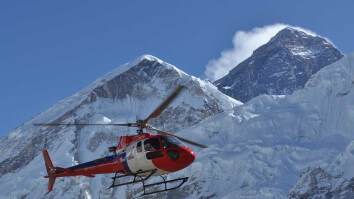
Weather can delay or cancel Lukla flights. Our team rebooks you on the next available flight and changes the plan. A helicopter may be used at extra cost. Extra nights caused by delays are not included in the price. Keep a spare day before your international flight.
Yes. The price includes the flights to Lukla and back from Kathmandu or Ramechhap. You fly up on Day 3 and fly down on Day 14. International flight tickets are not included. Please buy them yourself.
Yes, a licensed guide will lead you on the trek. All our guides speak English and also have years of experience with international trekkers. They are trained in first aid. During the trek, our guide will check your health every day.
No, you carry only a small day pack. One porter is included for every two trekkers. The porter will carry your main luggage. A duffel bag of 40 to 50 litres is advised, so try to pack it light because Lukla flights have strict luggage limits.
You can leave extra luggage in Kathmandu. It can stay at your hotel or at our office in Thamel. City clothes are a good example. Take only trail items to the mountains.
Yes, all permits are included in the price. You will need to apply for two permits, especially for the Sagarmatha National Park Entry and the Khumbu Pasang Lhamu Rural Municipality. Please send us a scan of your passport and a passport-size photo in advance. Also, carry your passport during the trek.
Yes, travel insurance is mandatory for this trek. The route will go through a remote high-altitude country. Flights are often delayed due to the weather. An emergency can cost a lot without cover, so buy your insurance policy before you arrive in Nepal.
Your policy should cover high-altitude trekking up to at least 6,000 m. It should cover medical treatment, helicopter evacuation, air ambulance and repatriation. Trip cancellation, flight delays and baggage loss should be covered too. Altitude-related illness must not be excluded. The policy also needs a 24-hour emergency assistance line.
Tell your guide early about any symptoms. The guide checks your health every day. Moving to a lower altitude can solve most altitude sickness cases. In severe cases, the guide will arrange a helicopter evacuation for you. We pay the first cost and claim it from your insurance, so your insurance policy must also include the helicopter rescue.
The price usually starts at US$ 1,430 per person, and the regular price is US$ 1,775 per person. The total per-person cost can be higher than the number of travellers, so a group of two people costs US$ 2,860 and a group of three people costs US$ 4,290. Last-minute bookings may cost you even more.
International flight tickets and travel insurance are not included. Lunch and dinner in Kathmandu can cost you extra. You will pay extra for drinks, hot showers, Wi-Fi, charging and laundry on the trail. Tips for the guide and porters are also extra. Emergency oxygen used on the trek and extra nights from flight delays are not included either.
Plan about US$ 15 to 25 per day for personal spending on the trek. Carry Nepali rupees in small notes. They pay for showers, charging, snacks and tips. Mostly, cash machines are not available on the trail, so withdraw your cash in Kathmandu.
A visa is part of your trip preparation. You can get a visa on your arrival at Tribhuvan International Airport, or you can also apply online before you travel. Your passport needs a blank page, so check these details before you fly.
Your passport must be valid for at least six months from your arrival date. It must also have a blank page. Check both points before you travel. Carry your passport on the trail too. Checkpoint staff may ask to see it.
You get breakfast, lunch and dinner every day on the trek. Dal bhat is the most popular meal. Other choices include thukpa, momo, Sherpa stew, pasta, fried rice and pizza. Breakfast has Tibetan bread, porridge, pancakes and eggs. Menus become shorter higher up.
In Kathmandu, you will stay for three nights at a 3-star hotel in Thamel, including breakfast. On the trail, you stay at local teahouses in twin-sharing rooms. The rooms have simple beds, a mattress, a pillow and a blanket. Most bathrooms are shared. Rooms are not heated at night.
Vegetarian dishes are common on the trail, which is also safer. At some local teahouses, you will easily find Dal bhat, vegetable momo, pasta and noodles. Meat is carried up without refrigeration. Vegetarian food is safer for your stomach. Tell us about any dietary needs before you book. We will inform the lodges in advance.
Yes, in most places, charging is easy at Lukla, Phakding and Namche Bazaar. As you go higher, the power is limited and can even cost more. Many lodges sell Wi-Fi cards, but the signal is slow, or sometimes it is missing at the high stops. So, carry a power bank and a universal adapter.
In some lower villages like Lukla, Phakding and Namche Bazaar, there are more comfortable toilets. Some lodges there have Western-style toilets and attached bathrooms. Higher up, toilets are shared and often squat toilets in a separate building outside. Hot showers cost you extra. Flush toilets can freeze in the cold.
Use boiled, filtered or purified water during the trek. Most teahouses sell boiled or filtered water. Bottled water is also sold at extra cost. You can use purification tablets or a filter instead. So, drink three to four litres of fluid each day.
Use a warm layered system. Pack moisture-wicking T-shirts, thermal underwear, a fleece jacket and a warm mid-layer. Carry a down jacket, especially for -15 °C or lower. A waterproof, windproof jacket and trousers are also needed. Add trekking trousers, wool or synthetic socks, a warm hat, a sun hat and warm gloves.
You need broken-in, waterproof trekking boots with good ankle support and a durable sole. Wear your boots well before you leave. Most blisters come from new boots. Pack camp shoes or sandals for the evenings. Gaiters help in snow.
Yes, you need a warm sleeping bag because the rooms at the Everest Base Camp are not heated at night. Choose a bag rated for -15 °C to -20 °C. Nights above 4,000 m are well below freezing. Earplugs help with thin teahouse walls.
Carry a day pack of 25 to 30 litres with a rain cover, a water bottle, snacks, sunscreen, lip balm, your camera and your personal medicines. Keep your passport and small rupee notes with you. A headlamp is mandatory on the Kala Patthar in the early morning climb for sunrise view.
Leave anything you will not need on the trail. City clothes are a good example. They can stay at your hotel in Kathmandu or at our office in Thamel. You can buy or rent most gear in Thamel. Lukla flights have strict luggage limits.
Greet people with a namaste and a slight bow, with palms together. Do not touch a person's head. Ask before photographing people. Dress modestly in villages and monasteries. The Sherpa people welcome every guest with a smile.
Yes, plan to tip your guide and porters. Mostly, tips are not included in the package price, so carry Nepali rupees in small notes for tips. Your last night in Lukla is a good moment to thank them for helping you all along the way.
Pass mani walls, chortens and prayer wheels on the left, walking clockwise. Do not step over prayer flags or sacred objects. Ask before photographing monks and ceremonies. Monasteries such as Tengboche are important places of prayer. So, carry your rubbish or garbage out instead of leaving it on the trail.
Yes, you can enjoy part of a festival on the right dates. Mani Rimdu is held at Tengboche Monastery, usually in October or November, where you see masked dances, prayers and music. Dashain and Tihar, the biggest festivals in Nepal, also fall in autumn.
Booking is easy. Choose your date and send your full name, passport details and contact number. We check the availability of guides, rooms and flights. You will receive an email within 24 hours with a full day-by-day itinerary. You can also book online or message us on WhatsApp at +977 9851093973.
Book at least three months ahead. Spring and autumn dates fill up fast. Early booking helps us secure your Lukla flights, teahouse rooms and trekking permits. Last-minute bookings may cost more than the listed price.
Yes, of course. You can change your trip schedule to a new date free of charge with 30 days' notice. During the spring and autumn seasons, the slots fill up fast. Send your preferred new dates early.
A cancellation 60 days or more before departure gets a full refund with no bank fees. A cancellation 30 to 59 days before departure gets a 50 percent refund. A cancellation less than 30 days before departure gets no refund. Permits and flights already bought cannot be refunded. Carry insurance that covers trip cancellation.
A 20 percent deposit books your place for the EBC trek, and the rest of the amount will be paid on your arrival in Kathmandu. Your payment can be made via bank transfer, credit or debit card or cash. Card payments may have a small bank fee. At the end, you will receive a receipt for every payment.
| Detail | Information |
|---|---|
| Destination | Nepal |
| Duration | 15 days |
| Difficulty | Challenging |
| Activity | Trekking, sightseeing |
| Max altitude | 5,545 m (Kala Patthar) |
| Group size | 1 person and above |
| Accommodation | Hotel in Kathmandu, teahouse lodges on the trail |
| Meals | Breakfast in Kathmandu; breakfast, lunch and dinner on the trek |
| Transport | Private vehicle, flights between Kathmandu (or Ramechhap) and Lukla |
| Start and end point | Kathmandu |
| Best seasons | March to May and September to November |
| Price | From US$ 1,430 per person |
A trek like this works best with a team that plans for what the mountains can do. Himalaya Heart Treks & Expedition Pvt Ltd is a registered Nepali company (Regd No: 22554) based in Thamel, Kathmandu. We are associated with the Nepal Tourism Board, TAAN and the Nepal Mountaineering Association (NMA), and our trekkers rate us 5 out of 5 on Tripadvisor and on our website. This trek is built around slow acclimatization, careful weather planning and clear communication, with a guide who knows the valley and a team in Kathmandu who handle your flights.
Here is why trekkers choose Himalaya Heart for the Everest Base Camp Trek - 15 Days:
The Everest Base Camp Trek - 15 Days is a wonderful journey through the heart of the Himalayas. The trail begins with a climb through the pine forests, yak pastures, and Sherpa villages. Prayer flags flutter in the mountain winds while you walk to a height of 5,364 meters. This 15-day package plan gives your body time to adjust to the height. A slow pace feels safer for most people. So, most dream trekkers ask the same question before they book: Is this Everest Base Camp Trek - 15 Days right for you?
If you are an adventure enthusiast who loves nature and mountain views, then EBC trek is the right choice. Also, if you want great photography and beautiful sunset views, then it's a great opportunity and a memorable moment for you. For more details, see below:
Mountain Lovers
The Everest Base Camp Trek is a dream walk for you. Every day brings a new view of giant peaks. You will get to experience the beautiful mountain views of Mt. Everest, Lhotse, Nuptse, Ama Dablam and Pumori. The Kala Patthar at 5,545 meters is the highest point of the trip, which gives you the clearest view of Mt. Everest at sunrise. At the Everest Base Camp, you stand beside the Khumbu Glacier and near the Khumbu Icefall, which feels like standing at the foot of the world. You can take hundreds of pictures and remember each one for a lifetime. The 15-day package plan gives you time to enjoy each view.
First-Time High Altitude Trekkers
The Everest Base Camp Trek is a fine first step into the high mountains with the right preparation. The 15-day itinerary plan is built for slow and safe progress. This plan includes rest days at Namche Bazaar (3,440 m) and Dingboche (4,410 m) to help your body adjust to the altitude. Your trek guide will check your health every day. The porters will carry your main things, but you can carry only a small backpack. Still, the trek is challenging. The air at EBC holds about half the oxygen of sea level. So, walk slowly and drink plenty of water.
Culture and Nature Enthusiasts
The EBC trek is much more than a mountain walk. It is a journey through the living world of the Sherpa people. You will pass through colorful prayer flags, spinning prayer wheels and carved mani stones. Tengboche Monastery, the largest in the Khumbu region, offers a calm and holy moment. Namche Bazaar adds a lively market and warm local cafés. In tea houses, you taste dal bhat and butter tea. The Sherpa people welcome every guest with a smile. The Sagarmatha National Park is a UNESCO World Heritage Site. Rhododendron, Juniper and birch forests line the lower trail. Himalayan thar, musk deer and the colorful Danphe live along the route. The 15-day package plan with a slow pace gives you time to meet people, learn their stories, and enjoy wildlife interaction.
| Day | Route | Distance (approx.) | Time | Altitude | Note |
|---|---|---|---|---|---|
| 1 | Arrival in Kathmandu | - | - | 1,360 m | Rest and welcome |
| 2 | Kathmandu sightseeing | - | Full day | 1,360 m | Four heritage sites |
| 3 | Fly to Lukla, trek to Phakding | About 8 km walk | 40 min flight, 3 to 4 hrs walk | 2,860 m to 2,610 m | Easy first day |
| 4 | Phakding to Namche Bazaar | About 11 km | 5 to 6 hrs | to 3,440 m | Long climb to the Sherpa capital |
| 5 | Acclimatization day at Namche | About 4 to 7 km round trip | 4 to 5 hrs | 3,440 m to about 3,880 m and back | Rest and views |
| 6 | Namche to Tengboche and Deboche | About 10 km | 5 to 6 hrs | 3,440 m to 3,860 m (Tengboche), 3,820 m (Deboche) | Monastery and mountain views |
| 7 | Deboche to Dingboche | About 11 km | 5 to 6 hrs | to 4,410 m | Above the tree line |
| 8 | Acclimatization day at Dingboche | 5 to 6 km round trip | 3 to 5 hrs | 4,410 m to about 5,083 m and back | Climb high, sleep low |
| 9 | Dingboche to Lobuche | 8 to 9 km | About 5 hrs | to 4,940 m | Cold, thin air |
| 10 | Lobuche to Gorak Shep and Everest Base Camp | 4 to 5 km, then about 7 km round trip | 2 to 3 hrs, plus 4 to 5 hrs | 5,164 m, then 5,364 m | The highlight of the trek |
| 11 | Kala Patthar at sunrise, Gorak Shep to Pheriche | Short climb, then a long descent | 2 to 3 hrs climb, 5 to 6 hrs trek | 5,545 m, then 4,371 m | Sunrise on Everest |
| 12 | Pheriche to Namche Bazaar | About 19 km | 7 to 8 hrs | to 3,440 m | Thicker air, long day |
| 13 | Namche Bazaar to Lukla | About 19 km | 6 to 7 hrs | to 2,860 m | Last night in the mountains |
| 14 | Fly to Kathmandu | - | 35 to 40 min flight | 1,350 m | Return to the city |
| 15 | Departure | - | - | - | Transfer to the airport |
The total cost of this trek depends on the number of people who are travelling. The guide, permits, flights and arrangements are organized for the group as a whole, so the more people who travel together, the more smoothly everything is shared. A few smaller things also affect the final amount: whether you join a fixed departure or travel privately, the season you choose, whether you fly from Kathmandu or Ramechhap, whether you rent gear in Kathmandu instead of bringing your own, and any extra nights caused by flight delays.
Our price for this 15-day journey is USD 1,430 per person (regular price USD 1,775). The total for your group is simply the per-person price multiplied by the number of travellers. Here is what you pay:
| Group Size | Price |
|---|---|
| Single Person | USD 1,430 |
| Double to Triple People | USD 2,860 - USD 4,290 |
| 4 to 6 People | USD 5,720 - USD 8,580 |
| 7 to 10 People | USD 10,010 - USD 14,300 |
This fee includes your guide and porters (one porter per two trekkers), all meals and teahouse lodging on the trail, three nights in a Kathmandu hotel with breakfast, the flights between Kathmandu (or Ramechhap) and Lukla, government taxes, permits and all transfers from the airport pick-up to the final drop-off. Last-minute bookings may cost more than the listed price. Also, please see the full list under Cost Includes and Excludes for detailed information.
Plan some cash for the items that are not included in the 15-day EBC package plan: lunch and dinner in Kathmandu, international flights, travel insurance that covers helicopter evacuation, drinks and snacks, hot showers, charging and Wi-Fi on the trail, and tips for your guide and porters. We suggest about USD 15 to 25 per day for personal spending on the trek. Even with these extras, it is a well-priced way to walk to the foot of Everest, because the package covers the flights, permits, porters and three hotel nights in Kathmandu.
Here are some of the main peaks you can see on this trek. Heights are approximate and may differ slightly between sources.
| S.N | Mountain Name | Altitude (m) | Altitude (ft) | Note |
|---|---|---|---|---|
| 1 | Mount Everest | 8,848.86 | 29,032 | The tallest mountain in the world |
| 2 | Lhotse | 8,516 | 27,940 | The fourth highest mountain, joined to Everest by the South Col |
| 3 | Makalu | 8,485 | 27,838 | A dark, pyramid-shaped peak, the fifth highest in the world |
| 4 | Cho Oyu | 8,188 | 26,864 | The sixth highest mountain, on the border with Tibet |
| 5 | Nuptse | 7,861 | 25,791 | A long, jagged ridge that rises beside Everest and Lhotse |
| 6 | Changtse | 7,543 | 24,747 | The North Peak of Everest, standing just across the border |
| 7 | Pumori | 7,161 | 23,494 | The pyramid above Gorak Shep and a landmark from Kala Patthar |
| 8 | Ama Dablam | 6,812 | 22,349 | The "Matterhorn of the Himalaya", visible for days on the way up |
| 9 | Kangtega | 6,782 | 22,251 | A steep ice peak above Namche and Tengboche |
| 10 | Thamserku | 6,623 | 21,729 | A sharp rocky summit in the lower valley |
| 11 | Island Peak (Imja Tse) | 6,189 | 20,305 | A popular trekking peak near Dingboche |
Everest itself hides behind the Nuptse-Lhotse wall from many places on the trail, and it only shows clearly from a few viewpoints, including the Everest View Hotel above Namche, Kala Patthar, and the ridge above Gorak Shep. For this reason, the sunrise climb to Kala Patthar is one of the highlights of the trip. The light changes within a few minutes, from deep blue to gold, as the sun rises on the highest summits.
The Everest Base Camp Trek - 15 Days is graded as challenging. It suits people with good physical fitness and proper preparation, and you do not need technical climbing skills or mountaineering experience. The trek takes you from Lukla at 2,860 m to Kala Patthar at 5,545 m, so the difficulty comes from the height, the cold and the long days, not from rock climbing. The difficulty depends on the following factors:
High Altitude and Risk of Altitude Sickness
Altitude is the biggest challenge on this trek. You sleep at 4,410 m in Dingboche, 4,940 m in Lobuche and 5,164 m in Gorak Shep. At these heights, the air holds much less oxygen, so your body has to work harder even when you are walking slowly. Many trekkers feel headaches, nausea, loss of appetite or poor sleep as they climb higher. The risk grows if you go up too fast, so the itinerary includes two rest days, at Namche Bazaar and Dingboche. Walk slowly, drink plenty of water and tell your guide early if you do not feel well.
Walking Hours and Physical Endurance
Most walking days take about four to seven hours, and you walk for eleven days in a row. The two long descent days from Pheriche to Namche and from Namche to Lukla take six to eight hours each. The challenge is not only walking for one long day, but recovering well enough to start the next morning again. Regular hiking, stair climbing, cycling and jogging before the trip will help you build the stamina you need.
Steep Ascents and Descents
The trail goes up and down all the way, with stone steps, loose rocks and narrow paths. The climb from Phakding to Namche Bazaar on Day 4 is the first big test, and it is steep. The uphill sections are hard on your lungs and legs, while the downhill sections can tire your knees, especially on the final two days. Using trekking poles, walking at a steady pace and taking short rests will make it easier.
Kala Patthar and Everest Base Camp Days
The hardest part of the trek comes at the top. On Day 10, you walk to Gorak Shep and then to Everest Base Camp (5,364 m) and back over rough glacier moraine. On Day 11, you climb Kala Patthar (5,545 m) before sunrise, when it is bitterly cold, and then walk on down to Pheriche. Each step feels heavy in the thin air, but the reward is the best view of the whole trip.
Weather and Temperature Conditions
Weather in the Khumbu can change quickly. Mornings are often clear, while clouds, wind and snow can arrive in the afternoon. Days at lower altitude are mild, but nights above 4,000 m are well below freezing. Good layers, a warm sleeping bag and waterproof outer clothing help you deal with the cold, wind and snow. The weather also decides whether the Lukla flights can operate, so it is wise to keep a spare day in your plan.
Remote Trails and Basic Facilities
The route is well used, but facilities become simpler as you go higher. Rooms are not heated, bathrooms are shared, hot water costs extra, and menus become shorter. Wi-Fi and phone signals can be slow or missing. Being ready for simple conditions will make the trek more enjoyable.
Mental Strength
Physical fitness alone is not enough. Eleven days of walking, cold nights, thin air and simple food can test your patience. There will be days when you feel tired, and your appetite is low. Take it one day at a time, stay positive and follow your guide's advice. Plans may also change because of weather or health, so a flexible attitude is just as important as strong legs.
Beginners with a good level of fitness, determination and a willingness to listen to their guide can complete this trek. It is, however, a harder challenge than a beginner-friendly walk such as Ghorepani Poon Hill, because of the altitude, the cold and the length of the climb. Over eleven days on the trail, you walk for several hours a day, reach 5,364 m at Everest Base Camp and 5,545 m at Kala Patthar, and have to cope with thin air, low temperatures and simple lodges.
Previous trekking experience is not required, but preparation is. We encourage you to start training at least eight to twelve weeks before your trip, with regular hill walking, stair climbing, cycling, jogging or swimming to build endurance, plus leg and core strengthening. Long walks with a loaded backpack are especially useful. A short trek at altitude beforehand, such as the Ghorepani Poon Hill Trek, can also tell you how your body responds to height.
The itinerary is designed with gradual height gain and two rest days, and our experienced guides keep an eye on your health, keep the pace comfortable and help whenever needed. You also have a responsibility to tell the guide at once if you feel unwell, because small symptoms ignored at altitude can become serious.
With good preparation, a steady pace and a positive mindset, many first-time trekkers successfully reach Everest Base Camp and enjoy the unforgettable feeling of standing at the base of the highest mountain in the world.
The best preparation is a combination of fitness, the right gear and a clear mind. Start early, because altitude trekking rewards people who have built a solid base.
The best time for the Everest Base Camp Trek - 15 Days depends on weather, trail conditions, mountain visibility and temperature at high altitude. Spring (March to May) and autumn (September to November) are generally the most favourable seasons because they offer stable weather and clear views of the Himalayas. Monsoon brings frequent rain and cloud, while winter brings very cold temperatures and snow at higher elevations. The ideal months for this trek are April and October, but you should always check the weather forecast before your flight to Lukla. Himalaya Heart can help you plan your trek around the season and dates that suit you.
Spring (March to May)
Spring is one of the best seasons for this trek. The sky is mostly clear, the weather is steady, and walking is comfortable, with good views of Everest, Lhotse and Ama Dablam. In the lower villages, days are about 8 to 16 °C (46 to 61 °F) and nights about -2 to 6 °C (28 to 43 °F). Higher up, at Lobuche and Gorak Shep, days are about -2 to 6 °C (28 to 43 °F), and nights fall to -15 to -8 °C (5 to 18 °F). There is no heavy rain, and the lower forests are full of red, pink and white rhododendron flowers. The trade-off is the crowd. Spring is one of the busiest seasons, so teahouses fill up, and the trail is busy. Please book early for your dates and flights.
Monsoon (June to August)
Monsoon is the off-season. Heavy rain makes the trail muddy and slippery, leeches and insects appear in the lower forests, and landslides can block paths. Clouds hide the mountains for long periods, and flights to Lukla are often delayed or cancelled. Lower villages are about 12 to 20 °C (54 to 68 °F) by day and 6 to 12 °C (43 to 54 °F) at night. Higher up, days are about 2 to 8 °C (36 to 46 °F) and nights fall to -5 to 0 °C (23 to 32 °F). On the good side, the trail is quiet, the forests are green, and rooms are easy to find. The monsoon is only for experienced trekkers who can stay flexible, and it needs extra logistical planning, so book in advance.
Autumn (September to November)
Autumn is the best season overall. After the monsoon, the air is clean, and the views are at their sharpest. With clear weather and dry trails, the lower villages experience daytime temperatures between 8 and 16 °C (46 to 61 °F) and nighttime temperatures from -3 to 4 °C (27 to 39 °F). At elevations like Lobuche and Gorak Shep, days are around -3 to 6 °C (27 to 43 °F), while nights drop to -18 to -10 °C (0 to 14 °F). October is usually the most stable month in terms of weather, and November brings colder conditions. Autumn is also a good time for culture, because the festivals of Dashain and Tihar fall in these months, and Mani Rimdu is often held at Tengboche Monastery. The trail, flights and lodges are very busy, so book well in advance.
Winter (December to February)
Winter is the other off-season. It is very cold, with ice and snow on the high trails, short days and a risk of frostbite and hypothermia. Some lodges close higher up the valley, and wind and snow can delay flights. Lower villages are about 2 to 8 °C (36 to 46 °F) by day and -10 to -3 °C (14 to 27 °F) at night. At Lobuche and Gorak Shep, days are about -10 to 0 °C (14 to 32 °F), and nights fall to -25 to -15 °C (-13 to 5 °F). The sky is often clear, the trail is quiet, and prices are lower. Even so, winter is only for experienced trekkers with proper cold-weather gear. Please book early so we can arrange extra planning.
Everest Base Camp is at 5,364 m and Kala Patthar at 5,545 m, where the air holds roughly half the oxygen found at sea level. This is the single biggest challenge of the trek. Acute Mountain Sickness (AMS) can affect anyone, whatever their age, fitness or previous experience, and it usually appears above 2,500 m when you ascend faster than your body can adapt. The risk can be reduced by a gradual ascent, rest days, hydration and by listening to your guide.
How can our 15-day EBC package plan help you?
The route gains height gradually. You start by flying to Lukla (2,860 m) and sleeping at Phakding, then reach Namche at 3,440 m, where you spend two nights, with a day hike to about 3,880 m in between. You then spend two nights at Dingboche (4,410 m), with a hike to about 5,083 m. On both rest days, you walk higher during the day and return to sleep lower, the "climb high, sleep low" rule. Above 3,000 m, the guide watches how much height you gain each night. After Kala Patthar, the descent brings quick relief.
Signs and symptoms
Tell your guide as soon as you notice any of these. Do not continue to climb if the symptoms are getting worse.
Causes and risk factors
AMS comes from climbing too fast, sleeping too high too soon, dehydration, overexertion, alcohol or smoking at height, and ignoring early symptoms. A previous history of altitude sickness also increases the risk. Being fit does not protect you.
Serious complications
If mild AMS is ignored, it can progress to High-Altitude Pulmonary Edema (HAPE), when fluid builds up in the lungs, causing a persistent cough, chest tightness and breathlessness even at rest, or High-Altitude Cerebral Edema (HACE), when the brain swells, causing confusion, loss of balance and extreme drowsiness. Both are life-threatening and need immediate descent and medical help. Our guides carry a first-aid kit and emergency oxygen, and your guide will arrange a helicopter evacuation if it is needed.
How to prevent altitude sickness?
Transport is a big part of this trip, and all of it is arranged for you.
| Leg | How | Approx. time |
|---|---|---|
| Airport and Kathmandu hotel | Private vehicle | 15 to 30 min |
| Kathmandu to Lukla | Domestic flight | About 35 to 40 min |
| Kathmandu to Ramechhap | Private vehicle (in busy seasons) | About 5 hrs |
| Ramechhap to Lukla | Domestic flight | About 15 to 20 min |
| Lukla to Kathmandu or Ramechhap | Domestic flight | About 20 to 40 min |
Flying to Lukla
The flight into Lukla is one of the most exciting in the world, landing on a short, sloping runway between mountains. It is also easily affected by weather. Depending on the season and the airline schedule, flights may operate from Ramechhap instead of Kathmandu, which adds a five-hour drive and a very early start, but a much shorter flight. Flights can be delayed by clouds or cancelled outright. If that happens, we rebook you on the next available flight, and in some cases a helicopter may be used at extra cost. We recommend keeping a spare day before your international flight.
Transportation with Himalaya Heart
The package includes airport pick-up and drop-off, the flights between Kathmandu (or Ramechhap) and Lukla, and the road transfers for the Kathmandu sightseeing tour, all as per the schedule..
Accommodation is an important part of the Everest Base Camp Trek because you need proper rest after walking for several hours each day at altitude. In Kathmandu, we provide three nights in a hotel with breakfast. On the trail, the route passes through Sherpa villages where accommodation mostly means locally run teahouses and mountain lodges. They offer simple rooms, warm meals and a chance to meet local people. Facilities become simpler as the altitude increases.
Teahouse Accommodation
Teahouses are the most common place to stay on the Everest Base Camp Trek. They are run by local families and offer twin-sharing rooms with simple beds, a mattress, a pillow and a blanket. Most teahouses have shared bathrooms and a common dining room with a central stove, which is the warmest place in the building. Trekkers gather there in the evening to eat, dry their clothes and chat. In lower villages such as Phakding and Namche Bazaar, some teahouses offer attached bathrooms and hot showers for an extra charge. As you go higher, towards Dingboche, Lobuche and Gorak Shep, the rooms become simpler, and bathrooms are shared.
Guesthouses and Mountain Lodges
In larger villages such as Namche Bazaar, Tengboche and Dingboche, there are also guesthouses and mountain lodges. Compared with basic teahouses, some of them offer more comfortable rooms, better beds and attached bathrooms. A few also have electricity in the room, charging points and Wi-Fi, depending on the location. These facilities are not available everywhere, and attached bathrooms cannot be guaranteed. They cost more than basic teahouses and fill up in peak season, so our guide books ahead.
Hotels and Comfort Lodges
In Kathmandu, you stay in a hotel with breakfast. On the trail, the nearest thing to a hotel is a small number of comfort lodges in Lukla, Phakding and Namche Bazaar. They have bigger rooms, better beds, attached bathrooms, hot water and sometimes Wi-Fi. They cost more than teahouses and are not part of this package. Still, we can arrange one for you for an extra fee. Above Dingboche, even the best lodges are simple, and rooms are not heated at night.
Camping
Camping is possible only in permitted places, and it is not the normal way to trek in the Everest region. It needs tents, sleeping gear, food and extra staff, so it must be planned well in advance. It suits experienced trekkers who want a quieter, more remote feel, but pitching camp in the cold at high altitude is hard. Camping is not included in this package, and your nights are in teahouses.
Note: At Gorak Shep, the last stop before Base Camp, rooms are small and basic, and in the busy season you may need to share a room. Bathrooms and showers are limited, and it is very cold at night, so carry a warm sleeping bag.
Your eleven nights in the Everest region are included in the package, in twin-sharing rooms. In peak season, you may share rooms with other trekkers. Rooms are not heated at night, so bring a warm sleeping bag.
Good food and plenty of fluids keep your energy up on long days of walking at altitude. Teahouses serve a mix of Nepali, Tibetan and international dishes. Menus get shorter, and prices rise as you climb, because everything is carried in by porter or yak. Here is what to expect:
Breakfast on the Everest Base Camp Trek
Breakfast is served early in the morning, before the day's walk starts. Common choices include Tibetan bread, chapati, porridge, pancakes, toast, eggs and potatoes. These meals give you the energy for a long day on the trail.
Lunch and Dinner on the Everest Base Camp Trek
Lunch and dinner are mostly Nepali and Tibetan dishes, with some international choices. Dal bhat, a traditional Nepali meal of rice, lentil soup, vegetables and pickles, is the most popular choice because it is filling and gives you energy. In lower villages such as Phakding and Namche Bazaar, you will find a wider variety of food, including:
| Items | Notes |
|---|---|
| Dal bhat | A traditional Nepali meal with rice, lentil soup, vegetable curry and pickles. |
| Thukpa | A warm noodle soup with vegetables and sometimes meat. |
| Momo | Nepali-style dumplings filled with vegetables or meat. |
| Sherpa stew | A thick soup with potatoes, vegetables and noodles, and sometimes meat. |
| Garlic soup | A simple, warm soup that many trekkers like at altitude. |
| Pasta and macaroni | Usually made with vegetables, cheese or a simple tomato sauce. |
| Fried rice and noodles | A filling choice, often with egg or vegetables. |
| Pizza | A simple teahouse-style pizza with basic toppings. |
| Potato dishes | Boiled, fried or served as rosti, often with cheese or egg. |
| Apple pie | A popular dessert in lower villages. |
Drinking Water and Beverages
Staying hydrated is very important on this trek. Most teahouses sell boiled or filtered water, and bottled water is also sold at extra cost, with the price rising as you go higher. You can also use purification tablets or a filter. Some of the drinks available are:
| Beverage | Notes |
|---|---|
| Black tea | A simple hot tea. |
| Milk tea | A common choice in teahouses. |
| Masala tea | Milk tea brewed with spices such as cardamom, ginger and cinnamon. |
| Butter tea | A traditional Himalayan drink made with tea, butter and salt. |
| Ginger and lemon honey tea | A warm, soothing drink that many trekkers like in the cold. |
| Hot chocolate | A sweet and warm chocolate drink. |
| Hot milk | Plain warm milk. |
| Soft drinks | Packaged drinks such as Coke, Fanta and Sprite. |
| Alcohol | Beer, wine and local drinks such as Rakshi are sold in some lodges. |
Note: Avoid alcohol at high altitude, because it can disturb your sleep, cause dehydration and make acclimatization harder. Food and drinks vary depending on the location and availability.
Tips for eating well at altitude
Note: Tell us about any allergies or dietary needs when you book, and we will inform the lodges in advance.
Phones, cameras, watches and power banks matter on a trek: you use them to stay in touch with family, record the memories, check the weather and navigate. A headlamp is also needed for the Kala Patthar sunrise climb and for early starts.
Electricity is available in most villages along the route, from hydropower and solar panels. Still, it becomes less reliable as you climb. In Lukla, Phakding and Namche Bazaar, supply is generally stable, and charging is easy. Higher up, in Dingboche, Lobuche and Gorak Shep, power is limited, often solar, and may be available only at certain hours, with queues in the dining room. Charging nearly always costs extra, usually per device or per hour, and the price rises with altitude.
Sockets are generally Type C, D and M at 230 V. However, they vary from lodge to lodge, so bring a universal adapter. For an easier trek, carry a power bank of 10,000 to 20,000 mAh, and a small solar charger if you have many devices. Cold drains batteries quickly, so sleep with your phone and spare battery in your sleeping bag. Power-saving mode, lower screen brightness and closing unused apps all help. Please also carry small rupee notes for charging fees.
Internet and phone connections are available on parts of the Everest Base Camp route, but they are limited and inconsistent. Connectivity depends on the weather, the altitude and where you are, and it generally gets weaker as you climb. Lukla, Phakding and Namche Bazaar are the best connected. At the highest points, such as Gorak Shep and Everest Base Camp, the service is slow or absent.
Mobile network
Ncell and Nepal Telecom cover parts of the route, and signal is usually good from Lukla to Namche, then patchier at Tengboche, Dingboche, Lobuche and Gorak Shep. In between villages, signals can disappear entirely. A local SIM card with a data pack is the cheapest way to stay in touch, and you can buy one at the airport or in Thamel with your passport and a passport photo. Calls and messages generally work where there is coverage, but mobile data should not be relied on throughout the trek.
Wi-Fi
Many lodges sell Wi-Fi, often through paid cards or vouchers, and the cost goes up with altitude. It is usually enough for messages, photos and a weather check at lower villages, but at higher stops it is slow and unreliable, and it can drop completely during bad weather.
Staying connected, sensibly
Toilet and washing facilities change with altitude. In the lower villages, such as Lukla, Phakding and Namche Bazaar, they are more comfortable, and some lodges offer Western-style toilets and attached bathrooms. Higher up, in places such as Dingboche, Lobuche and Gorak Shep, facilities are simpler and shared, and the toilet is often a squat toilet in a separate building outside.
Hot showers are available in many lodges in the lower and middle parts of the route and cost an extra fee, as they are not included in the package price. Higher up, they depend on gas, solar power or other limited sources of heat, so hot water cannot be guaranteed, and it may be expensive. Some lodges give you a bucket of hot water instead of a shower. At high altitude, many trekkers skip showers altogether and use wet wipes, which is common practice in the cold and perfectly sensible.
Washing facilities are basic. Lower lodges usually have running water and basins, but at higher stops water may freeze, and you wash from a bowl of warm water. Flush toilets can also freeze in the cold. Hot water, charging and Wi-Fi are normally charged separately, so keep some small notes.
We advise every trekker to bring a small hygiene kit: toilet paper or tissues, hand sanitizer, wet wipes, soap, a toothbrush and toothpaste, a small quick-dry towel and a bag to carry your rubbish out instead of leaving it on the trail. This is not a luxury holiday, so set your expectations to simple and clean, and you will manage comfortably.
The Everest Base Camp Trek gives you a chance to see how Sherpa and Tibetan Buddhist people live in the high Himalaya. The communities along the trail have kept their traditions, beliefs and way of life for generations. Here are some of the main cultural experiences you will find on the trek.
Local Ethnic Communities
The Khumbu is the homeland of the Sherpa people, who moved here from Tibet several centuries ago. You will meet them in Namche Bazaar, Khumjung, Pangboche and the villages in between. Sherpas are famous for their strength at altitude, and many are trekking guides, lodge owners and mountaineers. In the lower valley around Lukla and Phakding, you may also meet Rai and Tamang families.
Religion and Spiritual Beliefs
Most people here follow Tibetan Buddhism. You will see prayer flags on bridges and passes, prayer wheels in the villages and mani walls carved with sacred mantras. Monasteries such as Tengboche and Pangboche are important places of prayer, and monks gather there for morning and evening ceremonies.
Festivals and Ceremonies
The main Sherpa festivals include Lhosar (the Tibetan New Year), Dumji and Mani Rimdu. Mani Rimdu is held at Tengboche Monastery, usually in October or November, with masked dances, prayers and music. If your dates match a festival, you may be able to watch part of it. Dashain and Tihar, the biggest festivals in Nepal, also fall in the autumn trekking season.
Traditional Clothing and Music
For festivals, local people wear traditional woollen dresses, aprons and jewellery of coral and turquoise. Folk songs, dances and horns are important parts of celebrations, and they tell stories of Sherpa history and beliefs.
Local Food and Hospitality
On the trek, you can try local dishes such as thukpa, Sherpa stew, tsampa (roasted barley flour) and Tibetan bread, and drink warm butter tea. Lodge owners are known for their friendliness, even in this remote mountain setting.
Traditional Architecture
Villages have stone houses with wooden windows and flat roofs, built to survive the cold and the wind. Upstairs are living rooms and kitchens, while the ground floor is often used for storage or for animals in winter.
Local Customs
Life in the Khumbu revolves around farming, yak herding and trekking tourism. People grow potatoes and barley, and keep yaks and naks (female yaks) for milk, wool and carrying loads. Please follow the local customs listed below.
Cultural manners to remember
The Everest trek passes through Sagarmatha National Park, established in 1976 and added to the UNESCO World Heritage list in 1979. It covers a vast area of high mountains, glaciers and forests, and it is home to animals that can cope with the cold and thin air.
Wildlife
With a little patience, you can see the Himalayan tahr, a wild mountain goat, grazing on steep slopes near Namche and Phakding. Musk deer and blue sheep live higher up, and the elusive snow leopard is also found in the park, though it is very rarely seen. The Himalayan monal, Nepal's national bird, shimmers with colour, and you may also see other pheasants, choughs, snowcocks and lammergeiers overhead. On the trail, you will meet the real working animals of the Khumbu, the yaks.
Forests and plants
Forests of pine, fir, juniper and birch grow in the lower valley, and in spring the rhododendron hillsides are covered in red and pink blossoms. As the height increases, the vegetation thins out into hardy shrubs, lichens and mosses.
Natural attractions
Lower down, the Dudh Koshi River runs beside the trail in a milky-blue glacial torrent, and the high suspension bridges, such as the Hillary Bridge, are dramatic. From Dingboche onwards, the scenery is glaciers and moraines, ending with the Khumbu Glacier and the Khumbu Icefall at Base Camp. The best view of the whole trip is from Kala Patthar, looking out at Everest, Lhotse and Nuptse.
The Everest Base Camp Trek goes through Sagarmatha National Park and the Khumbu Pasang Lhamu Rural Municipality, so you need two permits before you start your journey. The table below shows what each permit is, where it is checked and what it costs.
| Permit | Place of Issue | Approx. cost (foreign visitors) | Included in our price |
|---|---|---|---|
| Sagarmatha National Park Entry Permit | Kathmandu or the park entrance near Monjo | About NPR 3,000 (roughly USD 22 to 30), plus VAT | Yes |
| Khumbu Pasang Lhamu Rural Municipality Permit | Checkpoint at Lukla or Chaurikharka | About NPR 2,000 to 2,500 (roughly USD 15 to 20) | Yes |
Note: You do not pay anything extra for permits on top of the package price.
Sagarmatha National Park Entry Permit
This permit is needed to enter Sagarmatha National Park. This protected area conserves the wildlife, forests and mountain landscape of the Everest region. It is sold in Kathmandu or at the park entrance near Monjo.
Khumbu Pasang Lhamu Rural Municipality Permit
This is a local permit for the rural municipality that covers the Everest trail. It replaces the old TIMS card in this region.
How to Obtain the Everest Base Camp Trek Permits?
With Himalaya Heart's package, we apply for both permits on your behalf, and the fees are already included in the price. We prefer to do this online before you arrive. All you need to do is send us a scan of your passport and a passport-size photo in advance. Please carry your passport on the trail, because checkpoint staff may ask to see it.
Note: Permit fees and rules can change. Published figures vary between sources, so please confirm the latest permit amounts with us before you travel. Some operators still mention a TIMS card for this region, although the TIMS card is no longer required in the Khumbu. Be careful of any website that offers a discount on permits because permit fees are fixed by the authorities.
Independent trekking in the Everest region has been possible in the past, but the rules have been changing, and recent regulations in Nepal's national parks and local municipalities have moved towards requiring a licensed guide. Because the rules differ between sources and can change from season to season, please check the latest requirements with the Nepal Tourism Board before you travel.
The real reason to trek with a guide on this route is not the paperwork. It is a high-altitude trek where problems develop quickly, and a guide who knows the trail and the people is the best protection you have. A guide recognizes the early signs of altitude sickness before you do, makes decisions on pace and rest days, books rooms in busy lodges and arranges a rescue within minutes if something goes wrong. Flights to Lukla must also be coordinated, and that is much simpler with an agency behind you.
Solo travellers are welcome with us. You can join a group departure for the safety of a team and the company of other trekkers, or arrange a private trek with your own guide.
Here is the essential list of items for the trek. Pack light, because the Lukla flights have strict luggage limits. A layered system works best, because days can be mild and nights drop well below freezing. Anything you will not need on the trail, such as city clothes, can stay at your hotel in Kathmandu or at our office in Thamel. You can also buy or rent most gear in Thamel.
1. Clothing and Layering
2. Footwear
3. Sleeping Gear
4. Bags and Trekking Equipment
5. Hydration and Water Purification
6. Personal Hygiene and Toiletries
7. First Aid and Medication
8. Electronics and Accessories
9. Travel Documents and Permits
10. Money and Personal Expenses
Travel insurance with high-altitude and helicopter rescue cover is mandatory for this trek. You walk through remote high-altitude regions, reach 5,545 m and depend on flights that are often delayed by weather. If something goes wrong, such as altitude sickness, an injury, a cancelled flight or a medical evacuation, the cost can be very high without cover.
Your policy should cover high-altitude trekking up to at least 6,000 m, medical treatment, emergency helicopter evacuation and air ambulance, and repatriation. It should also cover trip cancellation and interruption, flight delays and baggage loss. Check that altitude-related illness is covered and not excluded, that any medical conditions you already have are covered, and that there is a 24-hour emergency assistance line. Many standard policies exclude trekking above 3,000 or 4,000 m, so read the wording carefully and ask the insurer in writing if you are unsure.
If you fall ill on the trek, the guide's response depends on what is wrong. For altitude sickness, moving to a lower altitude solves most cases. In severe cases, the guide arranges an emergency helicopter evacuation, Himalaya Heart covers the initial cost, and we then claim it from your insurer. Please buy your policy before you arrive in Nepal, carry a printed copy and the emergency number, and send us a copy before the trek.
Safety on the trail
Safety is a big part of this trek, because the route goes through remote Sherpa villages, steep rocky trails and high-altitude country, where the weather can change fast. The trail is not technical, but it is long and tiring. Parts of it are narrow, with high suspension bridges, loose stones and drops beside the path. Near Gorak Shep and Everest Base Camp, you walk on glacier moraine, where the ground is uneven. Our guides check your health every day, carry first-aid kits and emergency oxygen (charged as an extra if used) and decide whether to slow down, rest or descend. Medical care is limited above Namche, so carry your own medicines. Wear sun protection even on cloudy days and listen to your guide on all decisions about the route, the pace and the weather.
| Feature | Everest Base Camp Trek - 15 Days | Everest View Trek - 8 Days |
|---|---|---|
| Duration | 15 days | 8 days |
| Price | From US$ 1,430 per person | From US$ 1,050 per person |
| Highest point | Kala Patthar, 5,545 m | Hotel Everest View, 3,880 m |
| Route | Lukla, Namche, Tengboche, Dingboche, Lobuche, Gorak Shep, and back the same way | Lukla, Namche, Khumjung, Tengboche, and back to Lukla |
| Goal | Everest Base Camp and Kala Patthar | Panoramic views of Everest and Sherpa culture |
| Difficulty | Challenging | Easy to moderate |
| Kathmandu hotel nights | 3 | 2 |
| Best for | Trekkers who want to reach Base Camp | People short on time, families, or those wary of high altitude |
If your goal is to stand at the foot of Everest and climb Kala Patthar, choose the Everest Base Camp Trek - 15 Days. If you have less time or prefer a gentler trek with excellent mountain views, the Everest View Trek is a good alternative. In either option, the need for good preparation remains the same.
Recommended Tours and Trips After EBC
After finishing the Everest Base Camp Trek, you might want to spend a few more days seeing other parts of Nepal. Himalaya Heart has extra tour options that you can add to your trip.
Booking
Booking the Everest Base Camp Trek 15-day package plan is very easy. Choose your date and send us your full name, passport details and contact number. Then, we check the availability of guides, rooms, and flights. After that, you will receive an email within 24 hours. So, if you want to book your spot for EBC 15-day package plan, we suggest you start booking at least three months ahead. The best seasons for this trek are Spring (March to May) and Autumn (September to November), and they fill up fast. So, an early booking helps us to secure your Lukla flights, teahouse rooms and trekking permits. Your email will also include a full day-by-day itinerary.
Payment
The payment for the Everest Base Camp Trek 15-day package plan is very clear and flexible. We ask for a 20 percent deposit to book your place, and the remaining amount will be due on your arrival in Kathmandu. You can pay the amount by bank transfer, credit card or cash. Credit or Debit card payments may incur a small bank fee. The trip price covers your airport transfers, permits, licensed guide, a porter, daily meals, and teahouse stays. This tour does not include International flights, travel insurance, personal gear and tips. At the end, you will receive a receipt for every payment.
Cancellation
Our cancellation policy is fair and simple, in case any plans change at the very last moment. Cancellations can be made 60 days or more before departure, and you will receive a full refund with no bank fees. Cancellations can also be made less than 30 to 59 days before departure, and you will receive a 50 percent refund. If you cancel less than 30 days before departure, you won't receive any refund. Permits and flights that are already bought cannot be refunded. You can also shift your trip to a new date, free of charge, with 30 days' notice. Flights can be delayed in Lukla, which is common, and we will help you adjust the plan to keep you safe. Also, please carry travel insurance that covers your trip cancellation, high-altitude care, and helicopter rescue.
The Everest Base Camp Trek - 15 Days is a complete walk to the heart of the Everest region, with Kathmandu sightseeing, Sherpa villages, high monasteries, two acclimatization stops, a sunrise on Kala Patthar and the foot of the highest peak in the world. It asks for preparation and a steady pace, but it rewards you with one of the great journeys in the Himalaya.
If you are a first-time trekker, this trek is definitely doable with the right training, correct equipment and an experienced guide. All you have to do is walk, look up and enjoy the view, while Himalaya Heart handles permits, flights, porters, meals and teahouses. Starting at US$ 1,430 per person, spring and autumn dates fill up fast, so send us your preferred dates and group size, or message us on WhatsApp at +977 9851093973, and we will help you plan your trip to Everest Base Camp.


See what travelers say about our service

Enjoy the popular trekking and tour packages in Nepal Himalayas. 2026.
Nepal , Everest Region Trekking
Everest Base Camp TrekkingNepal , Everest Region Trekking
Everest Panorama Trek 2026/2027Nepal , Everest Region Trekking
Gokyo Valley TrekNepal , Everest Region Trekking
Luxury Everest Base Camp TrekkingNepal , Everest Region Trekking
EBC Gokyo Lake via Cho La Pass Trek 2026/2027Nepal , Everest Region Trekking
Budget Everest Base Camp Trek 2026/2027


Copyright ® Himalaya Heart Treks & Expedition Pvt Ltd