
Last updated: January 12, 2026
Quick facts
Pikey Peak Trek: duration is 7 Days, price starts from us$627 per person, difficulty is medium.
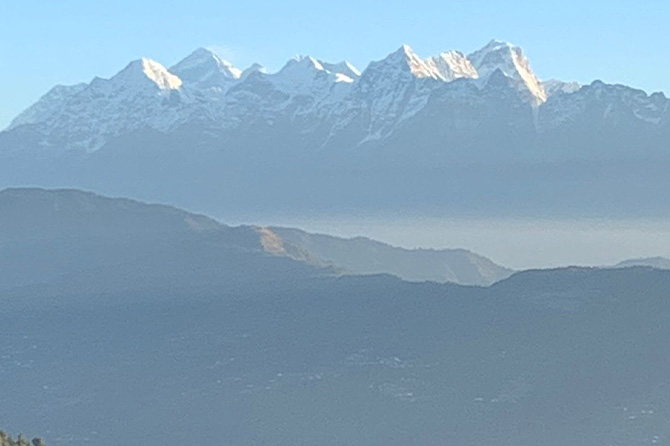
Pikey Peak sits in the lower Solukhumbu region at 4,065 metres, and it's known for one specific thing: Sir Edmund Hillary is widely quoted as having named the view from its summit as his favourite of Everest anywhere in the region. It's a wide, uninterrupted sweep of the high Himalaya rather than the more famous but partly obstructed view from Kala Patthar near Everest Base Camp, where Nuptse blocks part of Everest itself.
This is a genuinely different kind of Everest-region trek to Base Camp: shorter, lower, road-accessible at both ends, and built around Sherpa, Tamang, Chhetri, Gurung and Rai village life as much as the mountain views themselves.
Duration: 7 days on this itinerary (Kathmandu to Kathmandu), extendable to 8 to 9 days depending on route and pace
Trip style: Teahouse and lodge trekking, with a night in Kathmandu at either end
Starting point: Phaplu, reached by road from Kathmandu
Ending point: Dhap, with a road return to Kathmandu
Pikey Peak summit altitude: 4,065 m
Overnight altitude before the summit push: Pikey Base Camp, roughly 3,640 to 3,810 m depending on the exact camp used
Trekking hours: Varies by day, roughly 4 to 8 hours, with the longest days on the walk to Lamjura and the base camp approach
Difficulty: Moderate. No days are spent above 4,100 m, and there's no glacier travel or technical terrain, but some days involve sustained climbs and a long summit-and-descend day
Accommodation: Lodge and teahouse during the trek, hotel in Kathmandu
Group size: Up to 12 people on this package
Price: From US$627 per person (discounted from US$768), see the Cost section for what's included
If you want to see Everest and its neighbouring 8,000 m peaks without the cost, altitude, or Lukla flight risk of Everest Base Camp, Pikey Peak is the most direct alternative in the region. Three differences matter most:
Altitude. Everest Base Camp itineraries spend multiple nights above 4,000 m and reach 5,364 m at base camp itself, plus 5,545 m at Kala Patthar. Pikey Peak tops out at 4,065 m, with only one night close to that altitude, which meaningfully lowers the risk of altitude sickness.
Access. Everest Base Camp depends on the Lukla flight, which is genuinely prone to weather delays and cancellations. Pikey Peak is reached entirely by road at both ends, removing that specific risk from your trip.
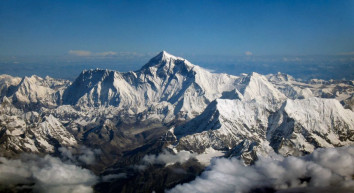
The view itself. From Kala Patthar, Nuptse sits in front of part of Everest. From Pikey Peak's summit, you get a wider, more open panorama that, on a clear day, takes in Everest, Makalu, Kanchenjunga, Lhotse and several other major peaks in one sweep, which is the basis for the Hillary story attached to this viewpoint.
What you trade for this is scale and prestige, Pikey Peak doesn't take you to the foot of Everest itself, and if reaching Base Camp specifically matters to you, this isn't a substitute for that. But as a shorter, lower-risk, still genuinely high-altitude Himalayan trek with a serious payoff view, it's a strong option in its own right.
This suits travellers with limited time, moderate fitness, or a preference for lower-altitude trekking who still want real Everest-region mountain views and Sherpa cultural exposure. It's a reasonable choice for capable first-time trekkers, since the altitude profile is far gentler than Everest Base Camp or Gokyo Valley. If you specifically want to reach Everest Base Camp itself, look at our Everest Base Camp Trek or the Everest Panorama Trek for a middle-ground option.
This itinerary drives in to Phaplu and drives out from Dhap, a loop through Junbesi, Lamjura La, and the Pikey Base Camp area. This routing does not pass through Shivalaya or Jiri, which matters for permits, see the Permits section below.
The 7-day Pikey Peak Trek is priced from US$627 per person (regular package, discounted from US$768). Price depends on group size and season, contact us for a specific quote if you're booking privately or outside a fixed departure.
Group size, larger groups typically reduce the per-person cost
Trip length, extending toward the 8 or 9 day version some operators offer adds cost
Whether you join a fixed departure or book a private, custom-dated trip
Permit requirements for Pikey Peak genuinely depend on which route you take, which is worth understanding rather than treating as a fixed list:
If your route enters via Shivalaya or Jiri, you'll need the Gaurishankar Conservation Area Permit (GCAP).
If your route runs Dhap to Phaplu (or the reverse), as this itinerary does, several sources indicate GCAP isn't required, since the route doesn't pass through the conservation area boundary. A Local Area (Trekking) Permit typically applies instead.
The status of the TIMS card for this specific trek is inconsistently reported, some sources say it's no longer required for Pikey Peak specifically since Solukhumbu began issuing its own local permits, others still list it. Given the disagreement, confirm the current requirement with us directly at the time of booking rather than relying on any single source.
All permit costs and arrangements are included in our package price regardless of which apply to your specific route.
This is a moderate trek. Daily walking time varies by day, roughly 4 to 8 hours, with the longest and most demanding days being the approach to Lamjura and the push to Pikey Base Camp, and the summit-and-descend day to Jhapre. There's no glacier travel, technical climbing, or exposed scrambling involved. The main physical demand is sustained uphill walking on some days rather than any single hard obstacle.
The trek's highest point is Pikey Peak's summit at 4,065 m, reached on a single push-and-return day from Pikey Base Camp. You'll sleep at increasing altitude on the approach, Junbesi (2,830 m), Lamjura (3,640 m), and Pikey Base Camp (3,810 m), before the final push, which is a reasonably gradual profile that helps with acclimatisation even though the trek doesn't include a dedicated rest day the way longer, higher treks do. Altitude sickness risk is genuinely lower here than on Everest Base Camp or Gokyo Valley, but it isn't zero at these elevations, watch for headache, nausea or unusual fatigue and tell your guide if symptoms appear.
Autumn (September to November) and spring (March to May) are the two reliable windows, with clear skies and the best mountain visibility. Autumn also coincides with Nepal's major festival season. Spring brings rhododendron blooms lower on the trail.
Monsoon (June to August) brings heavy rain, landslide risk, and poor visibility, not recommended. Winter (December to February) is cold, and some higher teahouses may close or run limited services, check current availability with us if you're set on a winter date.
You'll stay in a hotel in Kathmandu before and after the trek, and in teahouses or lodges (with some homestay options in villages like Junbesi) during the trek itself. Facilities are simple and vary by village, expect basic but comfortable rooms and shared bathrooms in most places.
Teahouses serve dal bhat alongside noodles, pasta and other simple options. Drinking water is available to buy along the route, or you can treat local water with purification tablets.
Layering matters here as much as on any Everest-region trek, given the range between the lower villages and the 4,065 m summit. Core items include broken-in trekking boots, a warm sleeping bag, a down jacket, waterproof and windproof layers, trekking poles, and sun protection. Most gear can be bought or rented in Kathmandu's Thamel district if you'd rather travel light.
Altitude sickness risk is lower here than on higher Everest-region treks, but not absent, especially on the final approach to and summit of Pikey Peak. Your guide carries a first aid kit and will monitor the group. Gradual pacing, hydration, and reporting symptoms early are the main precautions that matter at this altitude.
Travel insurance covering trekking activity and emergency evacuation is recommended for this trek. Given the maximum altitude is 4,065 m, most standard high-altitude policies will cover it, but check your policy's specific altitude cap to be sure. See our travel insurance page for more detail.
Assuming this substitutes for reaching Everest Base Camp itself. It's a strong trek in its own right, but it doesn't take you to Base Camp, if that specific destination matters to you, choose accordingly.
Not checking which permits your specific route requires. GCAP applies to the Shivalaya/Jiri approach, not necessarily to the Dhap/Phaplu routing used on this itinerary, confirm with your operator rather than assuming a fixed permit list.
Underestimating the summit day. It's the longest and most demanding day on the itinerary, pace yourself on the approach days beforehand.
1. How much does the Pikey Peak Trek cost?
This 7-day package is priced from US$627 per person, discounted from US$768. Private and custom-dated trips are quoted separately.
2. How long is the Pikey Peak Trek?
This itinerary runs 7 days, Kathmandu to Kathmandu. Some operators offer 8 to 9 day versions with a different route or added rest.
3. What is the maximum altitude on the Pikey Peak Trek?
4,065 metres, at the summit of Pikey Peak itself.
4. Is the Pikey Peak Trek harder than Everest Base Camp?
No, it's generally considered easier. The maximum altitude is significantly lower, there's no Lukla flight dependency, and daily walking is comparable or shorter on most days.
5. What permits do I need?
It depends on your route. The Shivalaya/Jiri approach requires the Gaurishankar Conservation Area Permit. The Dhap/Phaplu routing used on this itinerary typically requires a Local Area Permit instead. We confirm and arrange the correct permits for your specific route as part of the package.
6. Is the Pikey Peak Trek suitable for beginners?
Yes, more so than most Everest-region treks, given the lower altitude and absence of technical terrain. Reasonable general fitness is still needed for the longer walking days.
7. When is the best time to trek to Pikey Peak?
Autumn (September to November) and spring (March to May) offer the clearest views and most reliable weather.
8. Is altitude sickness a concern on this trek?
The risk is lower than on higher Everest-region treks, since the trek only briefly reaches above 4,000 m, but it isn't zero. Watch for symptoms on the summit day and tell your guide if they appear.
9. Do I need a guide for the Pikey Peak Trek?
While independent trekking is technically possible on parts of this route, a guide is strongly recommended for navigation, permit handling, and safety, and is included in our package.
10. What can I see from Pikey Peak summit?
On a clear day: Everest, Lhotse, Makalu, Kanchenjunga, Numbur, Thamserku and several other Himalayan peaks, widely regarded as one of the more complete panoramic views in the region.
If a shorter, lower-altitude Everest-region trek with a genuinely exceptional summit view fits what you're looking for, the next step is checking dates. You can view current departures for the Pikey Peak Trek directly, or get in touch for a private departure or a customised itinerary.
You'll start a long 8-hour drive covering about 250 kilometers to reach Phaplu, where you will have the opportunity to explore the local market and visit local monasteries such as Chewang monastery. Afterward, you will spend the night at a local residence.
Today, the walk towards Phaplu can be undertaken, requiring approximately five hours to complete. The path follows a small, calm stream, and you can enjoy delicious local food along the way. Subsequently, accommodation for the evening can be sought at a home-stay or lodge, providing a warm and hospitable environment for relaxation.
Begin the trek early in the morning, crossing Junbesi Khola and ascending uphill. From the summit, one can observe the breathtaking panorama of Everest, Thamserku, Kantega, and Mera Peak. Upon passing Ringmo Khola, the path ascends to Ringmo Village. Continuing from Ringmo, you will ascend Lamjura La Pass (3500m), an excellent representation of Sherpa architectural design.
Furthermore, you trek uphill for one hour to reach Lamjura top, offering optimal views of Everest and neighboring peaks in the region. Accommodation for the night will be provided at the teahouse.
Today, you can observe high altitude vegetation, including Himalayan flora and fauna. Additionally, centuries-old monasteries, Buddhist stupas, and mani stones are also visible. The herding of yaks can be witnessed in various locations, while one can enjoy the unique landscapes and scenery that accompany this journey. Moreover, this specific region offers the potential for marathon and mountain bike races. Accommodations for the night can be found in home-stays or lodges.
In the early morning, we ascend Pikey Peak to appreciate the panoramic mountain views one final time and capture the stunning scenery through photography. Subsequently, we commence our descent on a return trek from the base camp of Pikey Peak.
Moving through the tough land, we navigate through rhododendron forests and the quaint village of Lhamuje. Eventually, we reach the uneven paths leading to Jhapre. This part of the path might be tough, especially for beginners. Ultimately, after several hours of trekking, we reach Jhapre, where we will spend the night at a lodge.
Today marks the conclusion of our trek. After breakfast, we commence our journey from Jhapre to Dhap. The trail is uneven and rough, guiding us through various viewpoints that offer breathtaking views of the mountains. We pause at these points to appreciate the beauty and capture some photographs. Upon reaching Sigane, the path becomes dusty until finally arriving at Dhap. Our accommodations for the night will be at a lodge in Dhap.
After breakfast, take jeep ride back to Kathmandu. In the evening, join Himalaya Heart trek and Expedition for a dinner to celebrate the successful completion of the trek.
Trip duration: 7 Days
Choose any available date on the calendar to start your trip.
Pick a departure — your 7-day trip will be highlighted on the calendar.
This creates a private or flexible-date booking and does not join a fixed departure.
The Pikey Peak Trek is a new trekking route in lower Solukhumbu region which is accissible by road annd best for its stunning panoramic views of the Himalayas, including Everest.
The Pikey Peak Trek typically takes around 7-9 days, depending on the itinerary and pace of the trekker. You will walk for 6 to 7 hours.
The best time to trek to Pikey Peak is during the spring (March to May) and autumn (September to November) seasons, when the weather is clear and the views are spectacular.
The Pikey Peak Trek is considered a moderate trek, suitable for trekkers with a reasonable level of fitness. Some previous trekking experience is beneficial but not mandatory.
Teahouses on the trek offer a variety of meals, including traditional Nepali dishes like dal bhat (lentil soup with rice), as well as international options like pasta, noodles, and pancakes.
Yes, you need a TIMS (Trekkers' Information Management System) card and a Gaurishankar Conservation Area Permit for the Pikey Peak Trek.
While it is possible to do the trek independently, hiring a guide can enhance your experience by providing local knowledge, ensuring safety, and assisting with logistics.
Essential items include trekking boots, warm clothing, a sleeping bag, a first aid kit, trekking poles, and personal items like toiletries and a camera. A detailed packing list can be provided by your trekking agency.
Accommodation on the Pikey Peak Trek is mainly in teahouses or lodges, which offer basic facilities including meals, beds, and bathrooms.
The trek usually starts from Dhap or Jiri. You can take a bus or jeep from Kathmandu to reach these starting points. From there, you will follow the trekking route to Pikey Peak.
Pikey Peak is located in the lower Everest (Solukhumbu) region of Nepal at an altitude of 4,065 meters.
Himalaya Heart Treks offers experienced guides, flexible itineraries, and authentic local experiences on the Pikey Peak Trek.
From Pikey Peak viewpoint, trekkers can see Everest, Kanchenjunga, Makalu, Lhotse, Manaslu, Annapurna, and Dhaulagiri.
The Pikey Peak Trek typically takes 6 to 8 days depending on the itinerary arranged by Himalaya Heart Treks.
The best seasons for the Pikey Peak Trek are spring (March–May) and autumn (September–November).
Yes, the Pikey Peak Trek is suitable for beginners and first-time trekkers with a moderate fitness level.
The maximum altitude of the Pikey Peak Trek is 4,065 meters at Pikey Peak summit.
Yes, trekkers need a TIMS card and a local area permit for the Pikey Peak Trek.
Altitude sickness risk is low but possible; Himalaya Heart Treks ensures proper acclimatization during the Pikey Peak Trek.
The Pikey Peak Trek is rated as easy to moderate, making it ideal for all age groups.
Teahouse accommodation is available throughout the Pikey Peak Trek, arranged by Himalaya Heart Treks.
Trekkers can enjoy Nepali, Tibetan, and basic Western meals during the Pikey Peak Trek.
Yes, the Pikey Peak Trek is a quiet and less crowded alternative to the Everest Base Camp Trek.
Yes, the Pikey Peak Trek is excellent for landscape, mountain, and cultural photography.
Yes, the Pikey Peak Trek is family-friendly for children above 10 years.
Daily walking time ranges from 4 to 6 hours on the Pikey Peak Trek.
You may spot Himalayan birds, yaks, and local livestock during the Pikey Peak Trek
Yes, travel insurance covering trekking activities is recommended for the Pikey Peak Trek.
Limited Wi-Fi and mobile networks are available in some villages along the Pikey Peak Trek.
Yes, Himalaya Heart Treks offers fully customizable Pikey Peak Trek itineraries.
Yes, winter trekking is possible, but colder conditions should be expected.
Hiring a licensed guide from Himalaya Heart Treks is highly recommended for safety and cultural insight.
Temperatures can drop below freezing at night, especially at higher elevations.
The Pikey Peak Trek offers Everest views, cultural richness, and easy access within a short duration.
Check the list of items necessary for trekking in Nepal.


See what travelers say about our service

Enjoy the popular trekking and tour packages in Nepal Himalayas. 2026.
Nepal , Everest Region Trekking
Everest Base Camp TrekNepal , Everest Region Trekking
Everest Panorama Trek 2026/2027Nepal , Everest Region Trekking
Gokyo Valley TrekNepal , Everest Region Trekking
Luxury Everest Base Camp Trek with Helicopter ReturnNepal , Everest Region Trekking
EBC Gokyo Lake via Cho La Pass Trek 2026/2027Nepal , Everest Region Trekking
Budget Everest Base Camp Trek 2026/2027



Copyright ® Himalaya Heart Treks & Expedition Pvt Ltd


Lukas Schneider
Germany
1st January, 2026
It was Amazing
I completed the Pikey Peak Trek with Himalaya Heart Treks and Expedition and it was one of the best trekking experiences I’ve had in Nepal. The views from Pikey Peak were absolutely breathtaking, with clear panoramas of Everest and many other Himalayan giants. Our guide was professional, friendly, and very knowledgeable about local culture and nature. The trek was peaceful and far less crowded than other Everest routes, which I really appreciated. Everything was well organized, from transport to accommodation. I highly recommend Himalaya Heart Treks for anyone looking for an authentic Himalayan experience.
Sophie Martin
France
1st January, 2026
One of the best trekking
The Pikey Peak Trek with Himalaya Heart Treks and Expedition exceeded all my expectations. I loved walking through traditional Sherpa villages, visiting monasteries, and enjoying stunning mountain views every day. The sunrise from Pikey Peak was unforgettable. The team took great care of us, always making sure we were comfortable and safe. The food and teahouses were much better than I expected. This trek is perfect for those who want amazing views without extreme difficulty. I would definitely trek again with Himalaya Heart Treks.
Marco Rossi
Italy
1st January, 2026
Best peak peak trekking
I chose the Pikey Peak Trek with Himalaya Heart Treks and Expedition because I wanted a short and less touristy trek, and it was the perfect choice. The trail was quiet, scenic, and full of cultural encounters. Our guide explained everything clearly and shared many stories about the Sherpa lifestyle. Standing on Pikey Peak and seeing Everest, Makalu, and Annapurna in one panorama was incredible. The company was well organized and very professional. I highly recommend this trek to anyone visiting Nepal for the first time.
Emma Williams
United Kingdom
1st January, 2026
Best trek
Hiking the Pikey Peak Trek with Himalaya Heart Treks and Expedition was an unforgettable experience. The trek was well paced, making it ideal even for someone without much high-altitude trekking experience. The views were stunning throughout, and the sunrise from the summit was simply magical. Our guide Hari was kind, patient, and always smiling. I felt very well supported from start to finish. This trek is a hidden gem, and Himalaya Heart Treks did a fantastic job organizing everything.
Javier González
Spain
1st January, 2026
I will be back for this trekking again
The Pikey Peak Trek with Himalaya Heart Treks and Expedition was the highlight of my trip to Nepal. I was amazed by how quiet and beautiful the trail was compared to the busy Everest Base Camp route. The team was professional and very friendly, and they made us feel like family. The mountain views from Pikey Peak were some of the best I have ever seen. This trek offers culture, nature, and adventure all in one. I would highly recommend Himalaya Heart Treks to anyone planning a trek in Nepal.