Last updated: November 17, 2026
Quick facts
Everest Base Camp Trek with Helicopter Return: duration is 13 Days, price starts from us$4,665 per person, difficulty is challenging.
The Everest Base Camp Trek with Helicopter Return is a 13-day adventure in Khumbu region, Nepal, combining a classic Himalayan trekking experience with a scenic helicopter flight back to Kathmandu. This journey takes you to the foot of Mount Everest (8,848.86 m), offering spectacular views of Everest, Lhotse, Nuptse, Ama Dablam and other Himalayan peaks. The trek begins with a flight to Lukla and ends at Gorak Shep, then by helicopter to Kathmandu.
The major highlights include reaching Everest Base Camp (5,364 m) and hiking to Kala Patthar (5,545 m) for breathtaking views of Mount Everest and the surrounding Himalayan range. This challenging trek is best suited for travellers who enjoy adventurous trekking. Spring (March - May) and autumn (September - November) are the best times for trekking. During this time, the weather conditions are generally favorable.
With comfortable accommodation, experienced trekking guides, acclimatization stops, and a helicopter return, Himalayan Heart offers an exciting way to experience the Everest region in a shorter timeframe.
Everest Base Camp Trek with Helicopter Return: duration is 13 Days, price starts from US$ 4,665 per person, difficulty is challenging.
| Trip Facts | Details |
|---|---|
| Duration | 13 Days |
| Trek Difficulty | Challenging |
| Package Price | From xyz per person |
| Maximum Altitude | 5,545 m (Kala Patthar) |
| Group Size | 1 or more trekkers |
| Starting Point | Kathmandu, Nepal |
| Ending Point | Kathmandu, Nepal |
| Destination | Nepal |
| Activities | Trekking, helicopter flight, cultural sightseeing |
Luxury Everest Base Camp Trek with Helicopter Transfer is an amazing 13-day trek through the Khumbu region of northern Nepal. This trek will take you through the Sagarmatha National Park, traditional Sherpa villages and lush forested areas, with the goal of reaching the Everest Base Camp (5364m) at the foot of Mount Everest (8848.86m), the world's highest mountain.
This trek follows the popular Everest Base Camp itinerary. You will stay overnight in mountain lodges along the way. There are also some upgraded accommodation options included for certain nights. This trip also includes an overnight stay in a 5-star hotel in Kathmandu. The trip is shortened by around 3 days, as you will fly back from Kala Patthar to Kathmandu after seeing Everest Base Camp and Kala Patthar.
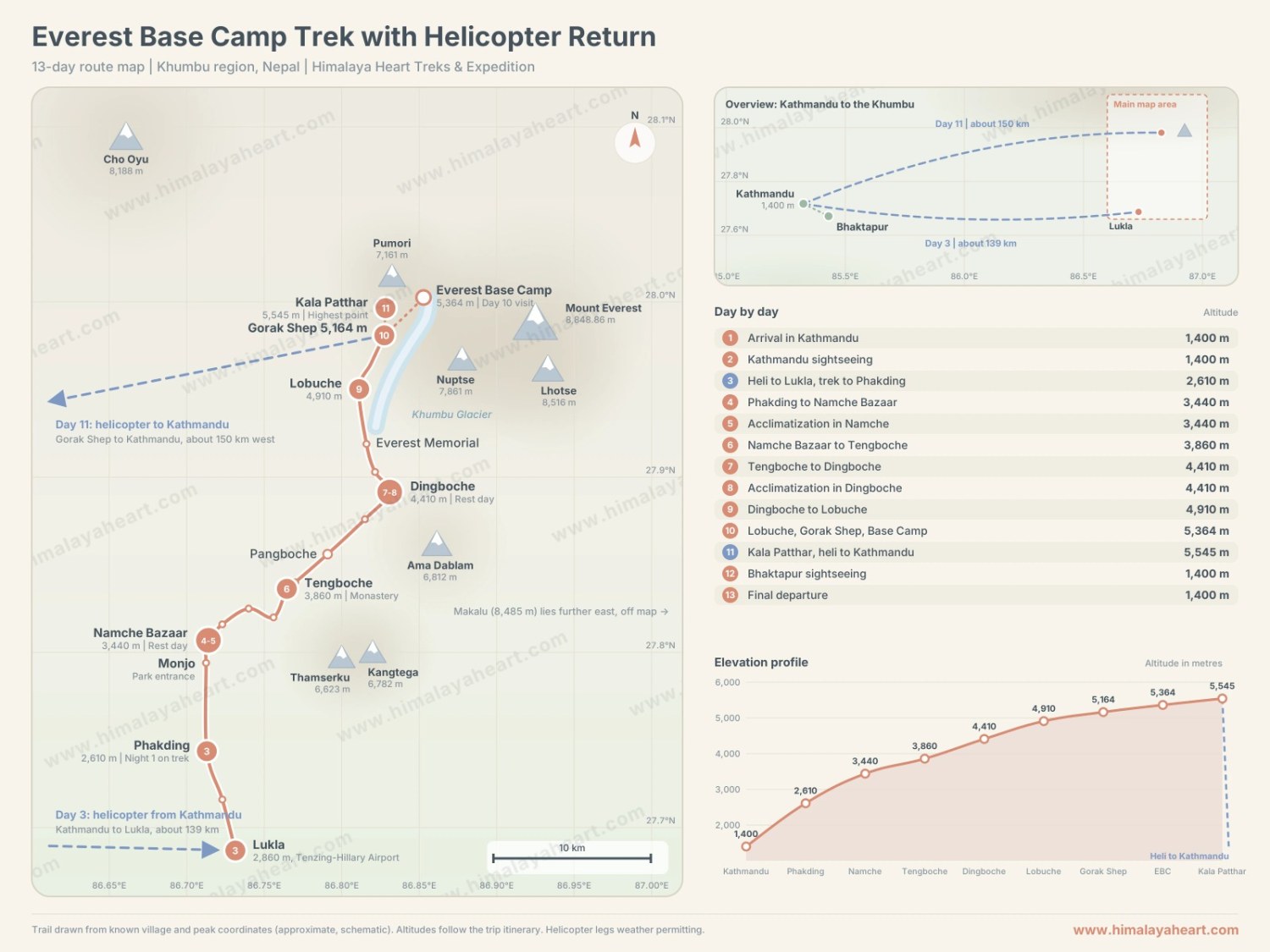
You will begin the trip in Kathmandu and spend some time sightseeing. From here, you will fly to Lukla (2860m). Throughout the trek, you will pass through Phakding, Namche Bazaar, Tengboche, Dingboche, and Lobuche. You will have 2 acclimatization days in Namche Bazaar and Dingboche. Once you have visited Everest Base Camp and Kala Patthar, you will be transferred back to Kathmandu via helicopter. After this, you will visit Bhaktapur for some cultural sightseeing.
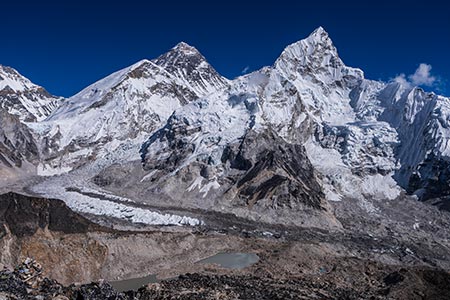
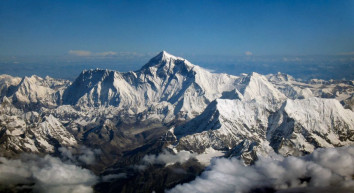
Also, one of the main highlights of the trek is arriving at Everest Base Camp (5364m). Whilst here, you will be able to view the Khumbu Glacier, Khumbu Icefall and surrounding Himalayan Mountains. As part of the trek, you will also get an early morning hike up to Kala Patthar (5545m), which is the highest point of the trek. From here, you can enjoy the spectacular views over Mount Everest 8,849 meters; 29,032 feet), Nuptse 7,861 meters; 25,791 feet), Lhotse 8,516 meters; 27,940 feet), Pumori 7,161 meters; 23,494 feet) and other snowy mountains if the weather is clear enough.
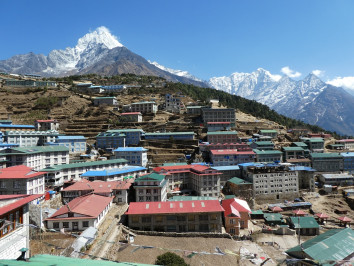
Besides that, you will get to experience the culture, tradition, customs, and hospitality of the local Sherpa people. In Namche Bazaar, you can visit local markets, mountain lodges, and learn about the history of Himalayan Mountaineering. Throughout the trek, you will walk past Tibetan Prayer Flags, Mani Walls, Prayer Wheels and traditional villages, which showcase the influence of Tibetan Buddhism in the Himalayas of Nepal. You will also visit the Tengboche Monastery to really get a feel for the spirituality within the Everest region.
The best time to do this luxury trek would be in Spring (March-May) or Autumn (Sept-November). These months will give you stunning views of the mountains and great trekking weather. Although it is a high-altitude trek with some rough terrain, it is a much more comfortable way to see the Everest region. You will stay in luxury mountain lodges and some upgraded accommodation. You will also be able to stay in a 5-star hotel in Kathmandu. A helicopter transfer back from Kala Patthar gives you a unique element to your trip; you will have some amazing views from above the mountains and won’t have to trek down for a few days. Book your Luxury Everest Base Camp Trek with Helicopter Transfer with us at Himalaya Heart Treks & Expedition for a luxurious Himalayan adventure!
The main benefit of taking an Everest Base Camp Trek with Helicopter Return is that you don’t have to spend extra days walking back to Lukla. Once you have reached Everest Base Camp and done the trek up to Kala Patthar, you can take a helicopter ride back to Kathmandu, saving you around 3 days. You will still get to enjoy the highlights of the Everest region but for a shorter amount of days.
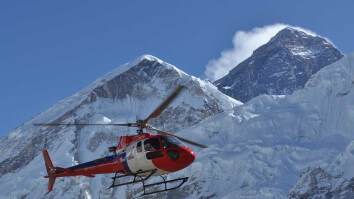
A helicopter ride back from Kala Patthar will give you a whole new view of the Himalayas! Rather than walking back through the villages and valleys, you will get some incredible aerial views of the snowy mountains, glaciers and the amazing landscape of the Khumbu region. The helicopter ride itself will be a highlight of your trip.
Aside from saving you time, it will also add a touch of luxury to your trip. After trekking for a few days, you can skip the long descent back down and get back to the comforts of Kathmandu sooner. If you want to experience the challenge of walking to Everest Base Camp but also want to enjoy a luxury way of completing your Himalayan trip, then this is the perfect option for you!
The Luxury Everest Base Camp Trek with Helicopter Return package offers you not only the chance to trek to the foot of Mt. Everest but also luxurious accommodation, personal service, and the luxury of flying back to Kathmandu via helicopter. This trek provides comfortable mountain accommodations, including personal acclimatization days so that you can have an easier and enjoyable Everest trekking trip.
A luxurious journey for those who want to experience everything Everest has to offer. Trek up to Everest Base Camp (5,364m), hike to Kala Patthar (5,545m) and fly back to Kathmandu in style! You will trek along one of the most popular trekking routes, visiting Namche Bazaar, Tengboche, Dingboche and Gorak Shep. Your journey will be an excellent cultural experience where you will learn more about Sherpa culture, Buddhist culture and take in some amazing views of the Himalayas. This adventure includes comfortable mountain lodges, 5-star accommodation in Kathmandu, expert guides and scheduled acclimatization days in Namche Bazaar and Dingboche. There is a lot of great culture to see in Kathmandu and Bhaktapur. This is a perfect journey if you want to experience a luxurious Himalayan adventure in a short period of time.
The Luxury Everest Base Camp Trek with Helicopter Transfer is perfect for you if you are looking for an elegant way to discover the beauty and adventure of Everest. This tour combines traditional trekking with luxurious accommodations, advanced services and a beautiful helicopter flight back to Kathmandu from Kala Patthar. While still requiring good levels of fitness, this tour will provide a more comfortable and convenient option than the traditional Everest Base Camp Trek.
This tour is perfect for:
Overall, this luxurious trek is perfect for people looking for a balance between adventure and comfort. It provides trekkers with a more comfortable and efficient way to experience the best of Everest Base Camp with bespoke services and helicopter transfer from Kala Patthar.
| Day | Itinerary | Altitude in Meters | Altitude in Feet |
|---|---|---|---|
| 1 | Arrival in Kathmandu | 1,400 m | 4,593 ft |
| 2 | Kathmandu sightseeing and trek preparation | 1,400 m | 4,593 ft |
| 3 | Fly to Lukla and trek to Phakding | 2,610 m | 8,563 ft |
| 4 | Trek from Phakding to Namche Bazaar | 3,440 m | 11,286 ft |
| 5 | Acclimatization day in Namche Bazaar | 3,440 m | 11,286 ft |
| 6 | Trek from Namche Bazaar to Tengboche | 3,860 m | 12,664 ft |
| 7 | Trek from Tengboche to Dingboche | 4,410 m | 14,469 ft |
| 8 | Acclimatization day in Dingboche | 4,410 m | 14,469 ft |
| 9 | Trek from Dingboche to Lobuche | 4,910 m | 16,109 ft |
| 10 | Trek to Gorak Shep and visit Everest Base Camp | 5,364 m | 17,598 ft |
| 11 | Hike to Kala Patthar and helicopter return to Kathmandu | 5,545 m | 18,192 ft |
| 12 | Bhaktapur sightseeing tour | 1,400 m | 4,593 ft |
| 13 | Final departure from Kathmandu | 1,400 m | 4,593 ft |
The Everest Base Camp Trek with Helicopter Return cost depends on the accommodation standard, group size, trekking services and helicopter arrangements. Himalayan Heart offers this 13-day journey as a luxury trekking package, with a published price of USD 4,665 per person. The package combines the classic Everest Base Camp trekking experience with upgraded mountain accommodation, five-star hotel stays in Kathmandu and a helicopter flight back from Gorak Shep to Kathmandu.
Despite being more expensive than the regular Everest Base Camp Trek, this trip ensures more comfort and saves a few days during the return journey via the flight. Helicopters are the major contributor to the total cost of the trip since it is quite expensive to fly at such high altitude levels.
Several factors influence the total Everest Base Camp Trek package price. Understanding these costs helps travelers choose a package that matches their budget and comfort requirements.
Price to be added in a table.
Experience an amazing mix of mountain trekking, Sherpa culture and comfortable lodging on this Luxury Everest Base Camp Trek with Helicopter Return. You will start your trek in the lower Khumbu Valley surrounded by pine and rhododendron forests, crossing over suspension bridges to get across the Dudh Koshi River and visit local villages. The scenery will change once you increase your altitude to open alpine valleys, rocky paths and glacial areas. Throughout the trek, you will have some amazing views of Mount Everest, Ama Dablam, Lhotse, Nuptse and other Himalayan mountains.
Most days of trekking will be between 5 and 7 hours. Days visiting Everest Base Camp and Kala Patthar will be longer. Lodging will be more basic at higher altitudes, but extra comfort will be provided where possible. We will also include acclimatization days in Namche Bazaar and Dingboche. You will fly back to Kathmandu from Kala Patthar after reaching Everest Base Camp (5,364m) and Kala Patthar (5,545m). Whilst flying, you will have some amazing views of the Khumbu Glacier, mountain valleys and surrounding mountains. (Weather permitting).
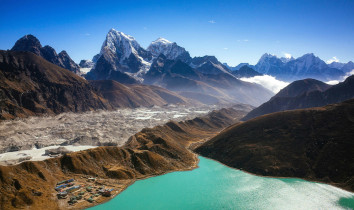
On your Luxury Everest Base Camp Trek with Helicopter Return, you will get great views of some of the highest mountains in the world such as Mount Everest (8,848.86m), Lhotse (8,516m) and Makalu (8,485m). While trekking around Namche Bazaar, Tengboche, Dingboche and Lobuche, you will see lots of breathtaking snowy peaks towering over the Khumbu Valley. Throughout your trek, you will see stunning views of the mountains.
A great place to take in the view of the mountains is Kala Patthar (5,545m). From here, you can take in the stunning panoramic views of Mount Everest, Nuptse, Lhotse and Pumori. Ama Dablam will stand out as it has a unique pyramid shape. Thamserku and Kangtega also provide great views as they are prominent features in the lower part of the Khumbu Valley. During the helicopter transfer back from Kala Patthar, you can also take in the view from above if the conditions are good.
| Mountain | Elevation | Best Viewing Locations |
|---|---|---|
| Mount Everest | 8,848.86 m | Namche Bazaar, Tengboche, Kala Patthar |
| Lhotse | 8,516 m | Tengboche, Dingboche, Kala Patthar |
| Makalu | 8,485 m | Nangkartshang Hill |
| Cho Oyu | 8,188 m | Selected high viewpoints, depending on visibility |
| Nuptse | 7,861 m | Lobuche, Gorak Shep, Kala Patthar |
| Pumori | 7,161 m | Gorak Shep, Kala Patthar |
| Ama Dablam | 6,812 m | Namche Bazaar, Tengboche, Dingboche |
| Thamserku | 6,623 m | Namche Bazaar, Tengboche |
| Kangtega | 6,782 m | Namche Bazaar, Tengboche |
Discover the majesty of the Himalayas on this 13-day Everest Base Camp Trek with Helicopter Return. See traditional Sherpa villages, trek to Everest Base Camp (5364m) and get panoramic views of the mountains from Kala Patthar (5545m). Experienced trekking guides will guide you along the route with comfortable accommodation and scheduled acclimatization days. You'll also be able to take advantage of luxury as you helicopter back to Gorak Shep.
Book our Everest Base Camp Trek with Helicopter Return to experience the wonder of the Khumbu region without having to trek back to Lukla. Whether you're looking for an adventure alone, with friends or in a private group, we can tailor your trip to fit your desired dates and make your trek bespoke to your needs. Get in touch with us to see if there's any availability and what's included in the package.
The 13-day Luxury Everest Base Camp Trek with Helicopter Return combines cultural sightseeing in Kathmandu with trekking through the Khumbu region. You will follow the classic Everest Base Camp route, with acclimatization days in Namche Bazaar and Dingboche. After reaching Everest Base Camp (5,364 m) and Kala Patthar (5,545 m), you will return to Kathmandu by helicopter from Kala Patthar.
Altitude: 1,350 m
Accommodation: 5-star hotel in Kathmandu
Meals: Breakfast
After you arrive at the gates of Tribhuvan International Airport in Kathmandu, our representative from Himalaya Heart Treks & Expedition will welcome you and transfer you to your 5-star hotel by private vehicle. The drive usually takes around 20 to 40 minutes, depending on traffic conditions. After you check in, you can rest, relax and recover from your international journey.
The rest of the day is free for personal activities. You can explore Thamel, visit nearby restaurants and shops, or spend time at your hotel. Kathmandu offers a combination of historical architecture, local markets, and modern facilities. Your first night will be spent in Kathmandu before beginning the sightseeing tour the following day.
Altitude: 1,350 m
Accommodation: 5-star hotel in Kathmandu
Meals: Breakfast
You will be picked up by your tour guide, who will show you around the main sights of Kathmandu. The first stop will be Kathmandu Durbar Square, which is famous for the many historical buildings, palaces and courtyards. Then we go on to visit the Pashupatinath Temple, a sacred place of worship for Hindus.
You will continue your sightseeing tour by visiting Swayambhunath Stupa (Monkey Temple) and Boudhanath Stupa, one of the most important places of worship for Buddhists in Nepal. This gives you an insight into the culture of both the Hindu and Buddhist religions in Nepal. Once your sightseeing tour has finished, you will return to your hotel to prepare for your trip to the Everest region.
Overnight Altitude: 2,610 m
Accommodation: Mountain lodge
Meals: Breakfast, lunch, and dinner
Your trip starts with a helicopter ride in the early hours from Kathmandu to Lukla (2,860m). It takes about 45 minutes, and you get to see green hills, deep valleys, and the majestic Himalayan mountains. At the Tenzing-Hillary Airport, you will be introduced to the trekking support team members and get ready for your walk on Day 1.
The trail goes down through Chaurikharka and other small Sherpa settlements before following the Dudh Koshi River towards Phakding. Along the way, you will cross suspension bridges, pass Buddhist prayer wheels, and enjoy the mountain scenery. After walking for about 3 to 4 hours, you will reach Phakding (2,610 m), where you will spend the night in a mountain lodge.
Overnight Altitude: 3,440 m
Accommodation: Mountain lodge
Meals: Breakfast, lunch, and dinner
After you have your delicious breakfast, you will follow the Dudh Koshi River through pine forests and traditional villages towards Monjo. The route has tons of suspension bridges with Buddhist prayer flags. At Monjo, you enter Sagarmatha National Park, a UNESCO World Heritage Site. From here, the trail continues towards Jorsalle, passing through forested landscapes and river valleys.
After crossing the Hillary Suspension Bridge, you will begin a steep uphill climb towards Namche Bazaar. This section requires more physical effort, but you may catch your first views of Mount Everest and other Himalayan peaks on a clear day. After 5 to 7 hours of trekking, you will reach Namche Bazaar (3,440 m), the main commercial centre of the Khumbu region.
Maximum height: approx. 3,880m
Accommodation: Mountain Lodge
Meals: Breakfast, Lunch and Dinner
You will have your first acclimatization day today. After breakfast, you will go on a short walk up towards Khumjung village and the Everest View Hotel (approx. 3,880m). Along the way, you will get some fantastic views of Mount Everest, Lhotse, Nuptse, Ama Dablam and Thamserku if the weather is clear.
Once you have had a look around the viewpoints, you will head back down to Namche Bazaar, where you can spend some time exploring the local shops, cafes, trekking stores and culture. This extra night in Namche Bazaar will help your body slowly adjust to the high altitude before heading on to Tengboche.
Overnight Stay: 3,860m
Accommodation: Mountain Lodge
Meals: Breakfast, Lunch and Dinner
After breakfast, you will depart from Namche Bazaar to start your trek. You will be walking along an amazing trail that takes you above the Dudh Koshi Valley. Along the trail, you will have some awesome views over the mountains, and you will pass through some forests and then head down towards Phunki Tenga. Once you have crossed the river, you will start heading steadily up towards Tengboche through Rhododendron, Pine and Fir forests.
After approx. 5-6 hours of walking, you will reach Tengboche (3,860m), which is home to one of the most important monasteries in Buddhism. If it is open to the public, you can have a look around the monastery and learn about the local Buddhist culture. You will also have some fabulous views over Ama Dablam, Everest, Lhotse and Nuptse. You will stay the night in a local mountain lodge.
Altitude: 4,410m
Highlights: Pangboche village, Views of Ama Dablam, Imja Valley
Accommodation: Mountain Lodge
Meals: Breakfast, Lunch, Dinner
Today starts with some beautiful mountain views. This walk takes you through some lovely forest areas back down to Dingboche village. You will cross the Imja Khola River. As you follow the trail through the old Sherpa village of Pangboche, there are lots of lovely scenic views along the way. There are Buddhist chortens, mani walls and traditional houses.
When you arrive at Dingboche, there will be fewer trees and more open scenery. You will walk through small villages and farmland with stone walls. After around 5-6 hours of trekking, you will arrive at Dingboche (4,410m). You will stay the night here to prepare for your second acclimation day.
Altitude: 4,410 m (night)
Accommodation: Mountain lodge
Meals: Breakfast, lunch, dinner
This is a further acclimatization day before heading up over 4,500m. Depending on how you are feeling and conditions, your guide may take you on a short walk up towards Nangkartshang Hill or the ridge above Dingboche. This gives you some amazing views of Ama Dablam, Lhotse, Makalu, Island Peak and the Imja Valley.
Alternatively, your guide may take you on a walk heading up towards Chhukung (4,730 m). This usually takes around 4-5 hours to complete as a round trip depending on the route and speed of walking. Depending on how you are feeling and how well you are acclimating, your guide will choose the best option. You will then head back to Dingboche for lunch or an afternoon break. You will spend another night at this altitude.
Altitude: 4910m
Accommodation: Lodge
Meals: Breakfast, lunch and Dinner
Leave Dingboche after breakfast and head along the trail towards Thukla. You will enjoy views of Cholatse, Taboche, and Ama Dablam whilst walking through lovely open alpine scenery. You will slowly ascend towards Thukla. From here, you will start a more challenging climb to the Everest Memorial. This has several stone monuments and prayer flags to commemorate those who have lost their lives climbing in the Everest region.
Continue along the side of the Khumbu Glacier to Lobuche. The scenery will be quite rocky and less lush as you gain altitude. This will take around 4-6 hours of trekking. When arriving in Lobuche (4910m), you will stay overnight in a lodge. This is a small village surrounded by high mountains.
Altitude: Approx 5164m
Accommodation: Lodge
Meals: Breakfast, lunch and Dinner
This is a very important day on your Everest Base Camp adventure. Leave your lodge after breakfast and head along a rocky trail to Gorak Shep (approx. 5164m). The trail will take you across rough glacial moraine whilst offering beautiful views of the Pumori, Nuptse and surrounding Himalayas. It will take around 2-3 hours to arrive in Gorak Shep. From here, you can have your lunch and store any excess items at your lodge.
Leave your lodge and head towards Everest Base Camp (5364m). The trail will take you across rocky glacial ground. As the altitude is high, you must be cautious whilst walking. From here, you can explore this special area of the Base Camp. You can see the Khumbu Glacier and Khumbu Icefall. You can also take some amazing photos of the surrounding mountains. After exploring for a while, return to Gorak Shep for an overnight stay.
Highest point: 5,545m
Accommodation: 5-star hotel in Kathmandu
Meals: Breakfast
Start your 11th day with a hike to the highest point of the trek at Kala Patthar (5,545m). The trail from Kala Patthar is highly inclined, so depending on your walking speed, it should take between 1.5 and 2.5 hours to reach the top. You will enjoy amazing views of Mount Everest, Nuptse, Lhotse, Pumori and the Khumbu Glacier. If the weather is good, you will also be able to see the sunrise.
After hiking and enjoying the views, head back down to Gorak Shep to pack up your belongings. We will then take you by helicopter back to Kathmandu. We may stop at Lukla to complete operations. As we fly back, you will enjoy views of the Khumbu Valley, glaciers and Himalayan mountains. Once we arrive in Kathmandu, you will be transferred to your 5-star hotel.
Accommodation: 5-star hotel in Kathmandu
Meals: Breakfast
After breakfast at your hotel, we will head towards another of the old cities of Kathmandu Valley. Bhaktapur is famous for its traditional Newari architecture and temples. There are lots of lovely courtyards to discover and a great place to admire local craftsmanship.
This tour is usually half a day, so you will have the afternoon free. You can head back to Kathmandu and relax at your hotel or enjoy the local shops. This will give you a taste of the culture in the area.
Meals: Breakfast
Accommodation: N/A
Today marks the end of your 13-day Luxury Everest Base Camp Trek with Helicopter Return. After breakfast, depending on your international flight time, you can enjoy some free time at your hotel. You have now completed your trek to Everest Base Camp, enjoyed amazing views from Kala Patthar and had an amazing helicopter ride.
We will transfer you from your hotel by our representative from Himalaya Heart Treks & Expedition to Tribhuvan International Airport. You will now leave Nepal, having created awesome memories in the Everest region, visiting traditional Sherpa villages and enjoying the beautiful scenery of the Himalayas and Kathmandu Valley.
Trip duration: 13 Days
Choose any available date on the calendar to start your trip.
Pick a departure — your 13-day trip will be highlighted on the calendar.
This creates a private or flexible-date booking and does not join a fixed departure.
This trek lasts 13 days with plenty of culture, trekking and acclimatization. On day 11, you will arrive at Everest Base Camp and Kala Patthar and then fly back to Kathmandu.
The package costs from USD $4,665 per person. All scheduled helicopter flights, accommodation, trekking meals, guides, porters, permits and sightseeing are included. The final price may vary depending on group size, dates and extra services.
We fly back from Kala Patthar (approx. 5,164m). Depending on weather and helicopter needs, we may stop at Lukla or somewhere else before continuing to Kathmandu.
No, after visiting Everest Base Camp and Kala Patthar, we return to Gorak Shep and then fly back to Kathmandu. This saves a few days of walking compared to the standard trek.
As long as you are physically fit and prepared properly, this trek can be attempted by beginners. It can be quite challenging due to the high altitudes, steep paths and long days of walking. If you haven’t done much hiking before, it would help to train regularly prior to your trek.
The highest altitude you will reach is Kala Patthar (5,545m), which gives you amazing views of Mount Everest and the surrounding mountains. Everest Base Camp is approx. 5,364 m, and Gorak Shep is the highest place you will stay overnight (approx. 5,164m).
Spring (March-May) and Autumn (September-November) are generally the best times to go. Conditions for trekking will be favourable, and you will have clearer views of the mountains. Helicopter flights are dependent on good weather conditions.
Helicopter flights are only done if the pilot feels the weather, visibility, performance of the helicopter and landing conditions are good. As we are flying to high altitudes, there may be some extra risks involved. The number of people we can take and when we can leave may change. There may be delays or cancellations.
If the helicopter can’t fly, the trekking team will work with the flight company to make alternative arrangements. We may have to wait until the weather is better, pick us up from a lower point, or we may have to stay an extra night in the area. There may be extra costs, so it’s a good idea to have 1 or 2 extra days.
No, we won’t have luxury accommodation throughout the trek. We will stay in a 5-star hotel in Kathmandu and comfortable mountain lodges where possible. The higher up we get, the more basic the accommodation will be. Lobuche and Gorak Shep will have very basic facilities.
You will need an entry permit to Sagarmatha National Park and Trek Card to Khumbu Pasang Lhamu Rural Municipality. Both of these permits are included in the package and will be organized by the trekking company.
Generally, you won’t be able to see the summit of Mount Everest, as there are mountains in the way. However, you will be able to see the Khumbu Icefall and surrounding glaciers. The included hike to Kala Patthar will give you one of the best viewpoints to see Mount Everest up close.
No, as we are still trekking above 5,000 m, we will still be at risk of altitude sickness. We do include acclimatization days in Namche Bazaar and Dingboche to help your body adjust.
Yes, we recommend you have travel insurance to cover high-altitude trekking (above 5,500m), emergency helicopter rescue, medical assistance and hospitalization. The scheduled helicopter flight is included, but emergency rescue and medical costs are not.
Depending on when you are travelling, how many people are in your group, what type of accommodation you want, and helicopter needs, we may be able to personalize your itinerary. We may be able to add extra sightseeing and acclimatization days. Any changes should be confirmed prior to booking. Always ensure you have enough acclimatization.
What Is the Difficulty Level of the Everest Base Camp Trek?
This challenging high-altitude trek requires good fitness. On most days, you’ll be walking between five and seven hours, either up steep inclines, stone steps, rope bridges or along rocky trails. You will reach both Everest Base Camp (5364m) and Kala Patthar (5545m), which will be harder due to the thinner air and cold temperatures. Whilst you won’t need any technical climbing skills, you should be comfortable walking on rough terrain for a few days.
Experienced trekkers and beginner hikers with good fitness will find this walk an achievable challenge. If you can walk regularly, hike up hills, cycle and do cardio exercises for eight to twelve weeks before your trip, then you should have built up a good level of stamina. We include acclimatization days in Namche Bazaar and Dingboche to allow you to adjust slowly to the high altitude. However, if you get altitude sickness, it can happen to anyone. Whilst we use the helicopter to fly back from Kala Patthar, this reduces the number of trekking days but does not make your climb to Everest Base Camp any easier.
Best Time to Do the Everest Base Camp Trek
The best times to go on the Everest Base Camp Trek with Helicopter Return are during the spring (March - May) and autumn (September - November) months. Generally, you will have good weather, great mountain views and pleasant trekking conditions. It is important that there is good visibility during your trek, as you will be using a helicopter to return from Kala Patthar. The trek can be done outside of these months, but the weather can cause difficulties with trekking and helicopter flights.
Spring (March - May)
One of the best times to undertake the Everest Base Camp Trek with Helicopter Return is during the spring months. The temperature will be pleasant during the day, and the lower treks will be in full bloom with Rhododendrons. You can enjoy incredible mountain views of Mount Everest, Lhotse, Nuptse and Ama Dablam from the trek whilst having an exciting time during the Everest climbing season. The helicopter flights are often better during this time. However, the afternoons can be cloudy and windy, and the mountains can be unpredictable. April and May can be very busy, but the temperatures will be cold at high altitudes.
Monsoon (June - August)
During the monsoon season, frequent rainfall can occur. This means you will often have cloudy skies and humid conditions. The treks will be muddy, and the views of the mountains will often be blocked out by the clouds. The higher altitude will not be as affected by the rain, but the unpredictable weather can cause issues. The helicopter flights from Kala Patthar can be difficult during this time due to the poor visibility, clouds and rain. If you are looking for clear Himalayan views and a reliable helicopter return, then this is generally not the best time to visit.
Autumn (September - November)
Another great time to go on the Everest Base Camp Trek with Helicopter Return is in the autumn. After the monsoon season, there are often clear skies, meaning you will have incredible views of Mount Everest, Ama Dablam, Lhotse and other Himalayan Mountains. Generally, the weather will be pleasant, and the temperature will be comfortable for trekking during the day. October and early November can have clear skies, meaning great conditions for scenic helicopter flights. However, the helicopter flights will depend on the day-to-day weather. The higher altitude will start to get colder towards the end of November.
Winter (December - February)
Winter can provide peaceful treks and beautiful snowy Himalayan scenery. However, the temperature will be extremely cold. The higher altitude areas such as Lobuche, Gorak Shep and Kala Patthar can be freezing, snowy and icy. There can be clear skies during the winter, meaning great mountain views on a good day. However, the helicopter flights from Kala Patthar can be affected by the strong winds, snow and sudden changes in weather. This trek would be best suited to experienced travellers who are physically ready for the cold.
Temperature During Different Seasons
| Season | Region | Daytime Temperature (°C) | Night Time Temperature (°C) |
|---|---|---|---|
| Spring (March to May) | Lower | 8°C to 17°C | -2°C to 5°C |
| Higher | 0°C to 12°C | -15°C to -3°C | |
| Summer (June to August) | Lower | 8°C to 17°C | -2°C to 5°C |
| Higher | 0°C to 12°C | -15°C to -3°C | |
| Autumn (September to November) | Lower | 9°C to 19°C | 2°C to 8°C |
| Higher | 0°C to 10°C | -18°C to -3°C | |
| Winter (December to February) | Lower | 3°C to 11°C | -5°C to -2°C |
| Higher | -8°C to 3°C | -25°C to -10°C |
Overall, the best times to go on the trek if you want to have a relaxed luxury trek with a scenic helicopter return are during the spring and autumn months. Generally, the best weather, mountain views and flying conditions will be available. However, the helicopter flights from Kala Patthar will always depend on the weather, so it is best to be flexible with your plans.
Everest Base Camp Trek Altitude Sickness and Acclimatization
Altitude sickness is one of the major challenges of the Everest Base Camp Trek because the route reaches elevations above 5,000 meters, where oxygen levels are significantly lower than at sea level. As trekkers climb higher, their bodies need time to adjust to the reduced oxygen supply. Without proper acclimatization, you may experience altitude-related health problems, commonly known as Acute Mountain Sickness (AMS). In severe cases, altitude sickness can develop into life-threatening conditions such as High Altitude Pulmonary Edema (HAPE) and High Altitude Cerebral Edema (HACE).
While on the trail, trekkers can reach Everest Base Camp at an elevation of 5,364 meters (17,598 feet) and Kala Patthar at an elevation of 5,545 meters (18,192 feet). Here, the chance of developing altitude sickness becomes high, especially if you ascend too quickly.
Common Symptoms of Altitude Sickness
Types of Altitude Sickness
There are three main types of altitude-related illness that trekkers should understand before starting the trek.
Acute Mountain Sickness (AMS)
Acute Mountain Sickness is the mildest and most common form of altitude sickness. It usually develops after ascending to elevations above 2,500 meters, particularly when the body does not have enough time to adjust. Common symptoms include headaches, nausea, dizziness, fatigue and difficulty sleeping. Trekkers should stop ascending if these symptoms develop and should not continue to higher elevations until they have recovered.
High Altitude Pulmonary Edema (HAPE)
High Altitude Pulmonary Edema is a serious condition in which fluid builds up in the lungs, making breathing difficult. It can develop when trekkers ascend too quickly without proper acclimatization. Early signs include unusual breathlessness during activity, reduced walking ability and a continuous cough. As the condition worsens, trekkers may experience breathlessness even while resting, chest tightness and extreme weakness. HAPE requires immediate medical attention and descent to a lower elevation.
High Altitude Cerebral Edema (HACE)
High Altitude Cerebral Edema is a life-threatening condition caused by swelling of the brain due to high-altitude exposure. It can develop from severe altitude sickness and requires emergency treatment. Warning signs include confusion, difficulty walking in a straight line, loss of coordination, unusual behaviour, severe fatigue and reduced consciousness. Anyone showing these symptoms must descend immediately and receive urgent medical assistance.
Acclimatization During the trek
Acclimatization is the process through which the body gradually adjusts to lower oxygen levels at higher elevations. It is one of the most important parts of the Everest Base Camp Trek because the route involves several days of continuous elevation gain. Taking enough time to adjust helps reduce the risk of altitude sickness and makes walking at higher elevations more manageable.
Tips to Prevent Altitude Sickness:
If symptoms worsen, trekkers should not continue ascending. Severe AMS, HAPE and HACE require immediate descent and medical assistance.
Lukla Flights and Transportation for the Everest Base Camp Trek
Lukla (2860m) is the main starting point of the Everest Base Camp Trek and is best accessed by a short flight. The flight options will depend on the trekking season, airport availability and any weather issues. Alternatively, you can choose to fly by helicopter for added comfort or travel by road.
Flights from Kathmandu to Lukla
This flight takes between 30 and 35 minutes. You will have stunning views of the lush green hills, deep valleys and mountainous Himalayas. The plane lands at Tenzing-Hillary Airport in Lukla. Usually, there will be more direct flights available outside of the busy trekking seasons. Most flights during the busy spring and autumn will depart from Ramechhap. The airport is located in a mountainous area, so flights depend on good visibility and suitable weather. We recommend checking which airport you are departing from and allowing some flexibility.
Flights from Ramechhap to Lukla
Most standard flights during the busy trekking seasons will depart from Manthali Airport in Ramechhap. This airport is around 130- 140 km away from Kathmandu and usually takes 4-5hours to drive. You will normally depart Kathmandu very early in the morning to get the first flights. The flight time will be around 15-20minutes. Although the extra transfer time can be an issue, it helps reduce the number of people at Kathmandu airport. Flights can be subject to change depending on the weather.
Helicopter Transfer to Lukla
If you want a more relaxed option to travel to Lukla, you can choose to fly by helicopter from Kathmandu. The flight time will be around 45- 60 minutes, and you will have amazing views of the Himalayan peaks, valleys and mountain villages. You have the option to choose a private charter or a shared helicopter if available. This is a more expensive option compared to standard flights. This option would be ideal for luxury trekkers who do not want to drive to Ramechhap early in the mornings. The helicopter flights will depend on suitable weather conditions. This is a separate option to the helicopter return from Kala Patthar included in this luxury trekking package.
Driving to Lukla
If you are unable to fly to Lukla or want to drive there, you can drive from Kathmandu towards Salleri, Phaplu and villages that are accessible by road. Jeep routes have now opened up to Surke village below Lukla. However, the last part of the journey will require you to walk. This will take much longer to complete, and the roads can be quite rough in the mountains. Although you will get the chance to see some of the countryside and villages, this would not be ideal for those wanting a luxury EBC Trek with a shorter itinerary.
Overall, most people will find flying to Lukla the most convenient option. If you want a more luxurious option, then the helicopter transfer can be considered. However, standard flights will be available from Kathmandu or Ramechhap depending on the season. As mountain weather can cause issues with all flights, we recommend allowing some flexibility.
Helicopter Weight Limits, Luggage, and Passenger Capacity
Helicopter operations at Everest are very limited in what they can carry in terms of weight and passengers. Helicopters are restricted to carrying a maximum of 5 people at lower altitudes. However, due to thinning air at higher altitudes, they will not be able to carry as many passengers. The helicopter type, passenger weight, luggage, fuel needs and weather all play a part in how many people can be taken back. Extra flights or stopovers may be arranged by the operator.
Travel light and stick to the luggage restrictions given to you by the helicopter operator. Everything you have, including your trekking duffel, daypack and personal items, will count towards the total weight the aircraft can take. If you have too much luggage, it may have to be taken separately. Before departure, your trekking group will liaise with the helicopter company to get the details of passengers and luggage. The pilot and operator will decide on the weight allowance and seating based on the real conditions they will face whilst flying.
Flight Details Specific Guidelines
| Flight Details | Specific Guidelines |
|---|---|
| Helicopter Type | Airbus H125 (AS350 B3), commonly used in the Everest region |
| Normal Passenger Capacity | Up to 5 passengers plus 1 pilot |
| Gorak Shep Pickup Capacity | Typically 2 to 3 passengers per high-altitude shuttle |
| High-Altitude Payload | Approximately 220 to 250 kg, including passengers and baggage, according to one Gorak Shep flight operator |
| Recommended Passenger Weight | Some operators use 75 kg per person, including a daypack, for planning |
| Luggage Allowance | Aim for 5 kg of essential hand luggage, subject to operator confirmation |
| Excess Luggage | May require separate transportation or additional arrangements |
| Final Weight Limit | Calculated by the pilot based on aircraft, fuel, temperature, and weather |
Helicopter Flight Safety, Weather Conditions, and Delays
The helicopter return is one of the major highlights of the Everest Base Camp Trek with Helicopter Return. However, flying in the Everest region requires careful planning because of high altitude, changing mountain weather, strong winds and challenging terrain. Unlike flights in lower regions, helicopter operations around Gorak Shep and other high-altitude areas depend heavily on visibility, wind speed, temperature and the aircraft's carrying capacity.
Safety is the main priority during the helicopter journey from Gorak Shep to Kathmandu. Pilots and helicopter operators follow aviation safety requirements set by the Civil Aviation Authority of Nepal (CAAN). Flights are operated only when weather and other operating conditions are suitable. If conditions become unsafe, the pilot may delay, reroute or cancel the flight rather than take unnecessary risks.
Weather Conditions for Helicopter Flights
Some common weather conditions that can affect helicopter operations include:
Safety Measures
Flight Delays and Cancellations
Delays are possible during the Everest Base Camp Trek with Helicopter Return, particularly when mountain weather becomes unpredictable. Morning flights are often preferred because weather conditions can become less favourable as the day progresses. However, an early departure does not guarantee that the helicopter will operate as scheduled.
If the helicopter cannot fly from Gorak Shep to Kathmandu because of poor visibility, strong winds, snowfall or other operational restrictions, passengers may need to wait until conditions improve. If the weather remains unsuitable, the flight may be rescheduled for the following day or the operator may arrange an alternative plan.
To reduce the inconvenience caused by unexpected flight changes, trekkers should prepare for possible delays before starting the journey.
Accommodation and Food on the Everest Base Camp Trek
Accommodation during the trek ranges from comfortable teahouses and mountain lodges to luxury hotels in Kathmandu. Along the trekking route, most overnight stays are arranged in locally operated teahouses and lodges that provide basic facilities, warm hospitality and a comfortable place to rest after long walking days. The main types of accommodation include:
Teahouses
Teahouses are the most common form of accommodation along the Everest Base Camp trekking route. They are locally operated establishments that provide basic rooms, meals and shared dining spaces. Most rooms have twin beds, mattresses, pillows and blankets. Bathrooms are usually shared, although some teahouses offer rooms with attached bathrooms at additional cost. Dining areas are generally heated with a central stove, providing a warm place to relax in the evenings.
Mountain Lodges
Mountain lodges offer a more comfortable accommodation experience than standard teahouses. They may provide larger rooms, better bedding, attached bathrooms, hot showers, Wi-Fi and charging facilities, depending on the property. Some upgraded lodges also have heated dining areas, restaurants and a wider choice of meals. Their availability and facilities vary depending on the village and altitude.
Luxury Hotels in Kathmandu
Before and after the trek, trekkers stay in a five-star hotel in Kathmandu as arranged by Himalayan Heart. These hotels provide comfortable private rooms, attached bathrooms, hot showers, Wi-Fi, restaurants and modern amenities. They offer a relaxing environment to prepare for the trek and rest after returning from the Everest region.
Food and Meals During the trek
Food plays an important role in the Everest Base Camp Trek because trekkers need enough energy to walk for several hours each day and adjust to increasing altitudes. A balanced diet helps maintain stamina, supports muscle recovery and keeps the body energized during long trekking days. Since the route passes through remote mountain villages, food options mainly consist of locally prepared Nepali, Sherpa and Tibetan dishes, along with some familiar international meals. Similarly, accommodation ranges from comfortable teahouses and mountain lodges along the trekking route to luxury hotels in Kathmandu.
The typical meals available during the trek include:
Note: Food may vary depending on the location and availability. Avoid drinking alcohol at higher altitudes.
Sherpa Culture and Local Traditions in the Everest Region
The Everest region is not only famous for Mount Everest and its spectacular Himalayan landscapes but also for its rich Sherpa culture, Buddhist traditions and welcoming mountain communities. The Sherpa people are among the original inhabitants of the Khumbu region and have a deep connection with the mountains. Their culture, lifestyle and religious beliefs are strongly influenced by Tibetan Buddhism, which can be seen in their monasteries, prayer flags, mani walls, chortens and traditional festivals.
During the Everest Base Camp Trek with Helicopter Return, trekkers pass through traditional Sherpa settlements such as Namche Bazaar, Tengboche and Dingboche, where they can experience local hospitality, explore Buddhist monasteries and learn about the traditional way of life in the Himalayas.
Sherpa People and Their Mountain Lifestyle
The Everest region is not only famous for its towering mountains and trekking routes but also for the rich culture and traditions of the Sherpa people. The Khumbu area is their traditional homeland, where culture, religion and tight social bonds have molded their way of life through generations past.
As you trek through villages such as Namche Bazaar, Khumjung, Pangboche and Thame, you will see traditional stone houses, Buddhist monasteries, prayer flags and local practices that reflect the region's cultural heritage. Exploring these communities gives you a deeper understanding of the people and traditions behind the Everest trekking experience.
Religion and Buddhist Traditions
The majority of the Sherpas living in the Mount Everest region belong to Tibetan Buddhism, specifically the Nyingma branch. Their religion is deeply connected with their daily life, family customs, and respect for nature and sacred mountains.
Along the trekking trails, you will see colourful prayer flags, mani walls carved with Buddhist prayers, prayer wheels, and chortens. These are important religious symbols rather than simple decorations. Trekkers are encouraged to walk clockwise around religious structures and respect local customs when visiting sacred places.
Monasteries in the Everest Region
Buddhist monasteries, known as gompas, are important centres of religious and community life in Sherpa villages. Tengboche Monastery is one of the most well-known monasteries in the Khumbu region and an important cultural stop on the Everest Base Camp route. Visitors can observe traditional architecture, Buddhist paintings, prayer halls and religious ceremonies while learning about the spiritual heritage of the region.
Traditional Festivals and Celebrations
Sherpa communities celebrate several festivals throughout the year, with religious ceremonies, traditional music, dancing and gatherings. They celebrate a festival called Mani Rimdu, which is one of the most famous festivals in the Everest region, at Tengboche Monastery. The monks perform sacred masked dances and prayers. Another festival they celebrate is Losar (the Sherpa New Year), with family gatherings and cultural performances. Khumbu people celebrate Dumji with prayers, community gatherings and traditional festivities. During these festivals, you can get a glimpse into the beliefs and customs of the people.
Traditional Food and Hospitality
Food is an important part of Sherpa culture, with traditional meals influenced by the cold mountain climate and locally available ingredients. Potatoes, barley, and dairy products are commonly used in traditional dishes. During your trek, you may come across local foods such as shyakpa (Sherpa stew), rigi kur (potato bread), tsampa (roasted barley flour) and butter tea.
Sherpa communities are also known for their warm hospitality, and visitors often experience this through welcoming teahouse owners, local families and friendly interactions along the trail.
Traditional Lifestyle and Mountain Communities
Traditional Sherpa life includes farming, yak and livestock herding, local trade and mountain travel. You can see yaks and dzos in the area used to transport goods. When you pass through Sherpa villages, you can observe stone-built homes, terraced fields and traditional architecture.
Permits Required for the Everest Base Camp Trek
Before starting the Everest Base Camp Trek, trekkers must obtain the required entry permits to access the trekking region and its protected areas. These permits help to support local infrastructure, conservation activities and the management of tourism in the Everest region.
Trekkers generally need the following two permits:
The Sagarmatha National Park Entry Permit is required to enter the protected area of the Everest region. The permit supports the conservation of the park's natural environment, wildlife, forests and mountain ecosystem.
The Khumbu Pasang Lhamu Rural Municipality Permit is a local entry permit required for trekkers entering the Khumbu region. The local municipality collects this fee to support tourism infrastructure, trail maintenance and local services. It has replaced the TIMS card requirement for the standard Everest Base Camp route.
You do not need a separate TIMS card for the standard Everest Base Camp Trek. However, if you choose an alternative approach through Jiri, an additional Gaurishankar Conservation Area permit may be required.
If you book your Everest Base Camp Trek through Himalayan Heart, we can arrange the necessary permits as part of your trekking package.
Everest Base Camp Trek Packing List and Equipment
Packing the correct gear is very important on the Everest Base Camp Trek with Helicopter Return due to changing weather and temperatures. This trek takes you up to Everest Base Camp (5364m) and Kala Patthar (5545m). Due to the cold temperatures, windy conditions and possible snowfall, it is important to pack warm clothing. As you are going to be returned by helicopter, you will want to pack lightly. Follow your luggage limits set by your helicopter operator.
Clothing and Layering:
Trekking Gear and Equipment:
Personal items and Toiletries
First Aid and Medication
Electronics and Accessories
Travel Documents and Money
Note: Keep your important documents and money in a waterproof bag. Cash is useful because card payment and ATM facilities are limited in the higher villages along the Everest Base Camp route.
Can I rent trekking gear in Kathmandu?
You can rent or buy trekking gear in Thamel, Kathmandu. There are lots of stores that can provide you with a down jacket, sleeping bag, trekking poles and other mountain gear. If you are not a regular trekker in cold environments, it would be a good idea to rent the gear. However, you will need to bring your own pair of trekking boots that fit you well. Wear them prior to your trek to avoid blisters. Check what gear we provide so you don’t rent any extra.
Travel Insurance, Safety, and Emergency Evacuation
It is essential to have travel insurance when trekking to Everest Base Camp (including helicopter transfer back). You should ensure it includes high-altitude trekking above 5500m, altitude sickness, medical assistance, emergency helicopter rescue and trip interruption. We include a helicopter transfer back from Kala Patthar, but emergency helicopter rescue is not included. Ensure your insurance covers trekking in high altitude remote mountainous regions and that your insurers provide assistance.
Your safety whilst trekking will depend on how well you acclimatize, physical fitness, weather conditions and listening to your guide. We have included days to acclimatize in Namche Bazaar & Dingboche. The most common symptoms of altitude sickness are headaches, nausea, dizziness and excessive tiredness. If you begin to suffer from any of these symptoms, you should let your guide know straight away. You should not increase your altitude until you have been assessed. If you start to suffer from severe symptoms, you may need to descend immediately with emergency medical assistance. Helicopter rescue will depend on weather conditions, availability of helicopters and safe landing sites.
What should my travel insurance include?
Medical assistance whilst trekking to a minimum of 5600m, emergency helicopter rescue, medical evacuation, hospitalization and repatriation. It is also advisable to have cover for flight delays, cancellations, lost luggage and extra accommodation. Ensure your insurance company requires pre-authorization for helicopter rescue. You should have your policy number and emergency contact information available during your trek.
How does emergency helicopter rescue work?
Your guide will assess the situation in the case of you becoming seriously ill, injured or having an altitude-related emergency. They will organize medical assistance and, if required, evacuation by helicopter. You may be flown from a suitable landing site to Kathmandu or appropriate medical facility. This is separate from the helicopter transfer back and may incur extra costs. Contact your insurance provider as soon as possible to put cover in place.
Everest Base Camp Trek vs. Everest View Trek
| Features | Everest Base Camp Trek with Helicopter Return | Everest View Trek |
|---|---|---|
| Duration | 13 days | Usually 5 to 7 days |
| Maximum Altitude | 5,545 m (Kala Patthar) | Around 3,880 m (Everest View Hotel) |
| Difficulty | Challenging | Easy to moderate |
| Main Destination | Everest Base Camp and Kala Patthar | Namche Bazaar and Everest View Hotel |
| Daily Walking | Approximately 5 to 7 hours | Approximately 3 to 5 hours |
| Acclimatization | Two scheduled days | Depends on itinerary |
| Mountain Views | Everest, Lhotse, Nuptse, Pumori, Ama Dablam | Everest, Lhotse, Ama Dablam, Thamserku |
| Accommodation | 5-star hotel in Kathmandu and mountain lodges | Teahouses and mountain lodges |
| Return Transportation | Helicopter from Kala Patthar | Usually trek to Lukla and fly back |
| Best Suited For | Fit and adventurous trekkers | Beginners, families, and shorter trips |
While both treks provide you with beautiful views of the Himalayas and culture, if your main objective is to get to Everest Base Camp, then the Everest Base Camp Trek is ideal for you. If you would like a shorter and easier trek, then the Everest View Trek can be considered.
Booking, Payment, and Cancellation Policy
To book the Everest Base Camp Trek with Helicopter Return with Himalaya Heart Treks & Expedition it is necessary to give details of dates, number of people in the group and what services you wish to take. We will require a 30% deposit of the overall cost of the package to reserve your booking. The remaining balance can be paid on arrival in Nepal. It can be paid by bank transfer or other acceptable methods. Credit cards incur an extra 3-4%. We recommend you book early, especially during Spring and Autumn, as helicopter and mountain accommodation may be limited.
Cancellations incur a charge depending on how early we are notified. If cancelled 2 months before departure date, then a 25% charge will apply. Cancellations between 2 weeks and 1 month before departure date incur a 50% charge. Any last-minute cancellations and no-shows will not be refundable. Any additional costs due to delays caused by weather, cancelled flights, illness, or anything not included in the itinerary will usually be at your own expense. We recommend you plan to have an extra day or two in Nepal as helicopter flights cannot go ahead in bad weather.
To confirm your trek with helicopter return booking, you are required to pay an advance deposit of 30% of the total package cost. The remaining balance can be paid after you arrive in Nepal. If you choose to pay by credit card, an additional charge of 3% to 4% will apply.
If you need to cancel your booking, the cancellation fee depends on how far in advance you notify the company. Cancellations made two months before the departure date are subject to a 25% cancellation fee. If you cancel between two weeks and one month before departure, 50% of the package cost will be charged as a cancellation fee. Last-minute cancellations and no-shows are non-refundable.
Also consider possible flight delays for your trip. If a flight delay requires you to stay longer in Nepal, any additional accommodation and meal expenses must be covered by you.
For cancellations made between one and two months before departure, or between one and two weeks before departure, the applicable charges should be confirmed directly with Himalaya Heart. You should review the complete booking terms and conditions before confirming your reservation.


See what travelers say about our service

Enjoy the popular trekking and tour packages in Nepal Himalayas. 2026.
Nepal , Everest Region Trekking
Everest Base Camp TrekkingNepal , Everest Region Trekking
Everest Panorama Trek 2026/2027Nepal , Everest Region Trekking
Gokyo Valley TrekNepal , Everest Region Trekking
Luxury Everest Base Camp TrekkingNepal , Everest Region Trekking
EBC Gokyo Lake via Cho La Pass Trek 2026/2027Nepal , Everest Region Trekking
Budget Everest Base Camp Trek 2026/2027


Copyright ® Himalaya Heart Treks & Expedition Pvt Ltd