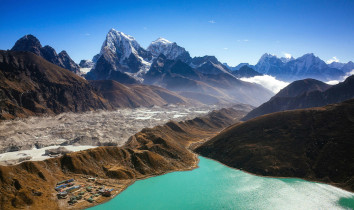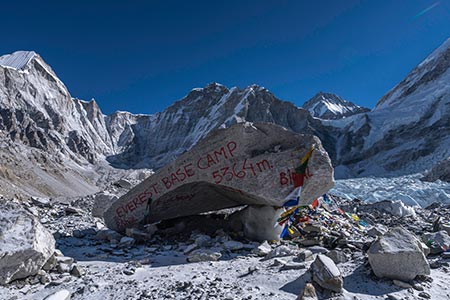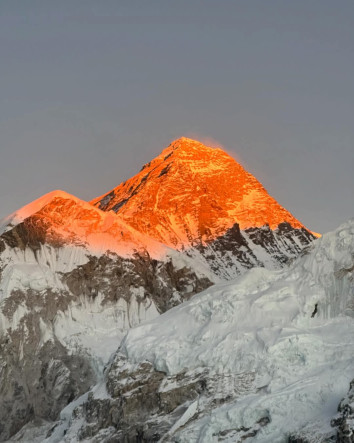

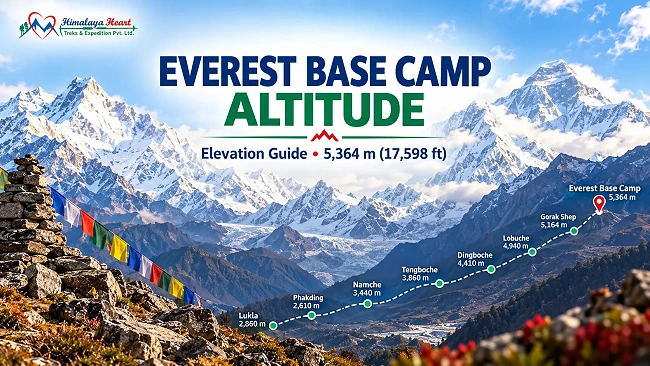
Everest Base Camp is one of the highest trekking locations in the world; it is 5,364 meters (17,598 feet) above the sea level on the Nepalese (Southern) side of Mount Everest. It lies in the Khumbu Region of Solukhumbu district inside Sagarmatha National Park. The Everest Base Camp trek is one of Nepal's classic treks, which thousands of trekkers dream of reaching every year. However, one of the most challenging parts of the trek is the altitude, which reduces the oxygen level in the air. So it is necessary to understand the EBC altitude and the challenges it comes with.
Everest has two base camps: South Base Camp in Nepal (5,364 m) and North Base Camp in Tibet (5,150 m). The EBC trek to reach the South Base Camp starts from Lukla (2,860 m) and ends at the Base Camp itself. The total altitude gain from the beginning to the end of the trek is 4,634 meters (15,203 feet), excluding elevation loss. The net elevation is around 2,504 meters (8,215 feet), although the elevations in different trail locations range from 1,400 to 5,364 meters. The acclimatization process, proper hiking planning, physical preparation, hydration, and other factors are crucial in adapting to the physiological changes at high altitudes.
This blog provides information on EBC's elevation, ascent levels, oxygen, and other details to help you prepare for trekking at high altitude. If you're climbing to EBC, studying this guide will help you know and prepare for the risks of trekking in one of the highest altitude areas on Earth.
Everest Base Camp Heights on the Nepal and Tibet Sides
Mount Everest sits on the border between Nepal and China, so there are 2 main base camps, one on each side of the mountain. Both camps are accessible to climbers and visitors, but the experience differs between them.
- South Base Camp Height (Nepal):
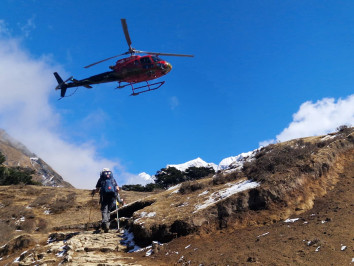
The South Everest Base Camp in Nepal is elevated at 5,364 meters (17,598 feet) above sea level in the Khumbu region. You cannot reach there by driving alone; you have to trek from Lukla, at 2,860 meters (9,383 feet), to the camp. Helicopter tours and access are also available to reach the camp, but the journey there is what makes it so popular. The route passes through the villages, suspension bridges, forests, and some of the best scenery in the Everest region. - North Base Camp Elevation (Tibet):
The North Everest Base Camp in Tibet is at 5,150 meters (16,900 feet). Unlike the camp in Nepal, it can be reached easily by vehicle. A proper road connects the area with China National Highway 318, so visitors can travel close to the base camp without having to trek. This makes the North Camp more accessible, while the South Camp is known for the classic trekking experience.
Why Do Everest Base Camp Elevation Figures Vary?
If you search for the elevation of Everest Base Camp, you'll find different numbers ranging from 5,150 m to 5,644 m on the same page. This happens due to three main reasons. First of all, different locations can be mixed. Locations such as South Everest Base Camp (5,364 m), Kala Patthar (5,545 m), and Gorak Shep (5,164 m) are all part of a typical EBC itinerary, so that they can be incorrectly used or mixed up due to writers' confusion.
Secondly, old guidebooks and travel sites use historical surveys from different old expeditions. Most of the records have been recorded before the modern GPS-based measurements were used as a standard, which is why older sources don’t always align with the newer versions.
At last, EBC is located on the Khumbu Glacier, and glaciers constantly change. When the ice shifts, melts, or thins over time, the camp's exact position will also move slightly each year, so small differences in coordinates and elevations are pretty normal.
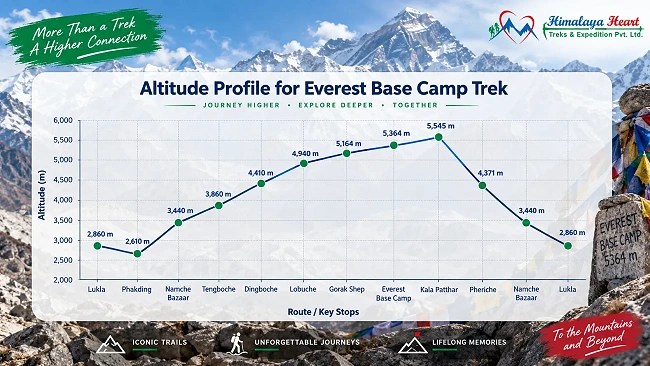
Everest Base Camp Trek Elevation Profile
| Location | Altitude (Meters) | Altitude (Feet) | Notes |
| Kathmandu | 1,400 | 4,593 | Arrival point and starting hub before the flight to Lukla. |
| Lukla | 2,860 | 9,383 | Main gateway to the Everest region and traditional starting point of the trek. |
| Phakding | 2,610 | 8,563 | First overnight stop on the standard Everest Base Camp route. |
| Namche Bazaar | 3,440 | 11,286 | Major Sherpa trading hub and key acclimatization stop. |
| Tengboche | 3,860 | 12,664 | Famous for Tengboche Monastery and panoramic mountain views. |
| Dingboche | 4,410 | 14,469 | Important acclimatization village in the upper Khumbu Valley. |
| Lobuche | 4,940 | 16,207 | High-altitude settlement and common overnight stop before Everest Base Camp. |
| Gorak Shep | 5,164 | 16,942 | Highest overnight settlement on the standard EBC trek and final stop before base camp. |
| Everest Base Camp | 5,364 | 17,598 | Main destination of the trek and seasonal base camp for Everest expeditions. |
| Kala Patthar | 5,545 | 18,192 | Popular viewpoint offering close-up views of Mount Everest and surrounding peaks. |
| Pheriche | 4,371 | 14,341 | Alternative acclimatization and overnight stop on the return route. |
| Monjo | 2,835 | 9,301 | Village near the Sagarmatha National Park entrance checkpoint. |
Day-by-Day Elevation Gain on the Everest Base Camp Trek
The elevation during the Everest Base Camp trek decreases on the day of walking from Lukla to Phakding. Then, it increases gradually until EBC, and decreases on the return journey. The table shows the elevation change along the 15 Day Everest Base Camp Trek itinerary starting and ending in Kathmandu. It highlights the most significant altitude gains and losses, helping trekkers understand the overall elevation progression.
| Itinerary | Trekking Route | Elevation | Net Elevation Change |
| Day 1 | Arrival in Kathmandu | 1,400 m / 4,593 ft | N/A |
| Day 2 | Kathmandu Sightseeing | 1,360 m / 4,462 ft | 0 m |
| Day 3 | Fly to Lukla and trek to Phakding | Lukla: 2,860 m / 9,383 ft Phakding: 2,610 m / 8,563 ft | +1,500 m to Lukla; -250 m to Phakding |
| Day 4 | Trek from Phakding to Namche Bazaar | 3,440 m / 11,286 ft | +830 m |
| Day 5 | Acclimatization Day in Namche Bazaar | 3,440 m / 11,286 ft | 0 m |
| Day 6 | Trek from Namche Bazaar to Tengboche/Deboche | 3,820 m / 12,533 ft | +380 m |
| Day 7 | Trek from Tengboche/Deboche to Dingboche | 4,410 m / 14,469 ft | +590 m |
| Day 8 | Acclimatization Day in Dingboche | 4,410 m / 14,469 ft | 0 m |
| Day 9 | Trek from Dingboche to Lobuche | 4,940 m / 16,207 ft | +530 m |
| Day 10 | Trek from Lobuche to Gorakshep and Everest Base Camp | Gorakshep: 5,164 m / 16,942 ftEBC: 5,363 m / 17,595 ft | +224 m to Gorakshep; +199 m to EBC |
| Day 11 | Hike to Kala Patthar and trek to Pheriche | Kala Patthar: 5,545 m/ 18,192 ftPheriche: 4,371 m / 14,341 ft | +381 m to Kala Patthar; -1,174 m to Pheriche |
| Day 12 | Trek from Pheriche to Namche Bazaar | 3,440 m / 11,286 ft | -931 m |
| Day 13 | Trek from Namche Bazaar to Lukla | 2,835 m / 9,301 ft | -605 m |
| Day 14 | Fly from Lukla to Ramechhap or Kathmandu | Kathmandu: 1,360 m / 4,462 ft | -1,475 m if returning to Kathmandu |
| Day 15 | Departure Day | N/A | N/A |
How Does Everest Base Camp Altitude Compare to Other Famous Treks?
Everest Base Camp is one of Nepal’s highest popular trekking destinations, but it isn’t the highest point reached on major treks. Some other routes like Annapurna Circuit crosses higher elevation and other treks such as Annapurna Base Camp stays lower. Comparing them gives a clear idea of how demanding EBC can be in terms of altitude.
| Trek | Highest Point | Altitude (Meters) | Altitude (Feet) | Altitude Compared with EBC | Altitude Category |
| Everest Base Camp Trek | Everest Base Camp | 5,364 m | 17,598 ft | — | Very High |
| Annapurna Circuit Trek | Thorong La Pass | 5,416 m | 17,769 ft | 52 m higher | Very High |
| Annapurna Base Camp Trek | Annapurna Base Camp | 4,130 m | 13,549 ft | 1,234 m lower | High |
| Manaslu Circuit Trek | Larkya La Pass | 5,106 m | 16,752 ft | 258 m lower | Very High |
| Gokyo Valley Trek | Gokyo Ri | 5,357 m | 17,575 ft | 7 m lower | Very High |
| Langtang Valley Trek | Tserko Ri | 4,984 m | 16,352 ft | 380 m lower | High |
| Mardi Himal Trek | Mardi Himal Base Camp | 4,500 m | 14,764 ft | 864 m lower | High |
| Upper Mustang Trek | Lo Manthang | 3,840 m | 12,598 ft | 1,524 m lower | High |
When we compare with the Annapurna Circuit Trek, Everest Base Camp is lower, Thorong La Pass reaches 5,416 mm which is 52 meters higher when we compare it to EBC, so both of the routes have high-altitude conditions and require rest days. The Annapurna Base Camp Trek is 1,234 meters lower than EBC. It is still challenging but not as much as the Everest route.
While on the Langtang trek, trekkers reach 4,984 m at Tserko Ri which is 380 meters lower than EBC. It is at a high altitude but still below the elevation of EBC. Meanwhile the Mardi Himal Trek reaches 4,500 m high and is 864 m below the EBC. This means that Mardi Himal is a low altitude option for trekkers who want Himalayan scenes without having to reach extreme elevation.
Does Altitude Sickness Affect the Everest Base Camp Trek?
Yes, altitude sickness affects the EBC trek as the route climbs to altitude at 5,364 meters. As we climb higher, the air pressure decreases and your body gets less oxygen. So, acclimatization is very necessary while climbing to higher elevations. Trekkers must pay attention to the symptoms of altitude sickness rather than ignoring the signal that your body is giving to you.
What is Altitude Sickness?
Altitude sickness is a condition when your body has trouble adjusting to lower oxygen levels at high elevation. It happens when your body feels harder to adjust in higher altitude due to lower air pressure and lower oxygen level. Your body reacts to it by breathing faster and harder to take in more oxygen that causes headache, nausea, fatigue, and dizziness. These symptoms can be improved when you give your body sufficient time to rest during ascent.
At What Altitude Can Altitude Sickness Occur?
Altitude sickness can occur from around 2,500 meters and above. Some people may develop symptoms at slightly lower elevation. On EBC trek, trekkers must be aware of altitude sickness from Lukla onwards so, proper acclimatization is very necessary. Once the trekkers are above 3,000 meters, sleeping at a much higher elevation than the previous night is very risky. Your body needs time to adjust so trekkers should increase their sleeping altitude slowly instead of climbing too high quickly.
Common Symptoms of Altitude Sickness
Common symptoms of altitude sickness include:
- Headache
- Nausea and vomiting
- Dizziness
- Fatigue
- Loss of appetite
- Difficulty in sleeping
- Vision change
- Malaise (unwell feeling)
These symptoms begin within several hours after reaching a higher altitude, sometimes it becomes noticeable during the first night.
What Should You Do If You Develop Symptoms?
Trekkers must not push themself if symptoms develop. Staying at the same altitude, and taking rest will really help to adjust your body. You must tell your guide about the symptoms so your condition can be watched carefully. If symptoms become worse then descending to lower elevation is necessary and you must seek medical help.
Everest Base Camp Acclimatization
Acclimatization is the most important part of EBC trek. As trekkers move higher, the air pressure drops and the body gets less oxygen with every breath. Climbing continuously is dangerous, that's why the itinerary includes extra time at certain elevations so that your body can adjust to the height.
Why is Acclimatization Important?
Our bodies need time to adapt to the change in oxygen level at high elevation. If you gain elevation too quickly, developing symptoms of altitude sickness, nausea, and dizziness is common. Acclimatization does not completely remove the risk of altitude sickness but it does give our body time to adjust. That's why a slow itinerary is safer than trying to reach EBC quickly.
Namche Bazaar Acclimatization
Namche Bazaar (3,440 meters) is the first major acclimatization stop on the trek. Most trekkers spend 2 nights here before continuing higher. Popular acclimatization walks are the Everest View Hotel area and Khumjung.
Dingboche Acclimatization
Dingboche (4,410 m) is the second major stop on the route, at this level the altitude difference is noticeable and the body needs extra time before moving toward Lobuche. Trekkers spend 2 nights in Dingboche and use the extra day for a short hike above the village. This prepares the body for the next stages of the trek.
How Do Acclimatization Hikes Help?
Acclimatization hikes help the body to train and get used to a higher altitude for a small time without requiring to sleep there. You have to climb above your sleeping elevation and spend some time at the height before returning for the night,. This exposure encourages the body to adapt to thin air and gives trekkers a chance to see if they feel fine at that altitude before continuing to gain elevation.
How Long Does It Take to Acclimatize?
Acclimatization happens step by step as the body tries to adjust to lower oxygen levels. On the EBC, trekkers spent acclimatization in places like Namche Bazaar and Dingboche with the gradual ascent because they sit at higher altitude. Spending an extra day in higher altitude helps our body to adjust before moving higher. The risk of altitude sickness does not disappear even after acclimatization day, so trekkers must climb slowly without rushing with regular rest in between.
How Difficult is Everest Base Camp Because of Altitude?
The Everest Base Camp trek is difficult mainly because of the altitude. As you go higher, the air becomes thinner, temperatures drop, and even simple waking can feel tiring. This tiredness occurs because when there is less oxygen, your body works harder to take in and supply enough oxygen to the brain and tissues. Most trekkers can complete the route with proper preparation, but the body needs enough time to adjust to the elevation. The difficulty increases gradually as you move closer to the camp.
- High altitude: Everest Base Camp is at an elevation of 5,364 meters (17,598 feet), where the amount of oxygen available to the body is lower than at sea level. Walking at this height requires more effort, even when the trail is not steep.
- Altitude sickness: Headache, nausea, dizziness, loss of appetite, and tiredness can happen as you gain elevation. These symptoms should be addressed if they become more severe and continue to rise.
- Uneven terrain: The trail has rocky sections, stone steps, suspension bridges, steep climbs, and glacial terrain. With all these components, the terrain is uneven.
- Temperature: Temperatures become much colder at higher elevations, especially early in the morning and at night. Wind and sudden changes in weather can make conditions feel even colder around EBC.
- Long walking days: Most trekking days involve several hours of walking, covering long distances day after day, which becomes more demanding as the altitude increases and your body needs more energy to maintain the same pace.
- Physical strain: Long hours of walking on an incline, at times back to back can take a toll on the body and be painful enough to strain our bodies.Which is why good stamina and basic leg strength is necessary to complete the trek without putting our body at risk.
- Acclimatization: Proper acclimatization is one of the most important parts of the trek. Resting days and avoiding harsh activities and walks will give our body time to adjust before moving to higher elevations.
How to Prepare for the Everest Base Camp Altitude?
Preparing for altitude should begin before you arrive in the Everest region. Physical training helps with the walk, and a good pace, nutrition, hydration, and proper acclimatization are important once the trek begins. The aim isn’t to move quickly but to give your body enough time to adjust as the elevation increases.
Train Before the Trek
Start preparing weeks before the trek with normal walking, hiking, cardio, and basic strength training. Focus on building endurance so your body becomes comfortable with walking for hours at a time. Training on hills or stairs is useful as there are climbs in the route.
Ascend Gradually
Our bodies need time to adjust to the thin air, which is why trekkers shouldn't rush to higher elevation. The typical EBC itineraries include resting days in places like Namche and Dingboche due to this. Walk at a steady pace, take breaks whenever you need and give yourself time before moving higher.
Stay Hydrated
Trekkers must stay hydrated throughout the day as you need it for breathing. You run out of breath at high altitude far before your legs give out. So, even when you do not feel very thirsty you should drink water. The dry mountain air and physical activity can cause dehydration more quickly than expected. Therefore, staying hydrated helps the body adjust to higher elevations.
Eat Enough
At high altitude, trekking takes a lot of energy and stamina, so eating enough is very important. Trekkers must choose a regular meal rich in carbohydrates, such as rice, potatoes, or porridge. Even if you do not have an appetite, try to eat something rather than skipping your meal. Proper, balanced food intake helps you maintain energy for long walking days.
Walk at a Steady Pace
Trekkers must not walk quickly or rush during the trail, even if it feels easy. A slow and steady pace gives your body more time to adjust to the increasing altitude. Walking too fast in the lower part makes you tired and makes the higher part feel much harder. Therefore, keep a steady pace and take short, regular rests when needed.
Avoid Alcohol and Smoking
It is better to avoid alcohol and smoking, as they can make you dehydrated and may affect sleep. Smoking can make breathing feel harder at high altitude. There will be lower levels of oxygen in higher elevations, so smoking and drinking can make it more difficult for your body to cope. You can drink and smoke after the trek rather than during the ascent.
Know the Symptoms of Altitude Sickness
As you go higher, there will be more chances of altitude sickness. Trekkers must know the symptoms of altitude sickness beforehand. Symptoms can include headache, nausea, fatigue, dizziness, malaise, unusual tiredness, loss of appetite, and trouble sleeping. If symptoms become worse, you must avoid climbing higher and inform your guide.
Choose the Correct Itinerary
As EBC lies at a higher altitude, choosing the right itinerary that includes proper acclimatization is essential. Namche Bazaar and Dingboche are common stops for acclimatization. You must avoid itineraries that rush through the route to save time and money. Good acclimatization gives your body time to adapt before reaching higher elevations, helping you avoid altitude sickness and other health risks.
Everest Base Camp Altitude Map
Conclusion
EBC is one of the most challenging trekking destinations with its altitude as one of the biggest challenges of the trek but it is manageable with the right preparation and a well-planned itinerary. A steady pace, and good fitness can make the journey much easier and comfortable. The goal should be to enjoy the journey while giving your body enough time to adapt. So, explore the EBC itinerary and packages with Himalayan Heart and start planning your journey with proper acclimatization and preparation.
Everest Base Camp Altitude FAQs
How many base camps does Everest have?
Mount Everest has 2 main base camps, South Base Camp and North Base Camp, located on opposite sides of each other.
How high is the north Everest Base Camp?
The northern Everest Base Camp is located in Tibet and is at an elevation of 5,200 meters (16,900 feet).
What is the hardest day of the Everest Base Camp?
According to trekkers and experts, the physically hardest day of the Everest Base Camp trek is the trek from Dingboche to Lobuche, which usually falls on day 9 on a standard Everest trek itinerary.
Do you get altitude sickness at Everest Base Camp?
Yes, getting altitude sickness at Everest Base Camp is common because it is at a high altitude of 5,364 meters (17,598 feet).
What is the oxygen level at Everest Base Camp?
The oxygen level in the air at EBC is roughly 21%, which is 50% lower than at sea level.
What is the elevation of Everest Base Camp in feet?
The elevation of Everest Base Camp in feet is 17,598 ft.
What is Kalapatthar, and why is it important on the EBC trek?
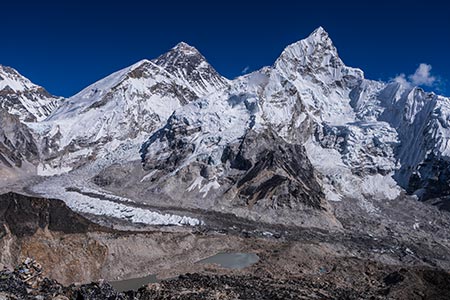
Kalapatthar, meaning "black rock" in Nepali, is a popular viewpoint offering close-up views of Mount Everest and the surrounding peaks. It is important on the EBC trek because of its closeness to Everest as the views are obstructed by Nuptse from the Everest Base Camp.
Can I visit Everest Base Camp by helicopter?
Yes, you can visit the EBC by helicopter, and many travel packages provide a helicopter tour.
What is the difference between the South Base Camp and the North Base Camp of Everest?
The difference between the South and North Base Camps is that North Base Camp is accessible by vehicle, while South Base Camp must be reached by trekking for 10-12 days.
Where does the Everest Base Camp trek begin?
The main trek to Everest Base Camp begins in Lukla, where trekkers disembark and continue to Phakding.
How long does the Everest Base Camp trek take, and what is the total altitude gain?
The EBC trek’s completion time depends on the itinerary, but it typically takes 12-14 days. The total altitude gain from the beginning to the end of the trek is 4,634 meters (15,203 feet).