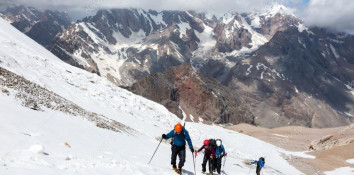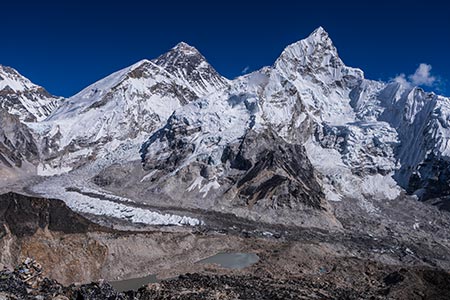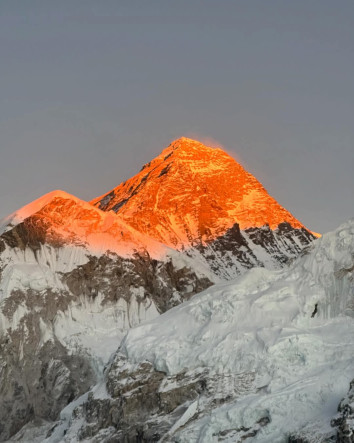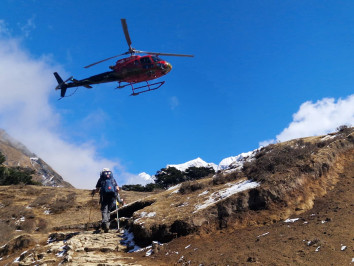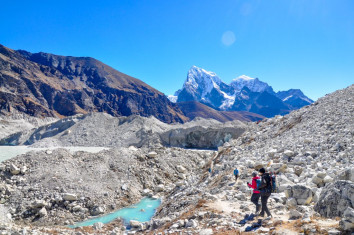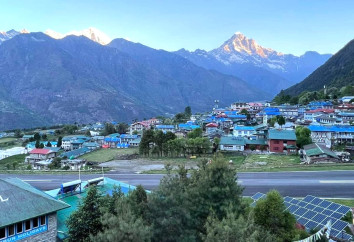

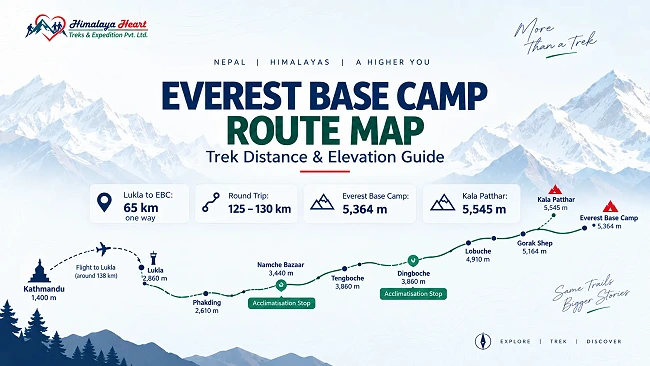
Everest Base Camp trek is one of the most adventurous and thrilling Himalayan journeys, reaching 5,364 meters (17,598 ft). It lies in the Khumbu region of Solukhumbu district in Nepal’s northeastern region. The actual trek begins in Lukla at 2,860 meters (9,383 ft) and follows the Dudh Koshi and Imja valleys through Sherpa villages, monasteries, forests, and mountain terrain. After that, the route passes Phakding, Namche Bazaar, Tengboche, Dingboche, Lobuche, and Gorak Shep before reaching Everest Base Camp.
From Kathmandu, the journey first covers around 138 km by air to Lukla. From Lukla, the Everest Base Camp Trek is about 65 kilometres (40 miles) one way and around 130 kilometres (80 miles) round trip. Trekkers spend time acclimatizing in Namche Bazaar and Dingboche before continuing higher. EBC is the main destination, but Kala Patthar at 5,545 meters (18,192 ft) is the highest point on the standard trek and is included on most EBC trek route maps.
The Everest Base Camp elevation can be confusing because of its altitude, elevation gain, and the highest point. EBC is at 5,364 meters, Kala Patthar at 5,545 meters, and Gorak Shep at 5,164 meters, the highest overnight stop. The actual route includes repeated climbs and descents, but trekkers mostly walk uphill. Distance and elevation matter when climbing the route because kilometres show how far you travel, while elevation shows how the trail rises and falls along the journey.
This blog provides complete information on the EBC route map, trek distance, and elevation profile so trekkers can understand the journey before stepping onto the trail. You will learn day-by-day distance and elevation, main stops between Lukla and EBC, acclimatization points, highest elevation, route duration, and answers to the most common questions about the trek. Whether you are comparing EBC itineraries or preparing your own trip, use this guide to see exactly where the trail goes, how far you will walk and how high you will climb.
Everest Base Camp Trek Route Map
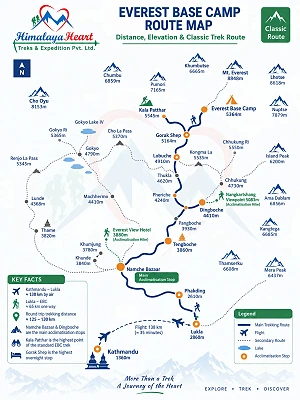
The classic EBC route begins at Lukla and follows the main trekking trail through Phakding, Namche Bazaar, Tengboche, Dingboche, Lobuche and Gorak Shep before reaching EBC. Most trekkers continue to Kala Patthar, the trek's highest point and one of the best viewpoints on the route. Along the way, the trail includes key acclimatisation stops at Namche Bazaar and Dingboche to help trekkers adjust before moving to higher elevations. The EBC trek route below shows the main route from Lukla to Everest Base Camp, including the major overnight stops and key points along the trail.
Everest Base Camp Route at a Glance
| Location | Role in the route |
| Lukla | Main starting and ending point of classic EBC trek. Trekkers reach Lukla by flight before beginning the walk. |
| Phakding | A common first overnight stop after Lukla. |
| Namche Bazaar | A major Sherpa town and important acclimatization stop. |
| Tengboche | An important cultural stop known for Tengboche Monastery and Himalayan views. It connects Namche with the higher Khumbu routes. |
| Dingboche | It is the second major acclimatization stop at high altitude. |
| Lobuche | A high-altitude overnight stop before Gorak Shep and EBC. |
| Gorak Shep | It is a final settlement before EBC and usually the highest overnight stop. It is also the starting point for the Kala Patthar hike. |
| Everest Base Camp | The main destination of the trek. |
| Kala Patthar | It is the highest point in standard EBC itineraries at around 5,545 meters. |
Everest Base Camp Trek Route Map from Lukla to EBC
The journey becomes easier to understand when you view the route on a map. The journey starts in Lukla, gains altitude over several days, and includes acclimatization stops before reaching EBC. Namche Bazaar and Dingboche are the main acclimatisation stops along the way. From Gorak Shep, trekkers continue to EBC at 5,364 meters and also hike to Kala Patthar at 5,545 meters for panoramic mountain views. The return journey follows the trail back through the Khumbu toward Namche Bazaar and Lukla.
Everest Base Camp Trek Distance
The EBC trek distance is around 130 km or 80 miles round trip from Lukla to EBC and back to Lukla again. This distance is approximate. Different itineraries, hikes, mapping methods, and starting points can change the final distance.
How Many Kilometres is the Everest Base Camp Trek?
The EBC trek is approximately 125 to 130 km or 80 miles round trip from Lukla. Many guides use 130km as a practical figure for the classic itinerary. Kilometre counts can vary based on measurements; different devices and mapping tools can calculate mountain terrain differently. Lodges, bridges, and local trail choices may also change the path and side hikes, and accommodation location can also change the total kilometres. The acclimatization walk in Namche Bazaar, Dingboche, and the Kala Patthar hike can add several kilometres to the total trek.
Lukla to Everest Base Camp Distance
Lukla is the conventional starting point of the EBC trek. The Lukla-EBC distance is approximately 65 kilometres, or 40 miles, one way, covering the journey through Phakding, Namche Bazaar, Tengboche, Dingboche, Lobuche, and Gorak Shep. But it doesn't include the return journey, so looking only at the one-way distance can make the trek look much shorter than it is.
Total EBC Trek Distance Round Trip
So, how far will you actually walk?
For standard itineraries, expect roughly 125 to 130 kilometres (80 miles). This includes Lukla-to-EBC. The trek distance also depends on the Kala Patthar hike and the return through the Khumbu Valley to Lukla. The distance also depends on acclimatisation stops, if included in the itinerary. Some trekkers will cover more than 130 kilometres if a longer acclimatisation stop is included, and others may record a shorter distance depending on the exact route and GPS methods used.
Everest Base Camp Trek Distance and Elevation by Day
Daily distance and elevation on the EBC trek depend on where you are. Lower sections cover more distance than the higher sections. Exact distance changes based on the route, side hikes, accommodation location, and mapping method, which is why these figures are approximate, not exact.
| S.N. | Trekking Route | Distance | Altitude |
| 1 | Lukla to Phakding | 8 km | 2,610 m (8,563 ft) |
| 2 | Phakding to Namche | 11 km | 3,440 m (11,286 ft) |
| 3 | Namche Acclimatization | 6 km | 3,880 m (12,730 ft) |
| 4 | Namche to Tengboche | 10 km | 3,860 m (12,664 ft) |
| 5 | Tengboche to Dingboche | 11 km | 4,410 m (14,469 ft) |
| 6 | Dingboche Acclimatization | 5 km | 5,083 m (16,677 ft) |
| 7 | Dingboche to Lobuche | 8 km | 4,910 m (16,109 ft) |
| 8 | Lobuche to Gorak Shep to EBC | 13 km | 5,364 m (17,598 ft) |
| 9 | Gorak Shep to Kala Patthar to Pheriche | 14 km | 5,545 m (18,192 ft) |
| 10 | Pheriche to Namche | 20 km | 3,440 m (11,286 ft) |
| 11 | Namche to Lukla | 19 km | 2,860 m (9,383 ft) |
Everest Base Camp Trek Elevation Profile
The EBC elevation profile is not a straight climb from Kathmandu to Base Camp. The journey begins at a much lower elevation and rises sharply with the flight to Lukla. Acclimatisation days at Namche Bazaar and Dingboche break up the elevation gain before trekkers climb higher. The biggest elevation gain happens between Phakding and Namche, Tengboche and Dingboche, and Dingboche and Lobuche. Kala Patthar is usually the highest viewpoint of the standard trek. After Kala Patthar, the route loses elevation quickly as trekkers descend toward Namche Bazaar.
| Itinerary | Trekking Route | Elevation | Net Elevation Change |
| Day 1 | Arrival in Kathmandu | 1,360 m / 4,462 ft | N/A |
| Day 2 | Kathmandu Sightseeing | 1,360 m / 4,462 ft | 0 m |
| Day 3 | Fly to Lukla and trek to Phakding | Lukla: 2,860 m / 9,383 ft Phakding: 2,610 m / 8,563 ft | +1,500 m to Lukla; -250 m to Phakding |
| Day 4 | Trek from Phakding to Namche Bazaar | 3,440 m / 11,286 ft | +830 m |
| Day 5 | Acclimatization Day in Namche Bazaar | 3,440 m / 11,286 ft | 0 m |
| Day 6 | Trek from Namche Bazaar to Tengboche/Deboche | 3,820 m / 12,533 ft | +380 m |
| Day 7 | Trek from Tengboche/Deboche to Dingboche | 4,410 m / 14,469 ft | +590 m |
| Day 8 | Acclimatization Day in Dingboche | 4,410 m / 14,469 ft | 0 m |
| Day 9 | Trek from Dingboche to Lobuche | 4,940 m / 16,207 ft | +530 m |
| Day 10 | Trek from Lobuche to Gorakshep and Everest Base Camp | Gorakshep: 5,164 m / 16,942 ft EBC: 5,363 m / 17,595 ft | +224 m to Gorakshep; +199 m to EBC |
| Day 11 | Hike to Kala Patthar and trek to Pheriche | Kala Patthar: 5,545 m/ 18,192 ft Pheriche: 4,371 m / 14,341 ft | +381 m to Kala Patthar; -1,174 m to Pheriche |
| Day 12 | Trek from Pheriche to Namche Bazaar | 3,440 m / 11,286 ft | -931 m |
Everest Base Camp Route: Day-by-Day
The EBC route changes a lot from one stage to the next. Some days focus on gaining elevation, some on adjusting to altitude, and others involve long descents through the Khumbu. This section of a blog explains what the trail actually feels like, what you pass along the way, and why each stop matters.
Lukla to Phakding
The first day is the easy phase in this journey. The trail follows the Dudh Koshi River through small villages, stone paths, suspension bridges, and gentle ups and downs. Phakding is located at a lower elevation than Lukla, so the elevation drops during the day. The short first walk gives you time to settle into the trail before the harder climbs start. Phakding is a common overnight stop after Lukla.
Phakding to Namche Bazaar
The walk from Phakding to Namche Bazaar is more demanding. The trail follows the Dudh Koshi River and crosses several suspension bridges before reaching the entrance area of Sagarmatha National Park. The route is steeper toward Namche. The trail gains significant elevation from Phakding to Namche Bazaar. Therefore, trekkers can feel tired. Namche Bazaar is the first main acclimatisation stop, which sits at an altitude of 3,440 meters.
Namche Bazaar to Tengboche
Tengboche lies in a deeper valley in the Everest region. During the trek, you can see Everest, Lhotse, Ama Dablam, and Thamserku if the weather is clear. The route first descends, then climbs toward Tengboche. The area is well known for Tengboche Monastery, the route's most important Buddhist monastery.
Tengboche to Dingboche
The trek to Dingboche includes mostly ascents. The trail moves into higher and more open alpine terrain. The forest and vegetation thin out as trekkers continue toward Dingboche. The landscape becomes colder, drier, and more exposed, and you can feel the mountains closer. The elevation increases throughout the trek because Dingboche sits at 4,410 meters. Most of the trekkers spend two nights acclimatising before continuing to higher climbs. It is the second most important stop for acclimatisation because it lies at a higher elevation.
Dingboche to Lobuche
The trail climbs into a much harsher high-altitude landscape. The trail passes through the steeper uphill section that leads toward a memorial dedicated to climbers who lost their lives on Everest. The terrain becomes rockier and more exposed, offering panoramic views of Khumbu Glacier and the surrounding mountains. Because of the high elevation gain, oxygen levels decrease, and the climb starts to feel slower and more tiring. Trekkers spend the night in Lobuche, the highest overnight stop before reaching Gorak Shep.
Lobuche to Gorak Shep
Although the distance between Lobuche and Gorak Shep is short, the trail feels demanding because of the higher altitude and terrain. Trekkers must cross rocky mountains and uneven ground beside the Khumbu Glacier. Trekkers must walk slowly and steadily without rushing because they are walking above 5,000 meters. Gorak Shep is the final settlement before EBC and serves as the main overnight stop for the EBC trek and the Kala Patthar climb.
Gorak Shep to Everest Base Camp
From Gorak Shep, trekkers make an out-and-back excursion to EBC. The route follows rocky and glacial terrain. You can see very little vegetation as you pass along the edge of the Khumbu Glacier. Trekkers usually visit EBC during the day, returning to Gorak Shep rather than sleeping at EBC. EBC is the starting point for reaching Mount Everest's summit. The summit lies thousands of meters higher than EBC.
Gorak Shep to Kala Patthar
The hike to Kala Patthar starts early in the morning. The trail to Kala Patthar is steep and short compared to other trekking routes. The altitude makes the ascent challenging, as Kala Patthar is the highest viewpoint, at 5,545 meters. From the top, trekkers can see breathtaking views of Everest, Nuptse, and the surrounding Himalayas when the weather is clear. After going back to Gorak Shep, the route continues downhill to Pheriche.
Return Journey to Lukla
The return journey follows much of the same routes back through the Khumbu. The descent allows you to walk faster, and the experience feels different because trekkers lose elevation. Many itineraries use different overnight stays rather than repeating the same stops from the ascent. The trekking ends when trekkers reach Lukla.
Where Are the Acclimatisation Stops on the EBC Route?
Acclimatisation is included in the itinerary so trekkers don't gain sleeping elevation too quickly and their bodies can adjust to the altitude. Acclimatisation stops give trekkers a chance to hike to higher elevations and return to sleep lower. This helps the body adjust gradually before entering the higher sections of the Khumbu.
Namche Bazaar Acclimatisation
Namche Bazaar sits at 3,440 meters, the first major acclimatisation stop on the EBC trek. Trekkers spend two nights here and use the extra day for short hikes to higher elevations. During this extra day, trekkers hike to Everest View Hotel at 3,880 meters (12,730 ft) for views of Everest.
This acclimatisation day is important because the route climbs higher after Namche. After spending time higher up, they return to Namche and sleep at the same elevation as the previous night. The round-trip hike generally takes about 3-4 hours, depending on walking pace and trail conditions. This will prepare the body for the next stage toward Tengboche and Dingboche.
Dingboche Acclimatisation
Dingboche is the second major acclimatisation stop for trekkers, sitting at an altitude of 4,410 meters before climbing above 4,500 to 5,000 meters. The extra day is used to hike to a higher viewpoint before returning to Dingboche to sleep. Trekkers hike toward Nangkartshang Viewpoint, around 5,083 meters or 16,677 ft.
This acclimatisation is important because the route climbs to higher elevations. This gives trekkers another chance to adjust to altitude before climbing toward Lobuche, Gorak Shep, and EBC. The round-trip hike takes about 4-6 hours, depending on pace and how far trekkers go. The hike offers wide views of Ama Dablam, Lhotse, Island Peak and the Imja Valley when the weather is clear.
How Much Elevation Do You Gain on the Everest Base Camp Trek?
The EBC trek starts in Lukla at 2,860 meters and ends at Everest Base Camp at 5,364 meters, for a net elevation gain of about 2,500 meters (8,215 ft). This is an approximate value, as trekkers descend into valleys and climb back up during the trek. The trails are mostly ascents and descents, where the actual cumulative ascent is greater because the trail repeatedly goes up and down. So, net elevation gain is not equal to total elevation climbed on the EBC route.
Elevation Gain from Lukla to EBC
The total elevation gain from Lukla to EBC is 2,500 meters. This elevation difference compares the starting elevation to the final elevation at EBC. The trail includes many ascents and descents, so the total elevation gain for the whole trek is higher than 2,500 meters. The section around Namche, Tengboche, and Thukla is a good example where trekkers descend before climbing again.
Highest Sleeping Elevation
The highest sleeping point on the standard EBC route is Gorak Shep at 5,164 meters (16,942 ft). Before Gorak Shep, Lobuche is the high-altitude overnight stop. Trekkers usually stay at Gorak Shep before visiting EBC and hiking to Kala Patthar. Trekkers climb EBC during the day rather than at night.
Highest Point of the Trek
The highest point on the EBC trek is Kala Patthar at around 5,545 meters (18,192 ft). Kala Patthar is higher than EBC, and it is visited for its panoramic mountain views. Most trekkers hike to Kala Patthar to experience the higher altitude and enjoy the views. Trekkers descend back toward Gorak Shep after a hike from Kala Patthar and continue lower into Khumbu.
Everest Base Camp Route vs Distance: Why Both Matter
The EBC trek distance does not tell you how difficult the walk actually feels. Two days with similar distance can feel completely different because of altitude, terrain, and elevation gain. For example, walking 10 km a day at lower elevation is not the same as walking 10 km above 4,500 meters. This is because at higher altitude, the body has less oxygen available, and even a steady climb can feel much slower.
Distance measures how far you walk, while elevation shows how high you climb. As the route rises, lower oxygen levels can slow you down and increase physical demand. Elevation also affects how the itinerary is planned. The EBC route includes acclimatisation stops because trekkers should not keep gaining altitude too quickly. To understand the EBC trek properly, always look at distance and elevation together.
How Long Does the Everest Base Camp Trek Take?
Most standard trek itineraries take 12-15 days depending on the route, schedule, arrangements and transportation. Some itineraries are shorter but demanding, while some have extra days for slower pacing or side trips. The right duration depends on your experience, health and how gradually you want to gain altitude.
12-Day Everest Base Camp Trek
A 12-day Everest Base Camp trek suits travellers with limited time who are willing to adjust to a compact schedule. This itinerary reduces rest time, and the route focuses on reaching Everest Base Camp without adding side trips.
A well-planned 12-day trek still includes important acclimatisation stops in Namche and Dingboche, but the walking schedule between destinations may be strict. Expect several days of walking 5-8 hours a day, depending on the terrain.
This option suits fit, experienced trekkers who are comfortable with continuous trekking days. However, a 12-day itinerary isn't easy or difficult; it depends on how the days are arranged and how quickly you gain altitude.
15-Day Everest Base Camp Trek
A 15-day Everest Base Camp trek offers a more gradual pace and more time to adjust to increasing altitude. It includes the standard route through Lukla, Phakding, Namche Bazaar, Tengboche, Dingboche, Lobuche and Gorak Shep before you reach the Everest Base Camp.
The longer duration provides enough time for acclimatisation days and reduces the rush between stops. Walking hours are still long on some days, but the overall schedule is more balanced than the 12-Day trek.
The extra days make the trek more comfortable, mainly for first-time high-altitude trekkers. They provide flexibility if weather, Lukla flights or health conditions affect the itinerary.
Longer EBC itineraries
Some EBC itineraries take 16-18 days, and sometimes longer. These trips include additional acclimatisation time, shorter walking days and extra destinations around the Everest region.
Longer itineraries may also combine Gokyo Valley with EBC, adding viewpoints or cultural stops. The longer schedule gives you more time to explore the Sherpa settlements along the route.
A longer itinerary doesn’t mean that the trek is harder or easier. In many cases, the extra days let you move at a slower pace and give your body more time to adjust to the altitude, making the journey more manageable and comfortable.
Conclusion
The EBC trek is more than just walking because the route, distance, and elevation all shape the experience. Proper acclimatisation also plays an important role before moving into higher sections of the trail. The route map and elevation profile make it easier to choose the right itinerary. With the right guidance and planning, the EBC route becomes not just a challenge, but a memorable journey through the heart of the Everest region. If you are planning your EBC trek, Himalayan Heart can help you choose the right itinerary and guide you through the journey with proper planning.
Frequently Asked Questions
How far is Everest Base Camp from Lukla?
Everest Base Camp is around 65 km from Lukla via a trekking route; the distance depends on the overnight stops and the trail.
How many kilometres is the EBC trek?
The Everest Base Camp trek is 120 km for the full trek from Lukla to Everest Base Camp and back. The exact distance can change depending on the itinerary, overnight stops, and acclimatisation hikes.
What is the highest elevation on the Everest Base Camp trek?
The highest point you can reach on the Everest Base Camp trek is 5,545 m (18,192 ft) when you reach Kala Patthar.
What is the elevation of Everest Base Camp?
Everest Base Camp on the Nepal side is 5,364 m (17,598 ft) above sea level. It lies on the Khumbu Glacier in the high Everest region.
Is Kala Patthar higher than Everest Base Camp?
Yes, Kala Patthar is higher than Everest Base Camp. Kala Patthar reaches 5,545 m while Everest Base Camp is at 5,364 m.
How much elevation do you gain on the EBC trek?
The total elevation gained in the EBC trek is 2,504 m (8,215 ft). Total ascent is higher than total gain because the trail has many uphill and downhill sections.
Where does the Everest Base Camp trek start?
The Everest Base Camp trek starts in Lukla, at 2,860 m (9,383 ft), the gateway to the Everest region. Many trekkers fly in and start walking from Lukla to Phakding.
How many days does the EBC trek take?
The Everest Base Camp trek takes 12-14 days, depending on the itinerary of the package you bought, and includes rest days in Namche and Dingboche.
Is the Everest Base Camp route difficult?
Yes, the Everest Base Camp route is challenging due to the high altitude, long walking days, steep sections, unstable weather, cold temperatures, and sickness. It doesn't depend on technical climbing skill but on good preparation, fitness and proper acclimatisation.
Can you see Mount Everest from the EBC?
You won't get a clear, direct view of Mount Everest from the camp itself because surrounding peaks block part of the view, which is why Kala Patthar is a popular viewpoint for seeing Everest clearly.
Is altitude sickness common on the EBC trek?
Yes, altitude sickness can affect trekkers because the route goes above 5,000 meters. Proper acclimatisation, hydration, and a slow ascent are important throughout the trek.
What is the best season for the Everest Base Camp trek?
Spring and Autumn are the best seasons to trek the EBC, as they provide stable weather, clear views, and better trail conditions.
Can you do the Everest Base Camp trek without flying to Lukla?
Yes, you can reach the Everest region by road and trekking routes, but it takes longer; flying to Lukla makes it a more practical option for the standard itinerary.