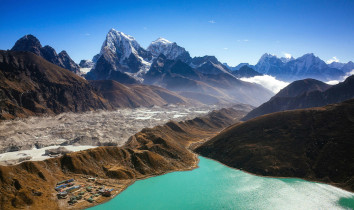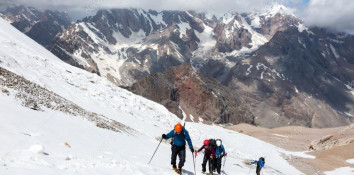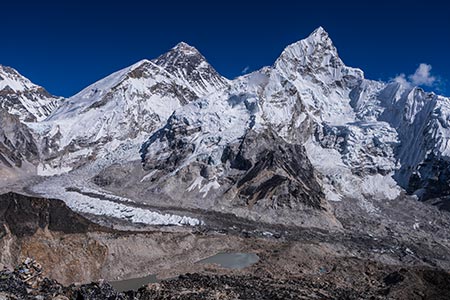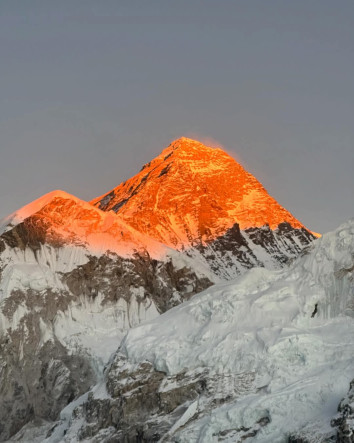

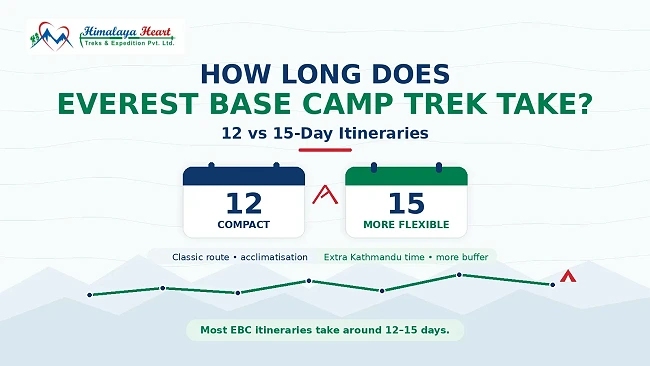
The Everest Base Camp Trek usually takes around 12 to 15 days, including arrival in Kathmandu, trekking in the Everest region, and international departure. The length varies based on the route, acclimatization management, walking speed, flight schedule, and weather conditions. Some trekkers opt for a shorter 12-day trek, while others choose the longer 15-day trek to acclimatise properly and take a more relaxed pace.
The trek takes you from the lower hills near Lukla to Everest Base Camp at 5,364 m (17,598 ft). At higher elevations, you need to acclimate to lower oxygen. That is why a good travel plan isn't just about getting there as quickly as you can. Rest and acclimatization days are crucial to the journey as well.
In this guide, we compare 12-day and 15-day Everest Base Camp itineraries, explain how much you walk each day, discuss flight and weather delays and look at shorter alternatives. If you're unsure which length to choose, contact our trekking team for help selecting the best trek to match your time, experience, and pace.
How Many Days Does the Everest Base Camp Trek Take?
Depending on the itinerary, the Everest Base Camp Trek can last anywhere from 12 to 15 days. Typically, the trekking part takes 10-12 walking days, while the rest of the time is spent on arrangements in Kathmandu, on flights, and for acclimatization.
For seasoned trekkers with limited time, a shorter trip can be arranged. However, cutting the number of days carefully is challenging, as it is not just about distance. The route has significant altitude gain, especially after Namche Bazaar. The longer the route, the more time you have to walk at a leisurely pace and adjust to a few unforeseen changes. A longer vacation can make the trip less stressful.
Why Does the Everest Base Camp Trek Take 12 to 15 Days?
The Everest route is long and steep. It's not a normal low-altitude hiking trip. Your body needs time to adapt, and walking times should be based on the terrain and changing conditions. Several factors determine the trip duration.
Altitude and Acclimatization
Altitude is one reason this trek is a multi-day walk. The trail gradually rises from Lukla at about 2,860 m (9,383 ft) to Everest Base Camp at 5,364 m (17,598 ft). As elevation increases, oxygen levels decrease. Rushing up too fast can make the ascent more dangerous and can raise concerns of altitude sickness. Therefore, include acclimatization stops on a sensible route instead of climbing all day.
The first acclimatization stop is typically at Namche Bazaar, at approximately 3,440 m (11,286 ft). Dingboche, at approximately 4,410 m (14,469 ft), is another key stop where you can spend more time acclimating to the elevation. Don't think acclimatization means doing nothing all day. Slowly adapting activity or a short walk is a good approach to an adjustment period.
Note: We have a separate Everest Base Camp trail’s altitude article where you can learn about elevations at different points of the trekking trail.
Daily Trekking Distance
Daily distances will vary depending on the part of the trail. The lower part may be more comfortable, while the upper part may take longer even if the distance isn't too great. The trail includes stone steps, suspension bridges, forest paths, rocky areas, and steep inclines. Most of the time, trekkers at higher elevations walk slower. A well-planned Everest Base Camp trek itinerary considers distance and elevation, rather than trying to cover the farthest distance each day.
Lukla Flight Schedule
You must fly from Kathmandu or Ramechhap to Lukla. Weather, visibility, and airport conditions affect flight operations. In peak trekking season, flights may operate from Ramechhap to Lukla instead of Kathmandu to Lukla. This may contribute to longer road travel times. When a flight is delayed, it can impact more than one day because missing the planned flight may also change the starting or return schedule. This is where flexibility comes in handy.
Weather and Trail Conditions
Weather conditions in the Everest region can rapidly change. Lower trails may be wet with rain, and higher trails may be snowy and icy in colder weather. Weather can also affect flights due to clouds and poor visibility. Heavy winds could cause further delays. Walking time can also vary depending on trail conditions. If conditions are slippery or snowy, this route may take longer than normal.
12-Day Everest Base Camp Trek Itinerary
A 12-day Everest Base Camp Trek itinerary is for those who want the classic route in a shorter time. It still includes appropriate acclimatization; however, because the trip is shorter, it should still include proper altitude adjustment. The following is the standard 12-day Everest Base Camp Trek.
12-Day EBC Trek at a Glance
| Day | Route | Altitude (m/ft) | Walking Time |
| 1 | Kathmandu to Lukla, trek to Phakding | 2,610 m / 8,563 ft | 3 to 4 hours |
| 2 | Phakding to Namche Bazaar | 3,440 m / 11,286 ft | 5 to 6 hours |
| 3 | Acclimatization at Namche Bazaar | 3,440 m / 11,286 ft | 3 to 4 hours |
| 4 | Namche Bazaar to Tengboche | 3,860 m / 12,664 ft | 5 to 6 hours |
| 5 | Tengboche to Dingboche | 4,410 m / 14,469 ft | 5 to 6 hours |
| 6 | Acclimatization at Dingboche | 4,410 m / 14,469 ft | 3 to 5 hours |
| 7 | Dingboche to Lobuche | 4,910 m / 16,109 ft | 4 to 5 hours |
| 8 | Lobuche to Everest Base Camp and Gorak Shep | 5,364 m / 17,598 ft at EBC | 7 to 9 hours |
| 9 | Gorak Shep to Kala Patthar and Pheriche | 5,644 m / 18,517 ft at Kala Patthar | 6 to 8 hours |
| 10 | Pheriche to Namche Bazaar | 3,440 m / 11,286 ft | 6 to 7 hours |
| 11 | Namche Bazaar to Lukla | 2,860 m / 9,383 ft | 6 to 8 hours |
| 12 | Lukla to Kathmandu | 1,400 m / 4,593 ft | Flight day |
Walking times are indicative only and may vary based on personal speed, trail conditions, weather and rest stops. The most challenging area is typically around Lobuche, Gorak Shep and Everest Base Camp. It differs from the first few days because of the altitude and distance.
Who Is the 12-Day Trek Best For?
If you have a relatively short vacation but want the classic route, a 12-day trek is a good option. It lets you complete the classic Everest Base Camp trek in a shorter timeframe without cutting any key trekking or acclimatization days.
It is particularly suitable for:
- Individuals who have limited vacation time and cannot commit to longer trekking itineraries.
- Those who have been physically prepared and can handle 5-8 hours of walking.
- Individuals who are okay with walking for a longer duration on multi-day mountain trekking routes.
- Trekkers who have prior experience of high-altitude trekking and can adapt to high altitude quickly.
- Adventurers who prefer a faster itinerary rather than spending time on any cultural tours in Kathmandu.
Familiarity with high-altitude trekking can help you understand how your body responds to lower oxygen levels and how long you can walk. However, a 12-day itinerary may not suit those who want a complete Nepal experience. Because the itinerary does not include sightseeing tours in Kathmandu, you may miss the chance to immerse yourself in Nepal's culture. But if you truly intend to experience only the mountain and can manage the challenges of altitude, then a 12-Day EBC trek is the best option.
Pros and Cons of the 12-Day Itinerary
Advantages
- It is shorter, so people with limited vacation time can benefit.
- The overall cost of the 12-day itinerary is lower than other longer itineraries.
- Trekkers can reach the destination in 12 days rather than taking a longer time to reach the ultimate goal.
- Best for people with a naturally steady pace who won’t feel like the 12-day trek is rushing.
- The trek follows a standard route and omits cultural tours, so nothing is missed during the walk.
Disadvantages
- Trekkers will miss the cultural sightseeing tour in Kathmandu, as the trek is straightforward with no added programs.
- There is no dedicated trek preparation day, so trekkers have less time to recover from the arrival flight.
- There are no buffer days, so that flexibility can become an issue in case of bad weather or flight delays.
- The overall trek is compressed, so trekkers have less breathing room between different parts of the journey.
For trekkers doing the 12-day trek, acclimatization is not an issue, as dedicated acclimatization days are similar for both the 12-- and 15-day treks. The only drawback of the 12-day trek is its limited flexibility. There is no separate day in Kathmandu for trek preparation and no extra day after returning from Lukla before international departure.
15-Day Everest Base Camp Trek Itinerary
The 15-day program spans a longer period and includes arrival in Kathmandu, an additional day for sightseeing and trek preparation in Kathmandu, and a final day for international departure. While the trekking days follow the same itinerary as that of the 12-day Everest Trek, the only difference is the added cultural tour. The 15-day itinerary thus offers a unique perspective on the city's culture and religion, thereby providing a ground-up, round-up experience of Nepal. Similarly, the extra days may also help manage the trip when you add days for Kathmandu pre-trip and post-trip.
15-Day EBC Trek at a Glance
| Day | Route | Altitude (m/ft) | Walking Time |
| 1 | Arrival in Kathmandu | 1,400 m / 4,593 ft | No trekking |
| 2 | Kathmandu preparation and sightseeing | 1,400 m / 4,593 ft | No trekking |
| 3 | Kathmandu to Lukla, trek to Phakding | 2,610 m / 8,563 ft | 3 to 4 hours |
| 4 | Phakding to Namche Bazaar | 3,440 m / 11,286 ft | 5 to 6 hours |
| 5 | Acclimatization at Namche Bazaar | 3,440 m / 11,286 ft | 3 to 4 hours |
| 6 | Namche Bazaar to Tengboche | 3,860 m / 12,664 ft | 5 to 6 hours |
| 7 | Tengboche to Dingboche | 4,410 m / 14,469 ft | 5 to 6 hours |
| 8 | Acclimatization at Dingboche | 4,410 m / 14,469 ft | 3 to 5 hours |
| 9 | Dingboche to Lobuche | 4,910 m / 16,109 ft | 4 to 5 hours |
| 10 | Lobuche to Everest Base Camp and Gorak Shep | 5,364 m / 17,598 ft at EBC | 7 to 9 hours |
| 11 | Kala Patthar and trek to Pheriche | 5,644 m / 18,517 ft at Kala Patthar | 6 to 8 hours |
| 12 | Pheriche to Namche Bazaar | 3,440 m / 11,286 ft | 6 to 7 hours |
| 13 | Namche Bazaar to Lukla | 2,860 m / 9,383 ft | 6 to 8 hours |
| 14 | Lukla to Kathmandu | 1,400 m / 4,593 ft | Flight day |
| 15 | Departure from Nepal | 1,400 m / 4,593 ft | No trekking |
The above is the standard 15-day Everest Base Camp Trek Itinerary offered by Himalaya Heart. The itinerary includes a sightseeing tour in Kathmandu, including visits to popular UNESCO World Heritage Sites like Pashupatinath Temple, Kathmandu Durbar Square, Swayambhunath Stupa (Monkey Temple), and Boudhanath Stupa. On the trek, dedicated acclimatization days in Namche and Dingboche allow proper adaptation to low oxygen levels.
The itinerary also includes one dedicated departure day from Nepal, allowing recovery after the tiring trek. It also allows a small window for shopping or extra activities after arriving in Kathmandu.
Who Is the 15-Day Trek Best For?
For those who don't wish to rush towards the trek and want some cultural immersion, the 15-day Everest Base Camp Trek itinerary is a good option.
It is particularly suitable for:
- First-time trekkers who want enough time to settle into altitude and enjoy the journey.
- International travellers who want a preparation and sightseeing tour in Kathmandu before heading to Lukla.
- Trekkers with enough vacation time who want to explore Nepal without rushing.
- Trekkers who value the overall experience, including Nepal's culture, mountain scenery, and local interactions.
- Travellers who want a balance between trekking, acclimatization, and sightseeing.
- People who want a buffer day before their international flight rather than returning from Lukla immediately and ending the trip.
You don't need to be an expert climber to complete a well-planned EBC trek. The keys are preparation, slow progression, and listening to the body.
Pros and Cons of the 15-Day Itinerary
Advantages:
- It offers a more relaxed schedule, with the journey allowing for an immersive experience.
- It is best for those who want a day to explore the city's cultural attractions.
- It adds an extra day, giving you flexibility for flight delays or unexpected changes.
- The itinerary still includes two acclimatization days while allowing trekkers to enjoy the high altitude.
- It provides a comfortable ending to the trek with extra time in Kathmandu before your international departure.
Disadvantages:
- You need to allocate more vacation time, which may not suit all trekkers.
- The cost is higher because of additional days in Kathmandu, as accommodation, meals and other travel expenses add up.
- The trekking challenge remains the same, as you still have to walk at high altitude and complete the trekking days to EBC.
- Some people may find shorter itineraries more suitable than taking longer days to reach Everest Base Camp.
The 15-day itinerary is best for travellers who want a flexible schedule and have enough time for extra acclimatization, recovery, and delays.
12 Days vs 15 Days Everest Base Camp Trek
Both itineraries follow the Everest Base Camp route, and the walking hours on major trekking sections can be similar. The main difference is how much time is available for acclimatization, recovery, travel arrangements, and unexpected delays.
| Factor | 12-Day EBC Trek | 15-Day EBC Trek |
| Overall schedule | More compact | More flexible |
| Acclimatization | Included but within a tighter schedule | More time can be available for acclimatization |
| Recovery time | Less room between demanding days | More time available overall |
| First-time trekkers | Suitable with good preparation | More comfortable for many first-time trekkers |
| Experienced trekkers | Good for those who want a shorter itinerary | Good for those who prefer a less rushed trip |
| Vacation required | Fewer days | More days |
| Flexibility | Limited | Better |
| Weather or flight delays | Less room for schedule changes | More room to manage delays |
| Overall trip cost | Usually lower | Usually higher |
| Best suited for | Travelers with limited time | Travelers who want more time and flexibility |
The right choice depends on how you want to experience the trek, not which number seems like the “easier” option.
Is 12 Days Enough for Everest Base Camp?
Yes, 12 days is enough time to complete the Everest Base Camp Trek. A well-designed trip can reach Base Camp with proper acclimatization stops. But 12 days should not be interpreted as 12 days of hard walking. Rest and acclimatization are an important part of a sensible plan.
The most important factor is the altitude profile, not just fitness. Even an extremely fit individual can get altitude sickness if the ascent is too rapid. Another consideration is flexibility. A fixed schedule leaves fewer days to adapt to delays, adverse weather, or the need for extra rest for the Lukla flights.
Is 15 Days Enough for Everest Base Camp?
Yes, the 15-day itinerary is more than enough for a standard Everest Base Camp Trek. It can cover Kathmandu preparation, two acclimatization days, the trek and the trip home.
The extra time lets you adjust to the altitude between stops without rushing your body each day, which helps make the trek easier for beginners.
However, 15 days doesn't mean there won't be possible flight delays or other disruptions. Be mindful that you may need to reschedule some plans in the itinerary because of those changes.
What Is the Best Duration for Everest Base Camp Trek?
There is no one-size-fits-all duration. Consider all factors (weather & trail conditions) that affect the itinerary, including your previous trek experience, physical preparation, vacation time, and preferred pace.
For First-Time Trekkers
For first-time trekkers, a 15-day itinerary will often be easier to handle. This extra time allows a more relaxed pace and less urgency to make it through a long segment. You don't need to monitor the time constantly; instead, focus on acclimating and adapting to the trail and altitude.
For Experienced Trekkers
If you are an experienced trekker, choose the 12-day trek, especially if you've done a high-elevation trek before. Don't skip key acclimatization points to shorten the trek, even if you're an experienced trekker. Although experience can help with altitude-related problems, they can't be avoided.
For Travellers With Limited Time
A fixed vacation time frame can make a 12-day trip possible without needing a few extra days off. If time is extremely limited, you may also consider an Everest Base Camp Helicopter Tour or a fast-paced schedule. Use these options with caution, as shortening the trip does not eliminate the physical demands of high altitude.
Can You Do the Everest Base Camp Trek in Less Than 12 Days?
Yes, but the type of itinerary matters. A Short Everest Base Camp Trek is an alternative to the classic trek, using longer walking days and a quicker ascent to Everest Base Camp. Helicopter Tours can cut the number of trekking days, especially if you use a chopper for the return trip.
An Everest Base Camp Trek with Helicopter Return suits those who want to walk to Base Camp but not trek back for several days. With a shorter tour, you must pay close attention to altitude, as you'll have less time to acclimatise. So, a shorter trip isn't necessarily a better trip. Sometimes it can be more physically strenuous as there may be fewer days to complete the route.
What Can Make the Everest Base Camp Trek Take Longer?
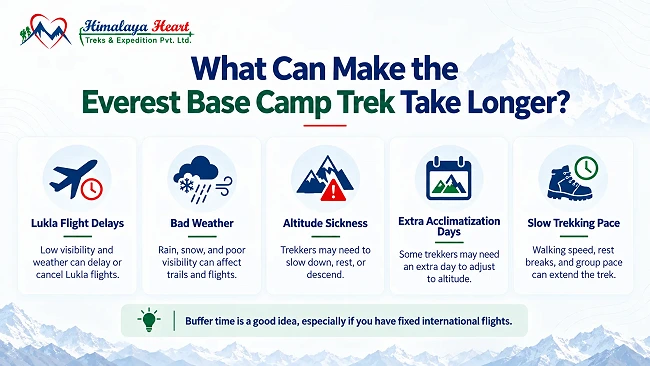
Even with good planning, things can change. Weather conditions and other factors beyond the control of trekking companies and trekkers impact mountain travel.
Lukla Flight Delays
Lukla flights may be delayed or cancelled due to low visibility, weather and other flight conditions. If you can't fly as planned, the start and/or end of your trek may change. This is why travellers with fixed international flights should consider adding some buffer time.
Bad Weather
Weather can affect flight conditions, as well as trekking conditions. Rain and snow can make trails more difficult at lower elevations and at higher elevations, respectively. Visibility is the most significant factor for flights, as suitable conditions are essential for aircraft operations.
Altitude Sickness
If you get altitude sickness, a trekker may have to slow down, rest or go down to a lower altitude. It can be risky to continue to go up if symptoms are worsening. Guides should be able to modify the itinerary as needed; safety is more important than the original itinerary.
Extra Acclimatization Days
Some trekkers may need an additional acclimatization day. This may help if your body isn't accustomed to the rate of change. Adding a day can extend the trip, but it may be a good idea for altitude.
Slow Trekking Pace
People don't walk at the same speed all the time. Some people like frequent breaks, while others prefer to move slowly and steadily. Group treks are usually arranged around the group's needs, and the walking programme may differ from the time indicated on an itinerary.
How Many Hours Do You Walk Each Day on the EBC Trek?
Generally, on most days, trekking takes about 4 to 7 hours. This is a guide, not a strict guideline. Shorter days can occur during acclimatization, when the purpose is to stay active without gaining too much additional elevation. Other days require a little more effort.
The trek from Lobuche to Everest Base Camp and back to Gorak Shep is very tough because of the altitude and terrain. The morning hike up to Kala Patthar may also be difficult due to its summit elevation of 5644 m (18517 ft).
Walking time varies for the following:
- Elevation
- Distance
- Trail conditions
- Weather
- Rest breaks
- Individual walking pace
- Group pace
Therefore, it is not a good idea to compare the hours spent trekking one day with the hours spent trekking another day without accounting for elevation and terrain.
How Many Days Should You Take Off Work for Everest Base Camp?
If you take leave from work, it is best to take the whole journey rather than just the trekking days. That means at least 15 to 18 days.
There are four possible parts to your schedule:
- Trekking days: You'll spend most of the journey walking between villages and major stops.
- Kathmandu days: You may need time for arrival, preparation, permits, equipment checks and departure
- Flight buffer: Weather conditions may affect flights to Lukla, so that you may need an additional day or two.
- International travel: If you are travelling internationally, be aware that you may need more travel days to arrive.
Planning 15-18 days away is more practical than working out a 12- or 15-day timeframe. This gives you enough time for the trek, Kathmandu arrangements, and potential flight changes. If your time is very limited, talk to your trek operator about your international travel dates before booking a set schedule.
Other Everest Base Camp Trek Duration Options
You can choose from several options, depending on your time.
| EBC Itinerary | Approx. Duration | Main Feature |
| Standard EBC Trek | 12 to 15 days | Classic route |
| Rapid EBC Trek | 9 to 11 days | Faster ascent |
| EBC with Helicopter Return | 10 to 13 days | Saves return trekking days |
| EBC Helicopter Tour | 1 day | No multi-day trek |
| EBC + Gokyo | 17 to 20+ days | Adds Gokyo Valley |
The standard route suits those who want a true trekking experience. Shorter options suit people with busy schedules, and helicopter-assisted trips minimize walking. Travellers who want to experience and explore more of the Everest region can combine their trek with the Gokyo Valley destination. Although it takes more time, it adds beautiful destinations such as Gokyo Ri, Gokyo Lake, and viewpoints during the trek.
Conclusion
The Everest Base Camp Trek generally lasts 12-15 days, depending on experience level, fitness, vacation time, and pace. Those who want a shorter trip but can adapt quickly to altitude changes can choose the 12-day trek. A 15-day trek offers extra flexibility for first-time trekkers and for people who don't want to push their luck.
No matter the length, the elevation chart should be a key factor. The best route gives your body enough time to acclimate and should be flexible for weather, flights, and other unforeseen changes. So, if you are ready to plan your journey to the Everest Base Camp, contact Himalaya Heart to discuss the right itinerary for your travel dates, experience and available time.
Frequently Asked Questions
How long does it take to trek to Everest Base Camp?
A standard Everest Base Camp Trek takes 12-15 days from Kathmandu, including the round trip. The walking part of the trek lasts 10 to 12 days, while acclimatization, flights, and Kathmandu arrangements add extra time. The exact time depends on how the itinerary is planned.
Is the Everest Base Camp trek 12 or 15 days?
It can be either, depending on how the itinerary is counted. The 12-day version usually refers to the trekking portion itself, while the 15-day itinerary includes additional days in Kathmandu for arrival, trip preparation or sightseeing, and departure. The actual trekking days, acclimatization stops, and walking schedule can remain the same in both itineraries. So, the 15-day option is longer overall, but it does not necessarily mean a slower trekking pace or more rest days on the trail.
Is 12 days enough for EBC?
Yes. With the right itinerary and proper acclimatization, you can do it in 12 days. The timetable is more strenuous than a longer one, and preparation is important.
Is 15 days enough time for Everest Base Camp?
Yes, 15 days is enough time for the Everest Base Camp trek for most trekkers. A 15-day itinerary usually provides enough time to follow the standard route, including acclimatization days, reach Everest Base Camp and Kala Patthar, and return to Lukla at a comfortable pace.
Can you do Everest Base Camp in 10 days?
Ten days is achievable, but it needs a more aggressive pace and altitude planning. Don't eliminate acclimatization days to save time; save time overall.
On the EBC trek, how many hours do you walk every day?
On many trekking days, you walk about 4 to 7 hours. On some days, altitude, terrain, and early morning starts can make the days longer, particularly on days involving Everest Base Camp and Kala Patthar.
Is there a chance of a longer trek to Everest Base Camp due to weather?
Yes. Flights to and from Lukla can be delayed by weather, and weather can also slow progress on the trail. A little time to spare in the trekking schedule is good.
Which is the shortest trek to Everest Base Camp?
The shortest itinerary to reach Everest Base Camp takes around 9 to 11 days. The time may be shorter if you take a helicopter option.
Do I need acclimatization for the Everest Base Camp Trek?
Acclimatization days are a crucial part of a classic EBC itinerary. Namche Bazaar and Dingboche are considered excellent places to acclimatise.
Is a 12-day EBC trek hard?
It can be challenging due to the short time frame. It's not the distance but the difficulty level, including altitude, long walking days, steepness and varying terrain.
Is a 15-day Everest Base Camp Trek difficult?
The trail itself doesn't get easier, but a longer duration makes the schedule less daunting. You'll have more time to keep up and ease up in between hard parts.
Can I add any additional days for my Everest Base Camp Trek?
Yes. Additional days may help with acclimatization, weather delays, or a slower pace. Talk with your trekking company before you leave about adding more days, which may be easier to handle.
Do you need a buffer day to rest after the EBC trek?
It's always a good idea to have a buffer, particularly when you have a set international flight. It is important to have additional time to reach Kathmandu after taking the Lukla flight because flights to Kathmandu may be disrupted.