

Nepal isn't just for hardcore mountaineers. Some of the most rewarding trails in the Himalayas are gentle enough for a first-time trekker with an average fitness level — and they still deliver jaw-dropping views of Everest, Annapurna, and Langtang. If you've been dreaming of Himalayan peaks but worry you're not "trekker material" yet, this guide is for you.
Below, we break down the best beginner-friendly trekking packages in Nepal, the ideal season to go, sample itineraries, required permits, and practical tips to help you plan your first Himalayan adventure with confidence.
Nepal is home to eight of the world's ten highest mountains, yet most visitors are surprised to learn that you don't need to summit anything to feel that scale up close. Beginner treks are built around the same trails used by generations of local traders, pilgrims, and porters — gentle stone staircases through terraced hillsides, rhododendron forests, and stone-walled villages where teahouses serve hot dal bhat and mountain views come free with breakfast. You walk a few hours a day, sleep in a warm bed each night, and let the landscape do the rest.
What makes these routes so approachable is the infrastructure built up around them over decades of trekking tourism. Well-marked trails, frequent teahouses, and knowledgeable local guides mean you're never far from a hot meal, a place to rest, or help if you need it. Many of the packages below can be tailored to a week or less, so even travelers with a tight vacation schedule can fit in a genuine Himalayan experience without needing months of preparation or specialized gear.
Whether you're after the iconic sunrise over Annapurna from Poon Hill, a first glimpse of Everest from a quiet ridge, or a short weekend hike from Kathmandu itself, there's a beginner-friendly trek on this list that fits your fitness level, timeframe, and sense of adventure.
Why Nepal Is Perfect for First-Time Trekkers
Nepal offers a huge range of trek difficulties, and the beginner-friendly routes are specifically designed with shorter walking days, lower maximum altitudes, and comfortable teahouse lodges along the way. You don't need technical climbing skills or prior high-altitude experience — just reasonable fitness, sturdy boots, and a sense of adventure. Many easy treks can be completed in under two weeks, making them ideal for travelers with limited vacation time.
What Makes a Trek "Beginner-Friendly"?
A trek is generally considered beginner-friendly in Nepal when it has:
- A maximum altitude under 4,000–4,500 meters (reducing altitude sickness risk)
- Short daily walking durations (4–6 hours)
- Well-established teahouse or lodge accommodation
- A shorter overall duration (5–10 days)
- Gradual, well-graded trails rather than steep technical sections
Best Beginner Trekking Packages in Nepal
Here are nine of the most popular easy treks, each suited to first-timers, families, and travelers short on time.
| Trek | Region | Duration | Max Altitude | Best For |
|---|---|---|---|---|
| Everest View Trek | Khumbu | 8 Days | ~3,880 m | Everest views without EBC-level effort |
| Pikey Peak Trek | Solukhumbu | 7–8 Days | ~4,065 m | Off-the-beaten-path Everest panoramas |
| Everest Panorama Trek | Khumbu | 8–9 Days | ~3,870 m | Sherpa culture and mountain views |
| Ghorepani Poon Hill Trek | Annapurna | 5–6 Days | ~3,210 m | Classic sunrise viewpoint trek |
| Khopra Danda Trek | Annapurna | 8–9 Days | ~3,660 m | Quiet ridgeline trail with fewer crowds |
| Mardi Himal Trek | Annapurna | 5–7 Days | ~4,500 m | Close-up Machhapuchhre (Fishtail) views |
| Langtang Valley Trek | Langtang | 7–8 Days | ~3,870 m | Nearest Himalayan trek to Kathmandu |
| Chisapani Nagarkot Trek | Kathmandu Valley | 2–3 Days | ~2,300 m | Ideal short trek / warm-up hike |
| Ruby Valley Trek | Ganesh Himal | 10 Days | ~3,400 m | Remote villages and cultural immersion |
Everest View Trek (8 Days)
The Everest View Trek is one of the most rewarding short itineraries in the Khumbu region, giving you a genuine taste of Everest country without the time, altitude strain, or physical demands of a full Base Camp expedition. The adventure begins with a dramatic mountain flight into Lukla, one of the world's most scenic airstrips, before the trail winds through pine forests and suspension bridges strung with prayer flags. You'll climb steadily to Namche Bazaar, the bustling Sherpa capital of the Khumbu, where stone houses, bakeries, and mountain gear shops sit beneath towering peaks. From there, short acclimatization hikes lead to panoramic viewpoints, culminating in a sunrise visit to the Everest View Hotel — widely regarded as one of the finest places on earth to watch dawn light strike Everest, Lhotse, and Ama Dablam simultaneously. Along the way, you'll pass through traditional villages, monasteries, and yak pastures, gaining insight into Sherpa culture and Buddhist tradition. With comfortable teahouse lodging, moderate daily walking hours, and no technical terrain, this 8-day trek is ideal for travelers who want big Himalayan views on a limited timeframe.

Everest View Trek Itinerary
| Day | Route | Highlights |
|---|---|---|
| Day 1 | Arrival in Kathmandu | Airport pickup, hotel check-in, trip briefing, and trekking gear check |
| Day 2 | Fly to Lukla & Trek to Phakding | Scenic mountain flight into Lukla; short trek downhill through Sherpa villages along the Dudh Koshi River |
| Day 3 | Phakding to Namche Bazaar | Cross suspension bridges, enter Sagarmatha National Park, steep climb to the Sherpa capital of the Khumbu |
| Day 4 | Acclimatization Day – Hike to Hotel Everest View & Khumjung Village | Short acclimatization hike for stunning views of Everest, Lhotse, and Ama Dablam; explore Khumjung's monastery and Sherpa culture |
| Day 5 | Namche Bazaar to Tengboche | Ridge walk with mountain panoramas, descent to Dudh Koshi, climb to Tengboche and its famous monastery |
| Day 6 | Tengboche to Monjo | Descend through forest and villages, retracing the route back toward lower elevation |
| Day 7 | Monjo to Lukla | Final trekking day back to Lukla, passing familiar villages and bridges |
| Day 8 | Fly Back to Kathmandu | Morning flight from Lukla to Kathmandu; free time or departure |
Pikey Peak Trek
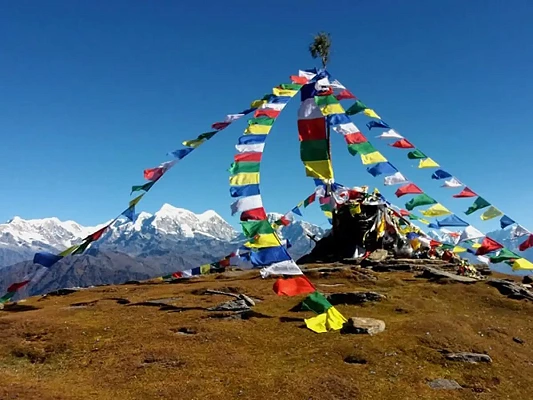
Long before Everest Base Camp became the region's marquee trek, Sir Edmund Hillary himself trekked to the summit of Pikey Peak and reportedly called its view one of the finest in the entire Himalaya. Today, the Pikey Peak Trek remains one of Nepal's best-kept secrets — a route that delivers a jaw-dropping 360-degree panorama without the crowds of the main Khumbu trail. Starting from the lower, forested hills east of the Everest region, the trek passes through rhododendron and pine woodlands, traditional Sherpa and Rai villages, and quiet monasteries rarely visited by outsiders. The climb to the 4,065-meter summit rewards trekkers with an unobstructed sweep of the Himalaya, from Everest, Lhotse, and Makalu in the east to Kanchenjunga in the far distance and even glimpses toward Annapurna on exceptionally clear mornings. Because the route sees a fraction of the foot traffic of the classic Everest trails, it offers a more intimate, authentic experience of rural mountain life alongside world-class scenery — perfect for trekkers who want depth and solitude as much as the view itself.
Pikey Peak Trek itinerary
| Day | Route | Duration | Altitude |
|---|---|---|---|
| Day 1 | Kathmandu to Phaplu (drive) | 9 hours | 1,400 m → 2,413 m |
| Day 2 | Phaplu to Junbesi | 4/5 hours | 2,413 m → 2,680 m |
| Day 3 | Junbesi to Lamjura | 5/6 hours | 2,680 m → 3,530 m |
| Day 4 | Lamjura to Pikey Base Camp | 7/8 hours | 3,530 m → 3,640 m |
| Day 5 | Pikey Base Camp to Pikey Peak Summit, then back to Jhapre | — | 3,640 m → 4,065 m (summit) → 2,820 m |
| Day 6 | Jhapre to Dhap | 4/5 hours | 2,820 m → 2,850 m |
| Day 7 | Dhap to Kathmandu (drive) | 8/9 hours | 2,850 m → 1,400 m |
Everest Panorama Trek
Designed for travelers who want to combine iconic mountain views with a slower, more cultural pace, the Everest Panorama Trek is one of the gentlest introductions to the Khumbu region. The trail follows the same lower stretches used by Everest Base Camp trekkers — flying into Lukla and climbing through forested trails and Sherpa settlements to Namche Bazaar — but takes a more relaxed pace, allowing extra time to explore Namche's markets and the nearby village of Khumjung, home to a historic monastery and long-standing mountaineering heritage. Rather than pushing higher into thinner air, this trek lingers at moderate altitudes, giving travelers ample time to absorb Sherpa customs, architecture, and daily life while still enjoying sweeping views of Everest, Ama Dablam, Thamserku, and Kwangde. It's an excellent option for first-time trekkers, families, or anyone who wants a rich cultural experience alongside classic Himalayan scenery, without the physical demands of higher-altitude routes.

Everest Panorama Trek Itinerary
| Day | Route | Altitude |
|---|---|---|
| Day 1 | Arrival at Kathmandu | 1,400 m |
| Day 2 | Explore Kathmandu | 1,400 m |
| Day 3 | Fly Kathmandu to Lukla, trek to Phakding | 2,860 m → 2,610 m |
| Day 4 | Trek to Namche Bazaar | 2,610 m → 3,440 m |
| Day 5 | Acclimatization Day in Namche Bazaar | 3,440 m |
| Day 6 | Trek to Tyangboche | 3,440 m → 3,860 m |
| Day 7 | Trek to Khumjung | 3,860 m → 3,790 m |
| Day 8 | Trek to Monjo | 3,790 m → 2,835 m |
| Day 9 | Trek to Lukla | 2,835 m → 2,860 m |
| Day 10 | Fly back to Kathmandu | 2,860 m → 1,400 m |
| Day 11 | Final Departure | 1,400 m |
Ghorepani Poon Hill Trek
Nepal's most iconic short trek, the Ghorepani Poon Hill Trek has earned its reputation for good reason. The route climbs through some of the country's most beautiful rhododendron forests — a riot of red and pink blooms in spring — and passes through stone-paved villages where trailside teahouses serve hot meals and warm hospitality. The trek's signature moment comes before dawn, with an early climb to the Poon Hill viewpoint at 3,210 meters, where a legendary sunrise gradually illuminates the entire Annapurna and Dhaulagiri ranges, including Annapurna South, Machhapuchhre (Fishtail Mountain), and Dhaulagiri itself. Beyond the summit, the trail winds through Gurung and Magar villages, offering a window into the everyday rhythms of hill life in the Annapurna foothills. With manageable daily walking distances, well-established teahouse infrastructure, and no technical difficulty, this trek is a favorite for first-time trekkers, families, and anyone short on time but eager for that classic postcard Himalayan sunrise.

Ghorepani Poon Hill Itinerary
| Day | Route | Altitude |
|---|---|---|
| Day 1 | Arrival at Kathmandu | 1,400 m |
| Day 2 | Kathmandu Sightseeing Tour | 1,400 m |
| Day 3 | Drive to Pokhara | 1,400 m → 820 m |
| Day 4 | Drive to Nayapul, trek to Tikhedhunga | 820 m → 1,500 m |
| Day 5 | Trek to Ghorepani | 1,500 m → 2,875 m |
| Day 6 | Trek to Tadapani | 2,875 m → 2,630 m |
| Day 7 | Trek to Ghandruk | 2,630 m → 1,940 m |
| Day 8 | Trek to Nayapul, drive to Pokhara | 1,940 m → 820 m |
| Day 9 | Drive to Kathmandu | 820 m → 1,400 m |
| Day 10 | Final Departure | 1,400 m |
Khopra Danda Trek
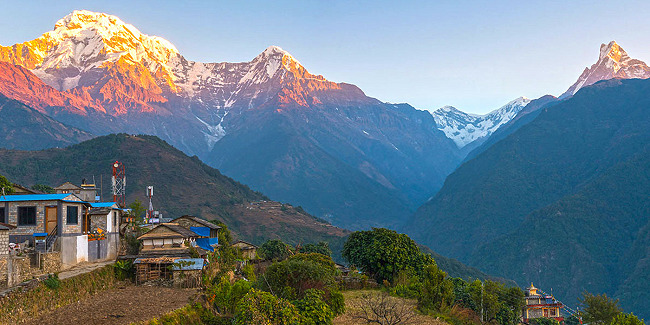
For trekkers who love the Annapurna region's scenery but want to escape its more heavily trafficked trails, the Khopra Danda Trek is an excellent alternative. The route climbs along a remote, high ridge — Khopra Danda — that delivers uninterrupted, close-up views into the heart of the Annapurna Sanctuary, including Annapurna South, Nilgiri, and the sacred peak of Machhapuchhre. Because the trail diverges from the main Annapurna Base Camp route, it sees far fewer trekkers, offering a genuine sense of solitude even during peak season. Along the way, the path passes through rhododendron and oak forests, traditional Gurung villages, and high pastures, with the option to detour to the sacred alpine lake of Khayer Lake. Lodging is simpler and more rustic than on the main trails, which only adds to the feeling of being somewhere wilder and less discovered. It's an ideal choice for experienced trekkers or anyone seeking Annapurna's grandeur minus the crowds.
Khopra Danda Trek Itinerary
| Day | Route | Altitude |
|---|---|---|
| Day 1 | Arrival in Kathmandu | 1,400 m |
| Day 2 | Drive to Pokhara | 1,400 m → 820 m |
| Day 3 | Drive to Nayapul, trek to Ulleri | 820 m → 1,960 m |
| Day 4 | Trek to Ghorepani | 1,960 m → 2,874 m |
| Day 5 | Trek to Tadapani | 2,874 m → 2,630 m |
| Day 6 | Trek to Bayeli Kharka | 2,630 m → 3,420 m |
| Day 7 | Trek to Upper Chistibung | 3,420 m → 3,400 m |
| Day 8 | Trek to Khopra Danda | 3,400 m → 3,660 m |
| Day 9 | Rest Day at Khopra Danda | 3,660 m |
| Day 10 | Trek to Tatopani | 3,660 m → 1,190 m |
| Day 11 | Return to Pokhara | 1,190 m → 820 m |
| Day 12 | Drive back to Kathmandu | 820 m → 1,400 m |
| Day 13 | Final Departure | 1,400 m |
Mardi Himal Trek
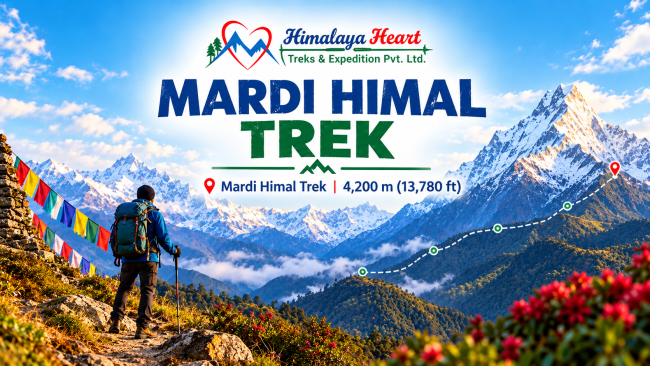
One of the newest additions to Nepal's trekking scene, the Mardi Himal Trek has quickly become a favorite for its dramatic, close-up views of Machhapuchhre (Fishtail Mountain) — a peak so sacred it has never been officially summited. The trail climbs through dense rhododendron and bamboo forest before breaking out onto an open ridgeline, where the surrounding peaks suddenly feel startlingly close. The final push to the upper viewpoint, above 4,200 meters, is steeper and more exposed than the trek's lower stages, offering a satisfying physical challenge for fit beginners and a genuine sense of accomplishment at the top. In exchange for that extra effort, trekkers are rewarded with a viewpoint that rivals far longer and more difficult treks — a sweeping vista of Machhapuchhre, Annapurna South, and Hiunchuli rising almost directly overhead. Because the route is shorter and less developed than the classic Annapurna trails, it also offers a quieter, more rugged experience, making it a great option for travelers with limited time who still want a taste of high-altitude trekking.
Mardi Himal Trek Itinerary
| Day | Route | Altitude |
|---|---|---|
| Day 1 | Arrival Day in Kathmandu | 1,400 m |
| Day 2 | Kathmandu Sightseeing Tour | 1,400 m |
| Day 3 | Drive to Pokhara | 1,400 m → 820 m |
| Day 4 | Drive to Kande, trek to Deurali | 820 m → 2,100 m |
| Day 5 | Trek to Forest Camp | 2,100 m → 2,600 m |
| Day 6 | Trek to High Camp | 2,600 m → 3,600 m |
| Day 7 | Hike to Mardi Himal Base Camp, then trek down to Low Camp | 3,600 m → 4,500 m → 2,900 m |
| Day 8 | Trek to Siding, drive to Pokhara | 2,900 m → 820 m |
| Day 9 | Drive to Kathmandu | 820 m → 1,400 m |
| Day 10 | Final Departure | 1,400 m |
Langtang Valley Trek
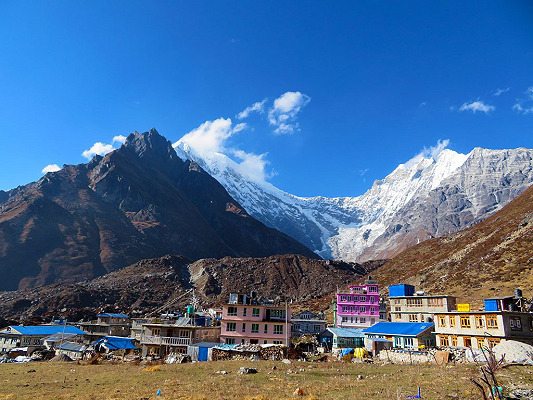
Just a few hours' drive north of Kathmandu, the Langtang Valley Trek offers the rare combination of dramatic Himalayan scenery and genuine accessibility — no domestic flight required. The trail follows the Langtang River upstream through a glacier-carved valley flanked by steep forested slopes, eventually opening into high pastureland dotted with grazing yaks and traditional stone chortens. This is Tamang heartland, and the trek offers deep insight into Tamang Buddhist culture, visible in the mani walls, prayer wheels, and monasteries that line the trail, including the atmospheric Kyanjin Gompa. The valley's centerpiece is Langtang Lirung, a towering 7,227-meter peak that dominates the skyline for much of the trek, with additional viewpoints offering panoramas of surrounding glaciers and ridgelines. Having been affected by the 2015 earthquake, the valley's rebuilt villages also carry a resilient, welcoming spirit that adds emotional depth to the journey. For travelers who want a full Himalayan trekking experience without the logistics of a mountain flight, Langtang is one of the most convenient and rewarding options in Nepal.
Langtang Valley Trek Itinerary
| Day | Route | Altitude |
|---|---|---|
| Day 1 | Arrival Day in Kathmandu | 1,400 m |
| Day 2 | Kathmandu Sightseeing Tour | 1,400 m |
| Day 3 | Drive to Syabrubesi | 1,400 m → 1,467 m |
| Day 4 | Trek to Lama Hotel | 1,467 m → 2,470 m |
| Day 5 | Trek to Mundu | 2,470 m → 3,545 m |
| Day 6 | Trek to Kyanjin Gompa | 3,545 m → 3,870 m |
| Day 7 | Hike to Kyanjin Ri | 3,870 m → 4,775 m |
| Day 8 | Trek to Lama Hotel | 4,775 m → 2,470 m |
| Day 9 | Trek to Syabrubesi | 2,470 m → 1,467 m |
| Day 10 | Drive back to Kathmandu | 1,467 m → 1,400 m |
| Day 11 | Departure Day | 1,400 m |
Chisapani Nagarkot Trek
Ideal for travelers with limited time or those easing into higher-altitude trekking, the Chisapani Nagarkot Trek offers a genuine Himalayan trekking experience in just 2–3 days, starting and ending right at the edge of the Kathmandu Valley. The trail climbs gently out of the valley rim through pine and oak forest, passing traditional Tamang and Newari villages where terraced fields cascade down the hillsides. The route's namesake stops — Chisapani and Nagarkot — are both renowned viewpoints, with Nagarkot in particular famous for its sweeping sunrise panoramas stretching from the Langtang range to the Annapurna Himalaya on clear days. Because the trek requires no special permits, no flights, and minimal preparation, it's an excellent way to sample the Himalaya as a short extension to a Kathmandu visit, or as a gentle warm-up before a longer trek elsewhere in Nepal.

Chisapani Nagarkot Trek Itinerary
| Day | Route | Duration | Altitude |
|---|---|---|---|
| Day 1 | Drive to Sundarijal, trek to Chisapani | 5 hours | 1,350 m → 2,215 m |
| Day 2 | Trek to Nagarkot | — | 2,215 m → 2,175 m |
| Day 3 | Trek to Changunarayan Temple, visit Bhaktapur, return to Kathmandu | — | 2,175 m → 1,541 m → 1,400 m |
Ruby Valley Trek (10 Days)
For travelers seeking a trek defined as much by culture as by scenery, the Ruby Valley Trek ventures into the lesser-visited Ganesh Himal region, home to remote Tamang and Ghale communities whose way of life has changed little over generations. Named for the ruby deposits once mined in the area, the trail winds through terraced hillsides, dense forests, and traditional villages built from stone and timber, with prayer flags and chortens marking the route's deep Buddhist roots. Compared to the busier trails of the Everest and Annapurna regions, Ruby Valley offers a slower, more immersive pace — homestay-style lodging, warm interactions with local families, and a rare chance to witness Tamang and Ghale customs, festivals, and daily rhythms up close. The scenery is no less impressive, with views toward the Ganesh Himal and Langtang ranges unfolding along the ridgelines, but it's the cultural intimacy that sets this 10-day trek apart. It's an excellent choice for travelers who've done a "classic" trek before and are ready to go further off the beaten path, without needing advanced mountaineering skills or extreme altitude exposure.

Ruby Valley Trek Itinerary
| Day | Route | Duration | Altitude |
|---|---|---|---|
| Day 1 | Arrival in Kathmandu | — | 1,350 m |
| Day 2 | Drive from Kathmandu to Syabrubesi | 7/8 hours | 1,350 m → 1,503 m |
| Day 3 | Trek from Syabrubesi to Gatlang | 5/6 hours | 1,503 m → 2,337 m |
| Day 4 | Trek from Gatlang to Somdang | 6/7 hours | 2,337 m → 3,271 m |
| Day 5 | Trek from Somdang over Pangsang Pass to Tipling | 7 hours | 3,271 m → 3,842 m → 2,087 m |
| Day 6 | Trek from Tipling to Borang Village | 5/6 hours | 2,087 m → 1,700 m |
| Day 7 | Trek from Borang to Kuri Village | 5 hours | 1,700 m → 1,785 m |
| Day 8 | Trek from Kuri to Raute Village via Moti Gompa | 6 hours | 1,785 m → 850 m |
| Day 9 | Drive from Raute Village to Kathmandu | 6/7 hours | 850 m → 1,350 m |
| Day 10 | Final Departure | — | 1,350 m |
Best Season for Beginner Treks in Nepal
Timing your trek right makes an enormous difference to comfort, safety, and visibility.
| Season | Months | Conditions |
|---|---|---|
| Autumn (Best) | September – November | Clear skies, stable weather, best mountain visibility, peak season |
| Spring (Best) | March – May | Warm days, blooming rhododendrons, excellent visibility |
| Winter | December – February | Cold at altitude but clear skies; good for lower-elevation treks (Poon Hill, Chisapani-Nagarkot) |
| Monsoon | June – August | Rain, leeches, and cloud cover; not recommended except in rain-shadow areas |
For most beginners, autumn (Sept–Nov) and spring (Mar–May) offer the best combination of mild weather, clear mountain views, and reliable trail conditions.
Permits Required for Nepal Trekking (2026)
Every trekking region in Nepal requires specific permits. Here's what beginner trekkers typically need:
| Region | Permits Required | Approx. Cost (Foreigners) |
|---|---|---|
| Everest / Khumbu (Everest View, Pikey Peak, Everest Panorama) | Sagarmatha National Park Permit + Khumbu Pasang Lhamu Rural Municipality Permit | NPR 3,000 + NPR 3,000 (~NPR 6,000 total) |
| Annapurna (Poon Hill, Khopra Danda, Mardi Himal) | ACAP (Annapurna Conservation Area Permit) + TIMS Card | NPR 3,000 + NPR 2,000 (~NPR 5,000 total) |
| Langtang Valley | Langtang National Park Permit + TIMS Card | NPR 3,000 + NPR 2,000 |
| Chisapani–Nagarkot | Shivapuri Nagarjun National Park Permit | NPR 3,390 (approx.) |
| Ruby Valley (Ganesh Himal) | TIMS Card + Local Area Permit | Varies by route |
A few important notes for 2026:
- A licensed trekking guide is now mandatory for foreign trekkers on most routes, including Annapurna and Langtang — independent solo trekking without a guide is no longer permitted on the national trail network.
- Permit fees and rules change periodically, so always confirm current rates with your trekking operator or the Nepal Tourism Board before departure.
- Booking through a registered agency means your permits are arranged for you, so you can skip the paperwork and queues entirely.
What to Pack for an Easy Nepal Trek
- Broken-in, waterproof hiking boots
- Layered clothing (base layer, fleece, insulated jacket, rain shell)
- A daypack (20–30 liters) plus a duffel bag for porters
- Trekking poles for knee support on descents
- Sunscreen, sunglasses, and a wide-brim hat
- A basic first-aid kit and any personal medication
- A reusable water bottle or bladder with a purification method
- A headlamp for early sunrise viewpoints and teahouse use
Tips for First-Time Trekkers in Nepal
- Start slow and hydrate often — even on "easy" treks, altitude can affect anyone.
- Break in your boots before you arrive; blisters ruin more treks than altitude does.
- Choose a package with a built-in acclimatization day if your route goes above 3,000 m.
- Travel insurance with emergency evacuation coverage is strongly recommended for all Himalayan treks.
- Book with a registered local operator so permits, guides, and teahouse logistics are handled for you.
- Pack light — teahouses along these routes offer basic meals and blankets, so you don't need to carry everything.
Frequently Asked Questions
1. What is the easiest trek in Nepal for beginners?
The Ghorepani Poon Hill Trek and the Chisapani Nagarkot Trek are widely considered the easiest treks in Nepal for first-timers. Both feature well-maintained trails, comfortable teahouse lodging, moderate daily walking hours, and altitudes low enough to avoid serious altitude sickness risk — making them ideal starting points for anyone new to trekking.
2. How many days do I need for a beginner-friendly trek in Nepal?
Beginner treks in Nepal typically range from 3 to 10 days. Short options like the Chisapani Nagarkot Trek (3 days) or Ghorepani Poon Hill Trek (5–6 days) suit travelers with limited time, while treks like the Everest View Trek (8 days) or Everest Panorama Trek (10–11 days) offer a fuller experience without requiring advanced fitness or high-altitude acclimatization.
3. Do I need prior trekking experience to do a trek in Nepal?
No. Most beginner-level treks — including Ghorepani Poon Hill, Chisapani Nagarkot, and the Everest View Trek — are designed for travelers with no prior trekking experience. A reasonable level of everyday fitness (regular walking or light cardio) is usually enough, though some walking practice beforehand helps.
4. What is the best short trek to see Mount Everest without going to Base Camp?
The Everest View Trek and Everest Panorama Trek are the top choices for seeing Everest, Lhotse, and Ama Dablam without pushing all the way to Everest Base Camp. Both routes reach Namche Bazaar and offer sunrise views from Everest View Hotel, all within about 8–11 days.
5. Is altitude sickness a risk on beginner treks in Nepal?
Altitude sickness risk is generally low on beginner treks, since most stay below 3,500–4,000 meters. Treks like Ghorepani Poon Hill (max ~3,210m) and Chisapani Nagarkot (max ~2,215m) carry minimal risk. Treks that go higher, such as Pikey Peak (4,065m) or Mardi Himal (4,500m), include acclimatization days and gradual ascent profiles to reduce risk.
6. What is the best trekking season in Nepal for beginners?
The two best seasons are autumn (September to November) and spring (March to May), when skies are clear, temperatures are moderate, and mountain visibility is at its best. Spring also brings blooming rhododendron forests, especially beautiful on routes like Ghorepani Poon Hill and Mardi Himal.
7. Do I need a permit to trek in Nepal?
Yes. Most treks require a TIMS (Trekkers' Information Management System) card and an area-specific permit — such as the Sagarmatha National Park permit for Everest-region treks, the Annapurna Conservation Area Permit (ACAP) for Annapurna-region treks, or the Langtang National Park permit for Langtang Valley. Permit requirements vary by route, so it's worth confirming which ones apply to your chosen trek.
8. What is the difference between teahouse trekking and camping treks?
Teahouse trekking means staying in small, family-run lodges along the trail that provide beds and meals — the standard (and easier) option for treks like Everest View, Ghorepani Poon Hill, and Langtang Valley. Camping treks require carrying or porting tents and supplies, typically used only on more remote routes like sections of Ruby Valley or Khopra Danda where teahouses are limited.
9. Which trek is best for mountain views without a domestic flight?
The Langtang Valley Trek is the top choice, since it starts with a scenic drive from Kathmandu rather than a flight to Lukla — making it more reliable in terms of scheduling and often more budget-friendly. The Chisapani Nagarkot Trek and Ghorepani Poon Hill Trek (via Pokhara) are also flight-free options.
10. How much does a beginner trekking package in Nepal cost?
Costs vary by trek length, region, and service level, but beginner packages generally include guide and porter fees, teahouse accommodation, permits, and meals during the trek. Shorter treks (3–6 days) are typically less expensive than longer ones (8–13 days), and treks requiring a Lukla flight (like Everest View or Everest Panorama) tend to cost more than drive-in treks like Langtang or Ghorepani Poon Hill due to flight fares.
Final Thoughts
You don't need to be an experienced mountaineer to experience the magic of the Himalayas. Nepal's trekking trails were built around ordinary travelers long before they became a bucket-list destination for elite climbers, and that spirit still shows in how accessible these routes remain today. From the short Chisapani Nagarkot ridge walk — doable as a long weekend right from the Kathmandu Valley rim — to the culturally rich, ten-day Ruby Valley Trek through remote Tamang and Ghale villages, Nepal has a beginner-friendly package for every fitness level, time budget, and travel style.
What makes these treks so approachable isn't just the gentle terrain or the well-worn trails — it's the infrastructure built up around them over decades. Teahouses appear at just the right intervals, offering a hot meal and a warm bed exactly when your legs need the break. Local guides and porters, many from the very villages you'll pass through, turn a physical challenge into a cultural exchange. And the mountains themselves seem to reward effort generously: a few hours of steady walking is often all it takes to earn a sunrise view that would otherwise require weeks of technical climbing to reach.
Whether you're drawn to the drama of Everest, Lhotse, and Ama Dablam on the Everest View or Panorama treks, the sweeping 360-degree panorama from Pikey Peak, the rhododendron-lined trails and legendary sunrise of Ghorepani Poon Hill, or the quieter, more remote paths of Khopra Danda and Ruby Valley, there's a route here that matches exactly the kind of adventure you're looking for — whether that's a short, easy introduction or a deeper, more immersive journey.
The formula for a great first trek in Nepal is simple: pick the right season, choose a trail that matches your interests and fitness level, secure your permits, hire a good guide, and let the mountains take care of the rest. Once you've stood on a ridge with the world's highest peaks stretched out in front of you, it's hard not to start planning the next one.