
Nepal has always been the dream destination for trekkers, but a lot of people still believe that walking through the Himalayas means spending a fortune. That's simply not true. Between domestic flights, guide fees, permits, and gear, costs can add up quickly if you don't plan carefully — but away from the crowded, expensive routes, Nepal is full of trails that give you the same soul-stirring mountain views, warm teahouse hospitality, and rich mountain culture without draining your savings.
The real secret to budget trekking in Nepal isn't finding a "cheap" trek — it's knowing which regions require costly flights, which ones you can reach by local bus, which seasons push prices up, and which small daily habits (snacks, charging, hot showers, Wi-Fi) quietly eat into your trekking budget. A trek that costs a backpacker $25 a day can easily cost an unprepared traveler $60 a day on the exact same trail.
Whether you're a backpacker on a tight budget, a student planning your first Himalayan adventure, or a traveler who just wants real value for money, there's a trek out there for you. Below is a complete, detailed guide to seven of the best low-budget treks in Nepal, covering everything from itineraries and best seasons to difficulty levels, culture, and practical money-saving tips.
1. Everest View Trek – 8 Days
If you want to see Mount Everest without committing to the long, expensive, and physically demanding Everest Base Camp trek, the Everest View Trek is the perfect shortcut. In just 8 days, you fly into Lukla, walk through Sherpa villages, and reach viewpoints near Tengboche and Khumjung that offer jaw-dropping views of Everest, Lhotse, and Ama Dablam — all at a fraction of the cost and time of the full Base Camp route.
This trek was designed for travelers who don't have the two full weeks that Everest Base Camp demands, but who still want the genuine Khumbu experience: the Lukla mountain airstrip, swinging suspension bridges over glacial rivers, yak caravans on the trail, and the unmistakable smell of juniper incense drifting from monastery courtyards. Because you turn back before the high, expensive, and slow-moving stretch beyond Dingboche, you save several days of accommodation, food, and permit costs while still standing close enough to Everest to feel its scale.
It's an especially good option for travelers on a strict schedule, first-time high-altitude trekkers who want to test how their body handles elevation before committing to something longer, or families trekking with older children.

Everest View Trek – 8 Days Itinerary Table
| Day | Route | Altitude | Approx. Walking Time |
|---|---|---|---|
| 1 | Fly Kathmandu to Lukla, trek to Phakding | 2,610 m | 3–4 hours |
| 2 | Phakding to Namche Bazaar | 3,440 m | 5–6 hours |
| 3 | Acclimatization day in Namche Bazaar | 3,440 m | 2–3 hours (short hike) |
| 4 | Namche to Tengboche | 3,860 m | 5–6 hours |
| 5 | Tengboche to Khumjung via Everest View Hotel | 3,790 m | 4–5 hours |
| 6 | Khumjung to Namche Bazaar | 3,440 m | 3 hours |
| 7 | Namche to Lukla | 2,860 m | 6–7 hours |
| 8 | Fly Lukla to Kathmandu | 1,400 m | 35-minute flight |
Best Season for Everest View Trek
Spring (March–May) and Autumn (September–November) offer the clearest skies, stable Lukla flights, and the best mountain visibility. Spring brings blooming rhododendron forests along the lower trail, while autumn (especially October) gives the sharpest, dust-free mountain views following the monsoon. Winter (December–February) is possible and considerably cheaper, though early mornings are bitterly cold. Monsoon season (June–August) is best avoided due to cloud cover and flight delays into Lukla.
Everest View Trek Permits
Here's the current (2026) permit breakdown for the Everest View Trek — since the route runs through the same Sagarmatha National Park and Khumbu Pasang Lhamu Rural Municipality area as the Everest Base Camp trail, it requires the same two permits, with no TIMS card needed.
| Permit Name | Purpose | Foreign Trekkers | SAARC Nationals | Nepali Citizens | Where to Obtain |
|---|---|---|---|---|---|
| Sagarmatha National Park Entry Permit | Entry into the Sagarmatha (Everest) National Park, a UNESCO World Heritage Site | NPR 3,000 (~$23) | NPR 1,500 (~$11) | NPR 100 (~$0.75) | Nepal Tourism Board, Kathmandu or Monjo checkpoint |
| Khumbu Pasang Lhamu Rural Municipality Entry Permit | Local municipality fee funding trail maintenance, toilets, and rescue coordination in Khumbu villages | NPR 3,000 (~$23) | NPR 2,000 (~$15) | NPR 100 (~$0.75) | Lukla or Monjo checkpoint |
| TIMS Card | Trekker information/tracking system | Not required | Not required | Not required | — (discontinued in Khumbu since 2018) |
| Total Permit Cost | — | ~NPR 6,000 (~$45) | ~NPR 3,500 (~$26) | ~NPR 200 (~$1.50) | — |
Everest View Trek Difficulty
Easy to Moderate — suitable for beginners with a reasonable fitness level. No technical climbing skills, ropes, or prior high-altitude experience are required. The main physical challenge is the steep climb from Phakding to Namche Bazaar and the altitude gain over a short period, so a few weeks of general fitness preparation (walking, stair climbing, light cardio) beforehand goes a long way.
Culture, Nature & Religion
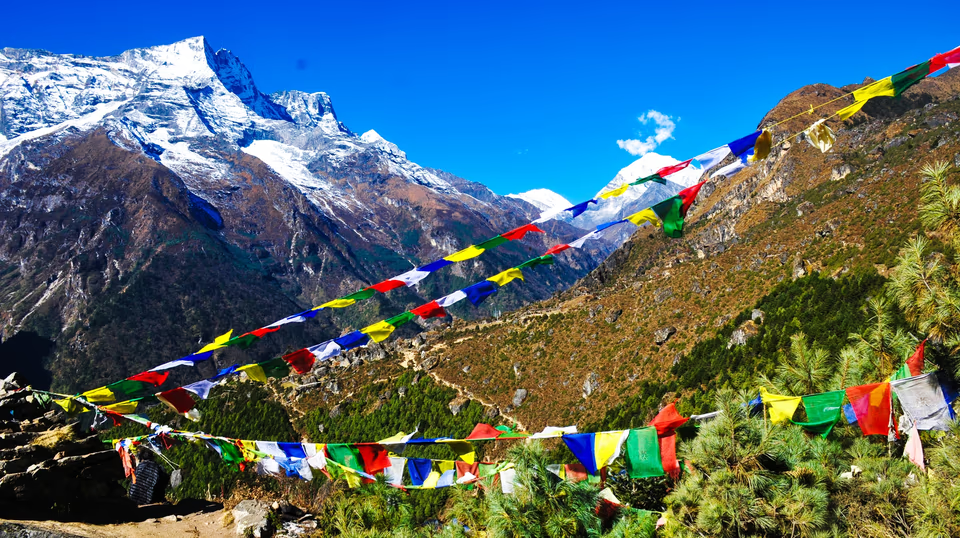
This trek takes you deep into Sherpa territory, home to prayer flags, mani walls, and centuries-old monasteries like Tengboche Monastery, the spiritual heart of the Khumbu region. You'll pass through Sagarmatha National Park, a UNESCO World Heritage Site rich with rhododendron forests, pine woods, and rare wildlife like the Himalayan musk deer, pheasants, and occasionally the elusive snow leopard at higher elevations. Namche Bazaar itself is worth a slow exploration day, with its Saturday market, Sherpa Culture Museum, and bakeries that reflect decades of mountaineering history.
Money-Saving Tips in Everest View Tgrek
- Trek during shoulder season (early March or late November) for cheaper flights and accommodation, since prices spike in peak October and April.
- Book your Lukla flight in advance to avoid last-minute price hikes, which can double closer to departure dates.
- Choose local teahouses over lodges advertised for tourists — the food and comfort level are usually similar, but prices are noticeably lower.
- Carry a reusable water bottle and use purification tablets or a filter instead of buying bottled water, which gets progressively more expensive the higher you climb.
- Consider trekking without a private porter if you're only carrying a light daypack, and split porter/guide costs with other trekkers if you're in a group.
Meals & Accommodation During the Everest View Trek
Accommodation is in simple, family-run teahouses with twin-sharing rooms, usually made of wood with thin walls, a shared squat or Western-style toilet, and blankets provided. Meals typically include dal bhat (rice, lentils, vegetables), noodles, momos, and hot soups, with dal bhat generally offering the best value since refills are usually free. Basic rooms with shared bathrooms are the most budget-friendly option, while hot showers, device charging, and Wi-Fi cost a small extra fee at higher altitudes — factor a few extra dollars per day into your budget for these.
2. Pikey Peak Trek
Once described by Sir Edmund Hillary as offering one of the best views in the entire Everest region, the Pikey Peak Trek remains one of Nepal's best-kept secrets. It's quieter, cheaper, and less touristy than the classic Everest routes, yet it delivers panoramic views of Everest, Kanchenjunga, and Makalu from a single summit point.
What makes this trek stand out for budget travelers is that it starts by road rather than by flight — you drive or take a local bus to Jiri or Shivalaya, following the original trail that expeditions used before the Lukla airstrip existed. This alone removes one of the biggest expenses of Everest-region trekking. The trail winds through pristine forest, remote hillside villages, and terraced farmland that rarely sees foreign trekkers, giving the whole route a more authentic, undiscovered feel.

Pikey Peak Trek Itinerary Table
| Day | Route | Altitude | Approx. Walking Time |
|---|---|---|---|
| 1 | Drive/fly Kathmandu to Jiri or Shivalaya | 1,935 m | 7–8 hours by road |
| 2 | Trek to Bhandar | 2,190 m | 5–6 hours |
| 3 | Bhandar to Sete | 2,575 m | 6 hours |
| 4 | Sete to Pikey Peak Base Camp | 3,600 m | 5–6 hours |
| 5 | Hike to Pikey Peak summit, trek to Junbesi | 3,807 m | 6–7 hours |
| 6 | Junbesi to Phaplu | 2,468 m | 4–5 hours |
| 7 | Drive Phaplu to Kathmandu | 1,400 m | 8–9 hours by road |
Best Season for Pikey Peak Trek
Autumn and spring are ideal for clear summit views, though this route is also trekkable in winter, when the trail is nearly empty and you may catch a dusting of snow on Pikey Peak itself. Monsoon months bring leeches and slippery trails on the lower forested sections, so they're best avoided.
Pikey Peak Trek Permits
Here's the permit breakdown for the Pikey Peak Trek (2026). Note: Pikey Peak does not enter Sagarmatha National Park, so permit requirements depend mainly on your starting point (Jiri/Shivalaya/Dhap vs. Phaplu).
| Permit Name | Purpose | Foreign Trekkers (FIT) | Foreign Trekkers (Group/Agency) | SAARC Nationals | Where to Obtain |
|---|---|---|---|---|---|
| Gaurishankar Conservation Area Permit (GCAP) | Entry into the Gaurishankar Conservation Area — required only if starting from Jiri, Shivalaya, or Dhap Bazaar | NPR 3,000 (~$22–23) | NPR 3,000 (~$22–23) | NPR 1,500 (~$11) | Nepal Tourism Board, Kathmandu |
| TIMS Card (Trekkers' Information Management System) | Trekker safety record and monitoring | NPR 2,000 (~$15) | NPR 1,000 (~$7) | NPR 600 / NPR 300 (group) | NTB or TAAN office, Kathmandu |
| Local Area Permit | Local municipality entry fee for certain villages en route | NPR 2,000 (~$15) | NPR 2,000 (~$15) | Minimal/varies | Checkpoints en route (e.g., Dhap, Jiri) |
| Sagarmatha National Park Permit | Not required — standard Pikey Peak route does not enter the park | N/A | N/A | N/A | — |
| Total Permit Cost (approx.) | — | ~NPR 7,000 (~$50–55) | ~NPR 6,000 (~$45) | ~NPR 2,500–3,000 (~$18–22) | — |
Pikey Peak Trek Difficulty
Moderate — long walking days but no high-altitude acclimatization concerns since the maximum altitude stays under 4,000 m. The route does involve consistent daily ascents and descents through hilly terrain, so decent stamina is more important here than altitude tolerance.
Culture, Nature & Religion
The trail passes through Sherpa, Rai, and Tamang villages, dense rhododendron and pine forests, and small Buddhist monasteries and chortens tucked into hillsides. Because it's off the main tourist trail, you'll experience authentic rural Nepali life, with locals still following traditional farming and herding practices, and you're far more likely to be invited in for tea by a local family than on more commercialized routes. Pikey Peak's summit itself holds spiritual significance for Sherpa communities and offers one of the widest unobstructed Himalayan panoramas in the country.
Money-Saving Tips in Pikey Peak Trek
- Take a jeep or local bus to Jiri instead of flying, which cuts costs significantly compared to any Lukla-based trek.
- Travel in a small group to split jeep, porter, and guide costs across more people.
- Eat what the teahouse cooks that day rather than ordering off-menu items, which are pricier since ingredients need to be carried in from further away.
- Buy trekking snacks and supplies in Kathmandu before departure, where prices are far lower than along the trail.
Meals & Accommodation During the Pikey Peak Trek
Teahouses along this route are simple and inexpensive, often run by local families who also farm the surrounding land. Expect classic Nepali meals like dal bhat, thukpa, and seasonal vegetables, often grown right outside the teahouse. Rooms are basic but clean, and blankets are usually provided, though carrying a lightweight sleeping bag is recommended in winter since some of the higher villages get genuinely cold at night.
3. Ghorepani Poon Hill Trek
One of the most iconic short treks in the Annapurna region, the Ghorepani Poon Hill Trek is famous for its sunrise views over the Annapurna and Dhaulagiri ranges from Poon Hill. It's affordable, well-established, and ideal for travelers with limited time, making it one of the most popular short treks in all of Nepal.
Because the trail infrastructure here is decades old, teahouses are plentiful, well spaced, and competitively priced, which keeps daily costs predictable. The trek is compact enough to complete in under a week yet rewards you with one of the most photographed sunrise viewpoints in the entire Himalayas — a genuine 360-degree panorama that includes Dhaulagiri, Annapurna South, Annapurna I, Nilgiri, and Machapuchare.

Ghorepani Poon Hill Trek Itinerary Table
| Day | Route | Altitude | Approx. Walking Time |
|---|---|---|---|
| 1 | Drive Pokhara to Nayapul, trek to Tikhedhunga/Ulleri | 2,020 m | 4–5 hours |
| 2 | Ulleri to Ghorepani | 2,860 m | 5–6 hours |
| 3 | Sunrise at Poon Hill, trek to Tadapani | 2,630 m | 6 hours |
| 4 | Tadapani to Ghandruk | 1,940 m | 5 hours |
| 5 | Ghandruk to Nayapul, drive to Pokhara | 850 m | 4–5 hours |
Best Season for Ghorepani Poon Hill Trek
Autumn (September–November) for the clearest sunrise views over the Annapurna range; spring (March–April) for blooming rhododendron forests that turn entire hillsides red and pink. Winter is doable for the sunrise view itself but expect cold mornings at Poon Hill, and monsoon brings fog that often obscures the very view you're trekking for.
Ghorepani Poon Hill Trek Permits
Here's the permit breakdown for the Ghorepani Poon Hill Trek (2026):
| Permit Name | Purpose | Foreign Trekkers | SAARC Nationals | Nepali Citizens | Where to Obtain |
|---|---|---|---|---|---|
| Annapurna Conservation Area Permit (ACAP) | Entry into the Annapurna Conservation Area — Nepal's largest protected area | NPR 3,000 (~$22–23) | NPR 1,000 (~$8) | NPR 100 (~$0.75) | Nepal Tourism Board, Kathmandu or Pokhara |
| TIMS Card (Trekkers' Information Management System) | Trekker safety record and monitoring, checked at Birethanti & Ghorepani checkpoints | NPR 2,000 (~$15–17) | NPR 600 (~$4–5) | Not required | NTB / TAAN office, Kathmandu or Pokhara |
| Total Permit Cost | — | ~NPR 5,000 (~$38–40) | ~NPR 1,600 (~$12–13) | ~NPR 100 (~$0.75) | — |
Ghorepani Poon Hill Trek Difficulty
Easy to Moderate — short daily walks with steep stone staircases in sections, manageable for most fitness levels, including reasonably active families and older trekkers. The famous stone steps up to Ulleri are the toughest single stretch of the whole route.
Culture, Nature & Religion
This trek passes through Gurung and Magar villages, with the chance to visit local museums showcasing Gurung culture, traditional dress, and the history of Gurkha soldiers from the region. The route runs through the Annapurna Conservation Area, one of the richest biodiversity zones in Nepal, home to rhododendron forests that bloom vividly in spring, over 400 bird species, and occasional sightings of Himalayan langurs.
Money-Saving Tips in Ghorepani Poon Hill Trek
- Trek independently without a guide if you're an experienced hiker, since the trail is well-marked and heavily trafficked, which naturally lowers your total cost.
- Share porter costs with fellow trekkers you meet at your starting teahouse.
- Buy snacks and trekking gear in Pokhara, where prices are considerably lower than in the mountains, rather than waiting to purchase along the trail.
- Avoid ordering imported items like chocolate bars or canned drinks, which carry a heavy mark-up the higher you climb.
Meals & Accommodation During the Ghorepani Poon Hill Trek
Teahouses here are well developed, offering comfortable rooms, sometimes with attached bathrooms at a small extra cost, particularly in Ghorepani. Meal options are varied, including dal bhat, pasta, pizza, and pancakes, though sticking to local dishes like dal bhat keeps costs down and usually comes with unlimited refills.
4. Mardi Himal Trek
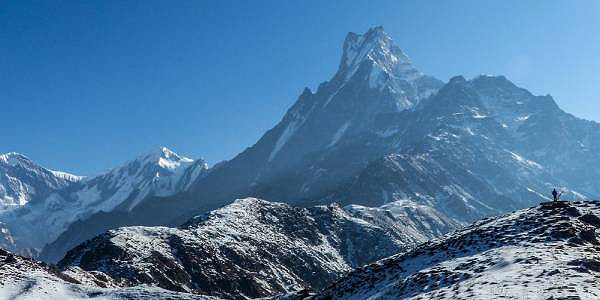
The Mardi Himal Trek is a hidden gem in the Annapurna region, following a narrow ridge trail that leads to close-up views of Machapuchare (Fishtail) and the Annapurna massif. It's less crowded than nearby Annapurna routes, making it a peaceful and budget-friendly choice for travelers who still want a genuinely dramatic high-altitude finish.
Unlike Poon Hill's gentle rolling hills, Mardi Himal climbs a narrow spine of ridge with the mountains rising directly on either side, giving a much more immersive, close-quarters mountain experience for a relatively short and inexpensive trip out of Pokhara.
Mardi HImal Trek Itinerary Table
| Day | Route | Altitude | Approx. Walking Time |
|---|---|---|---|
| 1 | Drive Pokhara to Kande, trek to Deurali | 2,100 m | 5–6 hours |
| 2 | Deurali to Forest Camp/Low Camp | 2,600 m | 5–6 hours |
| 3 | Low Camp to High Camp | 3,580 m | 5 hours |
| 4 | High Camp to Mardi Himal View Point and back to Low Camp | 4,500 m | 6–7 hours |
| 5 | Low Camp to Siding village, drive to Pokhara | 1,750 m | 5–6 hours |
Best Season for Mardi Himal Trek
Autumn and spring for clear mountain views and stable weather on the exposed ridge sections; the trail can be muddy and leech-prone during monsoon, and the ridge trail is exposed to strong wind in winter.
Mardi Himal Trek Permits
Since Mardi Himal lies within the same Annapurna Conservation Area, it uses the identical permit system as Poon Hill and ABC — here's the table for the Mardi Himal Trek (2026):
| Permit Name | Purpose | Foreign Trekkers | SAARC Nationals | Nepali Citizens | Where to Obtain |
|---|---|---|---|---|---|
| Annapurna Conservation Area Permit (ACAP) | Entry into the Annapurna Conservation Area — covers the full Mardi Himal route from Kande/Phedi to High Camp | NPR 3,000 (~$22–23) | NPR 1,000 (~$8) | NPR 100 (~$0.75) | Nepal Tourism Board, Kathmandu or Pokhara |
| TIMS Card (Trekkers' Information Management System) | Trekker safety record and monitoring, checked at trail checkpoints | NPR 2,000 (~$15–17) | NPR 600 (~$4–5) | Not required | NTB / TAAN office, Kathmandu or Pokhara |
| Total Permit Cost | — | ~NPR 5,000 (~$38–40) | ~NPR 1,600 (~$12–13) | ~NPR 100 (~$0.75) | — |
Mardi Himal Trek Difficulty
Moderate to Challenging — a steep, narrow ridge trail with a high point above 4,000 m, requiring reasonable fitness and comfort with exposed terrain. The final push to the viewpoint is a long, high-altitude day, so proper pacing and hydration matter more here than on the gentler treks in this guide.
Culture, Nature & Religion
The lower trail winds through Gurung villages and dense forests filled with rhododendron, oak, and moss-covered trees dripping with hanging lichen, giving the forest sections an almost primeval feel. As you climb higher, the landscape shifts dramatically from forest to alpine terrain, with sweeping views of sacred peaks considered holy in local Gurung tradition — Machapuchare (Fishtail) in particular is considered sacred and has never been officially summited out of religious respect.
Money-Saving Tips in Mardi Himal Trek
- Avoid peak season crowds (October) to get better teahouse rates and more room to negotiate at High Camp, where beds can otherwise sell out.
- Carry your own snacks from Pokhara instead of buying overpriced ones at High Camp, where everything is carried up by porter and priced accordingly.
- Opt for basic rooms since electricity and charging cost extra at higher altitudes, and Wi-Fi is unreliable and expensive above Low Camp.
- Fill water bottles from teahouse taps or boiled water stations rather than buying bottled water at high-altitude prices.
Meals & Accommodation During the Mardi Himal Trek
Accommodation becomes more basic as you gain altitude, especially at High Camp, where rooms are small and dormitory-style options are common to save money. Meals are simple: dal bhat, noodles, and soups, with menu variety shrinking the higher you go. Hot water and charging stations come at an additional cost the higher you go, so budgeting a little extra for these near the top is wise.
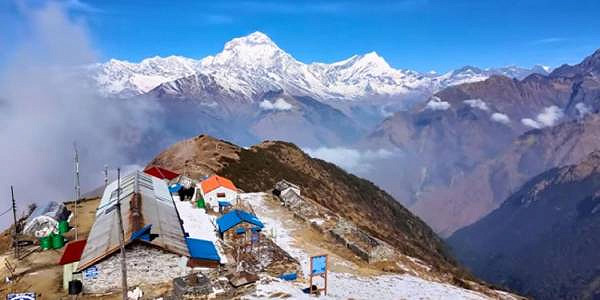
5. Khopra Danda Trek
For trekkers seeking solitude and dramatic panoramic views without the crowds, the Khopra Danda Trek is an excellent choice. This off-the-beaten-path route in the Annapurna region leads to a stunning ridge offering 360-degree views of Dhaulagiri, Annapurna South, and Nilgiri, all without the queues and crowded lodges you'll find on the more famous Annapurna routes.
Because this trail sees far fewer trekkers, it feels more remote and personal, even though it shares part of its route with the Ghorepani Poon Hill trail before branching off into quieter territory. It's a great pick for travelers who've already done the classic routes and want something a little further off the map, without needing full expedition-level preparation.
Khopra Danda Trek Itinerary Table
| Day | Route | Altitude | Approx. Walking Time |
|---|---|---|---|
| 1 | Drive Pokhara to Nayapul, trek to Tikhedhunga | 1,540 m | 4–5 hours |
| 2 | Tikhedhunga to Ghorepani | 2,860 m | 5–6 hours |
| 3 | Ghorepani to Swanta | 3,200 m | 5–6 hours |
| 4 | Swanta to Khopra Danda | 3,660 m | 5 hours |
| 5 | Khopra Danda to Khayer Lake and back | 4,660 m | 7–8 hours |
| 6 | Khopra Danda to Chistibung | 2,860 m | 5–6 hours |
| 7 | Chistibung to Ghandruk | 1,940 m | 5 hours |
| 8 | Ghandruk to Nayapul, drive to Pokhara | 850 m | 4–5 hours |
Best Season for Khopra Danda Trek
Spring and autumn provide the best visibility and stable trail conditions, particularly for the long day trip up to Khayer Lake, which requires clear weather to be worthwhile. Winter snow can close the higher sections, and monsoon obscures the panoramic views the trek is built around.
Khopra Danda Trek Permits
Here's the permit breakdown for the Khopra Danda Trek (2026) — it lies entirely within the Annapurna Conservation Area, so it follows the same permit system as Poon Hill, Mardi Himal, and ABC:
| Permit Name | Purpose | Foreign Trekkers | SAARC Nationals | Nepali Citizens | Where to Obtain |
|---|---|---|---|---|---|
| Annapurna Conservation Area Permit (ACAP) | Entry into the Annapurna Conservation Area — covers the full Khopra Danda/Khayer Lake route from Nayapul/Ghandruk side | NPR 3,000 (~$22–23) | NPR 1,000 (~$8) | NPR 100 (~$0.75) | Nepal Tourism Board, Kathmandu or Pokhara |
| TIMS Card (Trekkers' Information Management System) | Trekker safety record and monitoring, checked at posts including Birethanti | NPR 2,000 (~$15) | NPR 1,000 (~$8) | Not required | NTB / TAAN office, Kathmandu or Pokhara |
| Total Permit Cost | — | ~NPR 5,000 (~$38–40) | ~NPR 2,000 (~$16) | ~NPR 100 (~$0.75) | — |
Khopra Danda Trek Difficulty
Moderate to Challenging — longer trekking days at higher altitude, best suited for trekkers with prior hiking experience. The round trip to Khayer Lake in particular is a demanding, full-day high-altitude push from Khopra Danda.
Culture, Nature & Religion
The trail passes through Magar and Gurung communities and offers the option to visit the sacred Khayer Lake, a site of religious importance to both Hindus and Buddhists, especially during certain festival periods when pilgrims make the journey up. The route also crosses parts of the Annapurna Conservation Area, home to diverse flora and occasional wildlife sightings, including Himalayan tahr on the higher, rockier slopes.
Money-Saving Tips in Khopra Danda Trek
- This route has fewer teahouses, so booking ahead — or at least checking availability with locals along the way — can secure better rates and guarantee a bed.
- Travel with a small group to reduce per-person guide and porter costs, especially important here since a guide is strongly recommended for the Khayer Lake side trip.
- Bring your own basic first-aid and snacks since options are limited and more expensive on this quieter trail.
- Combine this trek with Ghorepani Poon Hill's shared starting section to avoid backtracking and duplicate transport costs.
Meals & Accommodation During the Khopra Danda Trek
Teahouses are more basic here than in busier regions, but still comfortable, and some of the higher lodges near Khopra Danda are run cooperatively by local community groups. Meals mainly consist of dal bhat, noodles, and simple vegetable dishes. Because the trail is less commercialized, prices remain lower than more popular routes like Poon Hill, even though supplies have to be carried in from further away.
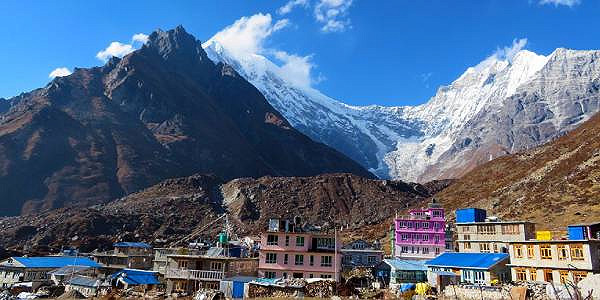
6. Langtang Valley Trek
Located just north of Kathmandu, the Langtang Valley Trek is one of the most accessible and affordable Himalayan treks, since it doesn't require a domestic flight. Known as the "valley of glaciers," it offers stunning mountain scenery, Tamang culture, and a close-up look at the resilience of communities rebuilding after the 2015 earthquake, which struck this region particularly hard.
Because you can drive directly from Kathmandu to the trailhead at Syabrubesi, this trek eliminates one of the single biggest costs of Himalayan trekking — the domestic flight — while still delivering genuine high-altitude scenery, glacier views, and a close encounter with Tibetan Buddhist culture, all within a manageable week-long window.
Langtang Valley Trek Itinerary Table
| Day | Route | Altitude | Approx. Walking Time |
|---|---|---|---|
| 1 | Drive Kathmandu to Syabrubesi | 1,550 m | 7–8 hours by road |
| 2 | Syabrubesi to Lama Hotel | 2,470 m | 6 hours |
| 3 | Lama Hotel to Langtang Village | 3,430 m | 6–7 hours |
| 4 | Langtang Village to Kyanjin Gompa | 3,870 m | 4 hours |
| 5 | Acclimatization, hike to Kyanjin Ri or Tserko Ri | 4,984 m | 5–7 hours |
| 6 | Kyanjin Gompa to Lama Hotel | 2,470 m | 6 hours |
| 7 | Lama Hotel to Syabrubesi | 1,550 m | 5 hours |
| 8 | Drive Syabrubesi to Kathmandu | 1,400 m | 7–8 hours by road |
Best Season for Langtang Valley Trek
Spring and autumn are best for mountain views and stable trail conditions, with spring bringing wildflowers to the valley floor. The region is also trekkable in winter for those who don't mind cold temperatures and the possibility of snow around Kyanjin Gompa, which adds a striking beauty to the glacier views.
Langtang Valley Trek Permits
Here's the permit breakdown for the Langtang Valley Trek (2026):
| Permit Name | Purpose | Foreign Trekkers | SAARC Nationals | Nepali Citizens | Where to Obtain |
|---|---|---|---|---|---|
| Langtang National Park Entry Permit | Entry into Langtang National Park, protecting the region's forests, wildlife, and trail infrastructure | NPR 3,000 (~$23–27) | NPR 1,500 (~$11) | Exempt / minimal fee | Nepal Tourism Board, Kathmandu or Dhunche checkpoint |
| TIMS Card (Trekkers' Information Management System) | Trekker safety record and monitoring, checked at Syabrubesi, Dhunche & other checkpoints | NPR 2,000 (~$15) individual / NPR 1,000 (~$7.50) group | NPR 1,000 (~$7.50) | Not required | NTB or TAAN office, Kathmandu, or Dhunche checkpoint |
| Total Permit Cost | — | ~NPR 5,000 (~$38–40) | ~NPR 2,500 (~$18) | Minimal / exempt | — |
Langtang Valley Trek Difficulty
Moderate — steady altitude gain requires proper acclimatization, particularly between Lama Hotel and Langtang Village, but daily walking hours are manageable and the trail itself is not technically difficult.
Culture, Nature & Religion
The Langtang region is home to the Tamang people, whose culture is heavily influenced by Tibetan Buddhism. You'll pass numerous chortens, prayer wheels, and the historic Kyanjin Gompa monastery, one of the oldest in the region. The trek runs through Langtang National Park, known for red pandas, langur monkeys, and dramatic glacial scenery, with Langtang Lirung towering above the valley for much of the walk.
Money-Saving Tips in Langtang Valley Trek
- Skip the domestic flight entirely by taking a local or tourist bus from Kathmandu, which cuts trip costs significantly compared to any fly-in trek.
- Buy cheese made locally at Kyanjin Gompa's cheese factory instead of imported snacks — it's cheaper and a genuine regional specialty worth trying.
- Trek without a porter if you're comfortable carrying your own bag, since this route doesn't require technical support and the trail is straightforward to follow.
- Choose the local bus over a private jeep for the Kathmandu–Syabrubesi transfer to cut transport costs substantially.
Meals & Accommodation During the Langtang Valley Trek
Accommodation is in cozy teahouses, many rebuilt after the earthquake with local investment and support from returning trekkers. Meals include dal bhat, Tibetan bread, and locally made yak cheese, a specialty of the region that's worth budgeting a little extra for. Prices are noticeably lower here than in the Everest or Annapurna regions, making Langtang one of the best value-for-money treks in Nepal overall.
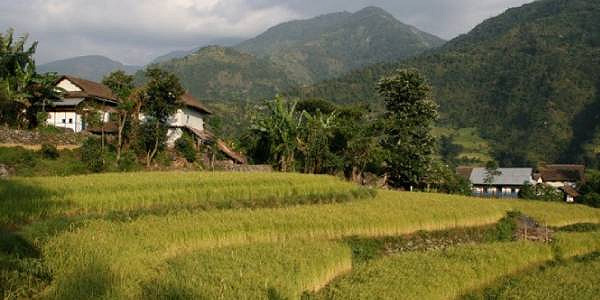
7. Chisapani Nagarkot Trek
Perfect for those with limited time or a tight budget, the Chisapani Nagarkot Trek is a short, easy trek right outside Kathmandu Valley. It's ideal for beginners, families, or travelers who want a taste of Himalayan trekking without venturing far from the capital, and it's often used as a warm-up trek before a longer, higher-altitude route.
Because it starts and ends so close to Kathmandu, this trek requires no flights, minimal gear, and only two or three days of your itinerary, making it the single most budget-friendly and time-efficient trekking option in this guide.
Chisapani Nagarkot Trek Itinerary Table
| Day | Route | Altitude | Approx. Walking Time |
|---|---|---|---|
| 1 | Drive Kathmandu to Sundarijal, trek to Chisapani | 2,215 m | 4–5 hours |
| 2 | Chisapani to Nagarkot | 2,175 m | 5–6 hours |
| 3 | Sunrise at Nagarkot, drive back to Kathmandu | 1,400 m | 1–2 hours by road |
Best Season for Chisapani Nagarkot Trek
Trekkable almost year-round, though autumn and spring offer the clearest views of the Himalayan range from Nagarkot, including distant glimpses of Everest on an exceptionally clear day. Monsoon brings lush green hills but a higher chance of clouded-over sunrise views.
Chisapani Nagarkot Trek Permits
Here's the permit breakdown for the Chisapani Nagarkot Trek (2026) — since this trek stays close to Kathmandu and passes through Shivapuri Nagarjun National Park, it's far simpler than the major Himalayan treks, with no TIMS card or guide-agency permit required.
| Permit Name | Purpose | Foreign Trekkers | SAARC Nationals | Nepali Citizens | Where to Obtain |
|---|---|---|---|---|---|
| Shivapuri Nagarjun National Park Entry Permit | Entry into the national park covering the Sundarijal–Chisapani–Nagarkot route | NPR 1,000 (~$7–8) | NPR 600 (~$4–5) | NPR 100 (~$0.75) | Park entry gates (Sundarijal, Chisapani, etc.) or in advance in Kathmandu |
| TIMS Card | Not required for this trek | N/A | N/A | N/A | — |
| Optional: Changu Narayan Temple Entry (if extending the route to this UNESCO site) | Heritage site entry fee | NPR 350 (~$2.50) | Discounted rate | Minimal | On-site at temple entrance |
| Total Permit Cost (core trek) | — | ~NPR 1,000 (~$7–8) | ~NPR 600 (~$4–5) | ~NPR 100 (~$0.75) | — |
Chisapani Nagarkot Trek Difficulty
Easy — short walking hours on well-established trails, suitable for children, families, and first-time trekkers with no prior hiking experience needed.
Culture, Nature & Religion
This trek passes through Shivapuri Nagarjun National Park, offering forest trails and views over the Kathmandu Valley from above. Along the way, you'll encounter small Tamang and Brahmin villages, local temples, and shrines that reflect Nepal's blend of Hindu and Buddhist traditions, with Nagarkot itself long valued as a hilltop retreat for its sweeping valley and mountain views.
Money-Saving Tips in Chisapani Nagarkot Trek
- Use public buses or shared jeeps to reach Sundarijal instead of a private vehicle, which is by far the cheapest way to start the trek.
- Since this trek is close to Kathmandu, carrying your own food and water from the city saves money along the trail, where prices rise slightly the further you get from town.
- Stay in Nagarkot's budget guesthouses rather than resort-style hotels, which can charge several times more for the same sunrise view.
- Do the trek as a two-day trip instead of adding extra nights, since the core experience doesn't require more time.
Meals & Accommodation During the Chisapani Nagarkot Trek
Given its proximity to Kathmandu, this route has a wide range of accommodation, from basic teahouses to slightly upscale guesthouses in Nagarkot. Meals are affordable and varied, with both Nepali and simple continental options available, and Nagarkot in particular has a good spread of budget eateries with mountain-view seating..
Budget Trekking FAQs
1. How much does budget trekking in Nepal cost per day?
Most independent budget trekkers spend around $25–$50 per day, covering a teahouse bed, three meals, and incidentals like water and snacks. If you add a licensed guide (required since 2023) and share costs with a group, daily spend typically rises to $40–$70 per day. Costs go up with altitude, since food and lodging prices increase the higher you trek.
2. What is the cheapest trek in Nepal?
The Poon Hill Trek (4–5 days, Annapurna region) is widely considered Nepal's most budget-friendly trek, with total costs as low as $200–$350 including permits, food, lodging, and transport. It's short, close to Pokhara, doesn't require a domestic flight, and still delivers panoramic Himalayan sunrise views.
3. How much does a full budget trek package cost (7–14 days)?
A complete guided package for a well-known route (like a short Annapurna Base Camp trek or Mardi Himal) typically runs $500–$1,000 for 7–9 days, or $800–$1,800 for a full 12–14 day trek including permits, teahouse stays, meals, and a guide. Everest region treks cost more because of the Lukla flight (roughly $360–$480 round trip).
4. Do I need a guide, and how much does one cost?
Yes — since April 2023, Nepal has required all foreign trekkers to hire a licensed guide from a registered agency, and this is enforced at trail checkpoints on most routes. A licensed guide costs roughly $25–$35 per day. Budget travelers often reduce costs by joining a small group to share one guide's fee.
5. Are porters worth the cost on a budget trek?
Porters cost around $20–$30 per day and are generally worth it if you're carrying more than 8 kg, have joint or back issues, or are on a trek longer than 10 days where fatigue adds up. Many budget trekkers skip a dedicated porter and carry a lighter pack instead, or share one porter between two people to cut the cost.
6. What permits do I need, and how much do they cost?
Most non-restricted routes require a TIMS card (~$7–$10) plus a regional conservation/national park entry permit (~$20–$30), such as ACAP for Annapurna or the Sagarmatha entry permit for Everest. Restricted areas like Manaslu or Upper Mustang cost significantly more (roughly $130–$170+) due to special permit fees. Reputable agencies usually include permits in package pricing.
7. How much does teahouse accommodation and food cost?
Basic teahouse dorm beds start around $3–$12 per night at lower altitudes, rising to $20–$40+ near high-altitude viewpoints during peak season. Meals (dal bhat, noodles, soup) generally cost $4–$8 each, with prices increasing the higher and more remote the lodge. Sticking to local dishes like dal bhat (often with free refills) is the cheapest way to eat well.
8. When is the cheapest time of year to trek in Nepal?
The off-season months (June–August and December–February) offer the lowest prices on lodges, guides, and transport, though weather and trail conditions vary — monsoon brings rain and leeches at lower elevations, while winter brings snow at higher passes. The shoulder edges of spring (March) and autumn (November) often balance good weather with slightly lower crowds and costs than peak season.
9. Can I trek independently without a guide to save money?
Technically, no — since 2023, solo independent trekking without a licensed guide is prohibited on most routes for safety reasons, though enforcement varies by region. Many budget travelers still keep costs low by booking a guide informally and splitting the fee across a small group, rather than trekking fully solo.
10. How can I make a Nepal trek even cheaper?
- Choose treks accessible by road (like Poon Hill or Mardi Himal) to avoid costly domestic flights such as the Lukla route.
- Travel in the off-season or shoulder months for lower lodge and guide rates.
- Eat local staples like dal bhat instead of imported/Western menu items, which cost far more at altitude.
- Share a guide and porter with other trekkers.
- Book directly with a local agency in Kathmandu or Pokhara rather than an international reseller, and confirm exactly what's included (permits, meals, guide) before paying.
Conclusion
Trekking in Nepal doesn't have to come with a hefty price tag. From the short and scenic Chisapani Nagarkot Trek to the culturally rich Langtang Valley and the panoramic ridgelines of Mardi Himal and Khopra Danda, there's a budget-friendly trail for every kind of traveler. By choosing the right season, sticking to local teahouses and meals, traveling by bus instead of flight where possible, and trekking in small groups, you can experience the magic of the Himalayas without overspending.
Each of these treks offers something unique — whether it's the sweeping Everest views from Pikey Peak, the sacred lakes near Khopra Danda, the glacier valleys of Langtang, or the sunrise over Poon Hill — proving that unforgettable Himalayan adventures are well within reach for budget-conscious travelers. The key is planning ahead: pick your season wisely, choose routes that don't require flights when your budget is tight, and let the mountains do the rest.