
Langtang is the closest major trekking region to Kathmandu, and the Gosainkunda extension turns a good valley trek into a genuinely varied Himalayan route. You're not choosing between Langtang and Gosainkunda — this trek gives you both, plus a sacred lake, a high pass, and often a descent through the Helambu region on the way back.
If you're weighing this against Everest or Annapurna, or just trying to work out whether it fits your time and fitness, this guide covers what the route actually involves, how hard it is, and the planning details — permits, seasons, altitude — that matter before you commit to a 2026 or 2027 departure.
What the Langtang Gosainkunda Trek Actually Involves
This trek combines two distinct experiences into one route. The first half takes you up the Langtang Valley itself, a glaciated valley beneath Langtang Lirung, through forest and yak pasture to Kyanjin Gompa, a small Buddhist settlement that serves as the main base for exploring the upper valley. From there, many itineraries include a side trip up Tserko Ri, a viewpoint reaching just over 5,000 metres with wide views of the surrounding peaks.
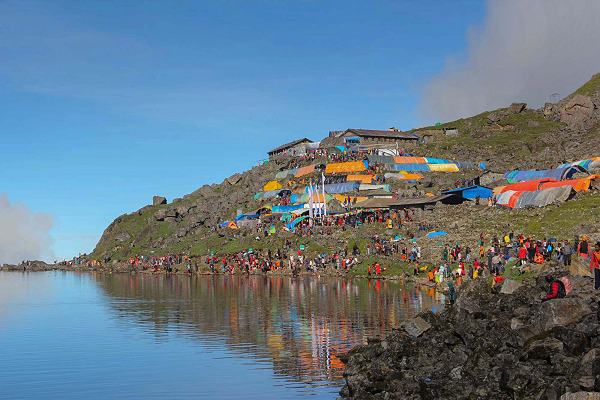
The second half heads to Gosainkunda, a cluster of high-altitude glacial lakes considered sacred in both Hinduism and Buddhism. Getting there means crossing back over from the Langtang side and climbing to the lake itself, usually around 4,380 metres. Many itineraries then continue over Lauribina Pass, connecting into the Helambu region for the return leg — a genuinely different landscape of terraced hills and Sherpa and Hyolmo villages, quite unlike the glaciated upper Langtang Valley.
Not every version of this trek includes the Helambu descent — some return the way they came, or exit via Dhunche instead. It's worth checking exactly which route your operator follows, since the finishing point (Kutumsang, Sundarijal, or elsewhere) changes how the transport back to Kathmandu works.
Who This Trek Suits
This route works well for:
- Trekkers with limited time who still want a genuine high-altitude experience — most itineraries run 12 to 16 days depending on how much of Langtang, Gosainkunda, and Helambu is included
- Those who've done at least one moderate multi-day hike before, since the pass crossing and long ascent/descent days ask more than a gentle valley walk
- Travellers who want variety in one trip — glaciated valley, sacred alpine lakes, and lower-altitude village trekking, rather than one landscape repeated for two weeks
- Anyone looking for a quieter alternative to Everest or Annapurna without sacrificing serious mountain scenery
It's less suited to trekkers wanting an easy, low-altitude walk, or those short on time who'd rather do a pure Langtang Valley trek without the Gosainkunda extension. If that's you, a standalone Langtang Valley Trek covers the glaciated valley and Kyanjin Gompa in fewer days without the pass crossing.
Langtang Gosainkunda Trek Route and Itinerary
Itinerary length varies more on this trek than on most others, generally running 15 days depending on whether Tserko Ri, the Helambu descent, and extra acclimatisation days are included. A common structure looks roughly like this:
Day 1 : Arrival Day in Kathmandu
Day 2 : Kathmandu Sightseeing Tour
Day 3 : Kathmandu to Syabrubesi 7–8 hour drive (122 km)
Day 4 : Syabrubesi to Lama Hotel 10 km (6–7 hours)
Day 5 : Lama Hotel to Mundu 12 km (6–7 hours)
Day 6 : Kyanjin Gompa (3,870m) 6 km (4–5 hours)
Day 7 : Kyanjin Ri 4675m 7–8 km round trip (5–6 hours)
Day 8 : Lama Hotel (2,470m) 12 km (6–7 hours).
Day 9 : Lama Hotel to Thulo Syabru(2230m): 6-7 hours - 13.1 km
Day 10 : Thulo Syabru to Sing Gompa (3330m): 3-4 hours- 6.8 km
Day 11 : Sing Gompa to Gosaikunda Lake (4600m) 4-6 hours- 11.2 km
Day 12 : Gosaikunda to Sing Gompa (3250m) - B.L.D.
Day 13 : Trek from Sing Gompa to Dhunche (six hours.)
Day 14 : Dhunche drive back to Kathmandu transfer Hotel (7 hours)
Day 15 : Final Departure
Some operators run this in the reverse direction, or drop the Helambu section entirely to shorten the trip. Confirm the exact day-by-day plan and finishing point with your operator, since it affects both trip length and your return transport arrangements.
Langtang Gosainkunda Trek Accommodation
Teahouses are available throughout, though standards vary more here than on the busier Everest trails. Syabrubesi, Langtang Village, and Kyanjin Gompa have reasonably comfortable lodges with decent food. Around Gosainkunda and on the Helambu side, expect simpler accommodation — basic rooms, shared bathrooms, and limited electricity, especially at higher, more remote stops like Ghopte or Phedi. A good sleeping bag matters here just as much as on higher-profile treks, since nights near Gosainkunda get properly cold.
Langtang Gosainkunda Trek Food
Standard teahouse menus apply: dal bhat, noodles, soups, and simple fried dishes, with more variety in Langtang Village and Kyanjin Gompa than in the remoter stretches near Gosainkunda and Helambu. Dal bhat remains the practical, filling choice, particularly on longer trekking days. Prices rise the further you get from the roadhead, and menus thin out noticeably around the pass-crossing section, so don't expect much choice at Ghopte or similar stops.
How to Get to Langtang Valley
Unlike Everest or Annapurna, this trek starts with a road journey rather than a flight — a drive from Kathmandu to Syabrubesi that typically takes most of a day, depending on road conditions. This is one of the practical advantages of Langtang over the bigger regions: no dependence on mountain flights that can be delayed by weather. The return leg, whether via Dhunche, Sundarijal, or another road-head, is also a drive rather than a flight, which makes scheduling around this trek generally more predictable.
Langtang Gosainkunda Trek Difficulty
This is often described as a moderate trek, and that's broadly accurate, but it's not a gentle one. Long ascent and descent days, the altitude gain to Gosainkunda, and the Lauribina Pass crossing all add real physical demand, particularly for trekkers without much prior experience. The terrain itself isn't technical — no scrambling or glacier travel — but the combination of remoteness, altitude, and consecutive long days makes it harder than a first-time trekker might expect from a "moderate" label.
The Gosainkunda-to-Lauribina Pass section is generally the toughest part of the route: a demanding, sustained climb followed by a long descent on the other side. Trekkers who've done at least one multi-day hike before, even at lower altitude, tend to find this section far more manageable than those attempting their first serious trek here.
Langtang Gosainkunda Trek Altitude and Acclimatisation
You'll reach Gosainkunda at around 4,380 metres and cross Lauribina Pass slightly higher, with Tserko Ri (if included) going just over 5,000 metres. That's high enough for altitude sickness to be a genuine consideration, even though this trek is often marketed as more accessible than Everest or Annapurna.
A few practical points:
- Build in at least one rest day, typically at Kyanjin Gompa, to acclimatise before continuing toward Gosainkunda.
- The gain from lower valley stops up to Gosainkunda happens relatively quickly on some itineraries, so a well-paced schedule matters more here than the "moderate" label might suggest.
- Diamox is used by some trekkers as a preventive measure, but this should be a decision made with a doctor before your trip, not on the trail.
- Take headaches, nausea, or poor sleep at altitude seriously, and tell your guide immediately rather than pushing through.
Langtang Gosainkunda Trek Best Seasons
Spring (March to May) and autumn (September to November) are the established best seasons, offering clearer skies and more stable trail conditions. Spring brings rhododendron forests into bloom through the lower Langtang Valley, which is genuinely one of the highlights of this route in the right weeks. Autumn tends to offer the clearest mountain views, right after the monsoon clears.
Winter is possible, but snow around Gosainkunda and Lauribina Pass adds real difficulty and can occasionally block the pass entirely, so this needs realistic planning and flexibility if you go outside the main seasons. Monsoon months (June to September) are generally avoided, both for persistent cloud cover and slippery trail conditions on the forested lower sections.
What to Pack For Langtang Gosainkunda Trek
Because this trek moves between forested valley, high-altitude lake, and lower Helambu hill country, layering matters more here than on a single-environment trek. Beyond the trekking essentials, worth prioritising:
- A warm sleeping bag rated for below-freezing nights, particularly around Gosainkunda
- Sturdy, broken-in trekking boots for the long ascent and descent days
- Trekking poles, genuinely useful on the steep climb to Lauribina Pass and the descent that follows
- Layers for temperature swings between the Langtang side and the lower Helambu villages
- A headlamp, given some early starts around the pass crossing
- Basic water purification, since Gosainkunda's water sources shouldn't be relied on without treatment
Check with your operator for a season-specific list, since exact recommendations shift with departure month.
Langtang Gosainkunda Trek Permits Required
Trekking in this region requires a Langtang National Park entry permit, since both the Langtang Valley and Gosainkunda lie within the park boundaries. Requirements around TIMS cards and any additional local permits have changed in various trekking regions in recent years, so confirm current requirements directly with your operator or the Nepal Tourism Board before departure rather than relying on older published information. Permit fees are also subject to periodic revision.
Langtang Gosainkunda Trek Guides and Porters
While parts of this trail are well-marked and see reasonable foot traffic, the Gosainkunda and Helambu sections are quieter and less straightforward to navigate than the Langtang Valley itself, particularly around the pass crossing in poor visibility. We'd recommend trekking with a guide for this route rather than attempting it independently, and current regulations for several Nepal trekking regions increasingly require one regardless. Porters are optional but worth considering given the number of long, tiring days across varied terrain.
Langtang Gosainkunda Trek Safety Considerations
The main risks on this trek are altitude illness around Gosainkunda and Lauribina Pass, navigation difficulty in poor weather on the pass crossing, and the general remoteness of the Helambu descent compared with busier trekking regions. Mobile signal is inconsistent in places. Comprehensive travel insurance covering high-altitude trekking and emergency evacuation is essential — check your policy's altitude limit, since this trek's high points can exceed some standard policy caps.
Responsible Tourism
Langtang National Park and the Gosainkunda lakes hold real ecological and religious significance, and Gosainkunda itself is an important pilgrimage site, particularly around the Janai Purnima festival. Stick to marked trails, carry out any rubbish, and be respectful around the lakes themselves, which many trekkers pass through without realising their religious weight for local communities. The Langtang region was significantly affected by the 2015 earthquake, and trekking here directly supports a local economy that's still rebuilding — choosing operators and teahouses that reinvest fairly in these communities makes a real difference.
Langtang Gosainkunda Trek Cost Factors to Consider
Pricing depends on itinerary length (12 versus 16 days makes a real difference here), whether porters are included, group size, and teahouse standard. Because this trek starts and ends with road transport rather than flights, costs are generally more predictable than Everest or Annapurna region treks, without the flight-delay-related expenses those routes sometimes involve. Ask your operator for a clear breakdown of inclusions versus on-trail costs like charging and hot showers.
Common Mistakes to Avoid
- Underestimating the "moderate" label. The Gosainkunda-to-Lauribina Pass section is a serious climbing and descending day, not a gentle add-on.
- Skipping the acclimatisation day at Kyanjin Gompa. This matters more than it might seem given the trek's overall shorter length and lower peak altitude compared with Everest.
- Not confirming which route variant you're booking. With or without Helambu, with or without Tserko Ri — these change trip length and difficulty meaningfully.
- Assuming road transport removes all schedule risk. Roads to Syabrubesi can still be affected by landslides or poor conditions, particularly in monsoon shoulder periods.
- Packing as if this were a shorter, lower-altitude trek. Nights around Gosainkunda are genuinely cold, and trekkers sometimes under-pack based on this trek's reputation as more accessible.
Langtang Gosainkunda Trek vs a Standalone Langtang Valley Trek
If you're deciding between the two: a standalone Langtang Valley Trek is shorter, doesn't involve a high pass crossing, and focuses entirely on the glaciated upper valley and Kyanjin Gompa. Adding Gosainkunda and the Helambu descent extends the trip, adds a genuinely demanding pass day, and gives you far more landscape variety — sacred lakes, a high pass, and lower-altitude village trekking on the way out. For trekkers with the time and reasonable fitness, the combination trek makes considerably better use of the journey to and from this region than the valley alone.
Planning Your Trek
If the Langtang Gosainkunda Trek fits what you're looking for in 2026 or 2027, our team has planned and guided trekkers through this region for years and can talk you through realistic timing, route options, and how to pace the itinerary for your experience level. Take a look at our Langtang Gosainkunda Trek itinerary, or get in touch if you'd like help deciding between this route and a shorter Langtang Valley alternative.
Frequently Asked Questions
1. How many days does the Langtang Gosainkunda Trek take?
Most itineraries run 15 days, depending on whether Tserko Ri, extra acclimatisation days, and the Helambu descent are included.
2. Is the Langtang Gosainkunda Trek difficult?
It's generally classed as moderate, though the Gosainkunda-to-Lauribina Pass section involves a demanding, sustained climb and descent that's harder than the "moderate" label might suggest to a first-time trekker.
3. What is the highest point on this trek?
Tserko Ri, if included as a side trip from Kyanjin Gompa, reaches just over 5,000 metres. Lauribina Pass, the trek's main pass crossing, sits slightly above Gosainkunda Lake's roughly 4,380 metres.
4. Do I need prior trekking experience?
It helps considerably, particularly for the pass-crossing section, though trekkers with reasonable fitness and no prior high-altitude experience do complete this route with a well-paced itinerary.
5. What permits do I need for the Langtang Gosainkunda Trek?
A Langtang National Park entry permit is required, since the route passes through the park. Confirm current TIMS or additional permit requirements with your operator before departure, as regulations are periodically updated.
6. When is the best time to do this trek?
Spring (March to May) and autumn (September to November) offer the most stable weather, clearest views, and, in spring, blooming rhododendron forests through the lower valley.
7. Can I do the Langtang Valley without the Gosainkunda extension?
Yes, a standalone Langtang Valley Trek is available and generally shorter, without the Lauribina Pass crossing or Helambu descent.
8. Do I need a guide for this trek?
It's strongly recommended, particularly for the Gosainkunda and Helambu sections, which are quieter and less straightforward to navigate than the main Langtang Valley trail.
9. How does this trek compare to Everest or Annapurna treks in difficulty?
It reaches lower maximum altitude than most Everest region treks, but the pass crossing and long consecutive trekking days make it more demanding than its "close to Kathmandu, moderate trek" reputation might imply.
10. Is the Langtang region safe to trek, given the 2015 earthquake?
Yes, the trails have been rebuilt and are actively used by trekkers today. The region is still recovering economically in places, and trekking here directly supports that recovery.