
If there's one place in Nepal that proves you don't need to spend a fortune (or three weeks of vacation time) to stand face-to-face with the Himalayas, it's the Annapurna region. Stretching from the subtropical foothills above Pokhara to the high desert plateaus bordering Tibet, Annapurna is the most versatile trekking region in Nepal — home to a trail for practically every budget, fitness level, and time frame.
Whether you're dreaming of a quick 10-day escape to a sunrise viewpoint, a moderate two-week trek into the Annapurna Sanctuary, or a full three-week expedition into the restricted valleys of Nar Phu and Upper Mustang, this guide breaks down seven of the best Annapurna trekking packages for 2026–2027, organized so you can quickly find the trip that matches your budget, your fitness, and your travel dates.
All the packages below are run by Himalaya Heart Treks & Expedition, a Kathmandu-based trekking company, and prices reflect their current 2026/27 rates (including the standard package discounts). Every trek includes a licensed guide, porter support, permits, teahouse or hotel accommodation, and meals during the trek — the essentials that let you focus on the mountains instead of the logistics.
Quick Comparison: Annapurna Treks at a Glance
| Trek | Duration | Price (from) | Max Altitude | Difficulty |
|---|---|---|---|---|
| Ghorepani Poon Hill Trek | 10 Days | $959 | 3,210 m | Easy to Moderate |
| Mardi Himal Trek | 10 Days | $910 | 4,500 m | Moderate |
| Nar Phu Valley Trek | 11 Days | $1,150 | 5,320 m | Hard |
| Khopra Danda Trek | 13 Days | $1,115 | 3,660 m | Easy to Moderate |
| Annapurna Base Camp Trek | 14 Days | $1,100 | 4,130 m | Moderate |
| Annapurna Circuit Trek | 14 Days | $1,265 | 5,416 m | Difficult |
| Upper Mustang Trek | 18 Days | $2,100 | 3,840 m | Challenging |
Now let's look at each of these treks in detail, grouped by the kind of trekker they suit best.
Budget-Friendly & Short Treks: For First-Timers, Families, and Tight Schedules
If this is your first trip to Nepal, or you only have a week and a half to spare, these two treks pack maximum Himalayan reward into a minimal time and money commitment.
1. Ghorepani Poon Hill Trek — 10 Days, From $959
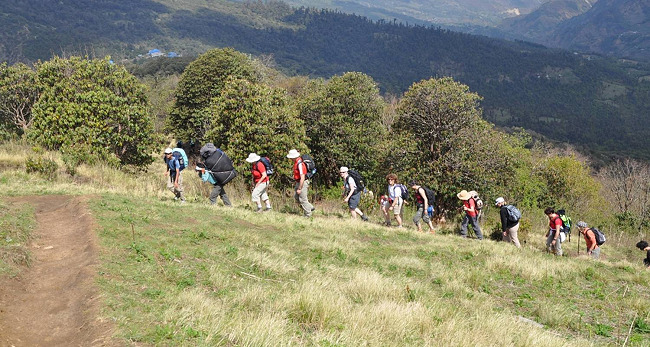
The Ghorepani Poon Hill Trek is the trek most people picture when they imagine "an easy Himalaya trek." It's short, scenic, and stays low enough in altitude that altitude sickness is rarely a concern — which makes it a favorite for families, first-time trekkers, and anyone short on vacation days.
The route begins near Nayapul, a short drive from Pokhara, and climbs steadily through rhododendron and oak forests, past terraced farmland, and through traditional Gurung and Magar villages including Ghandruk, one of the largest Gurung settlements in Nepal. The undisputed highlight is the pre-dawn climb to Poon Hill (3,210m), where trekkers gather to watch the sunrise paint the Annapurna and Dhaulagiri ranges gold and pink — widely regarded as one of the best mountain viewpoints in the world for the effort required to reach it.
Why choose it: Shortest genuine Himalayan trek in the region, excellent infrastructure (hot showers, Wi-Fi, varied food), and a gentle enough trail that it doubles as a good acclimatization warm-up before Annapurna Base Camp or the Annapurna Circuit.
Good for: Beginners, families with kids, older trekkers, and anyone wanting a taste of the Himalayas without a major time or fitness commitment.
See the full Ghorepani Poon Hill Trek itinerary and pricing →
2. Mardi Himal Trek — 10 Days, From $910
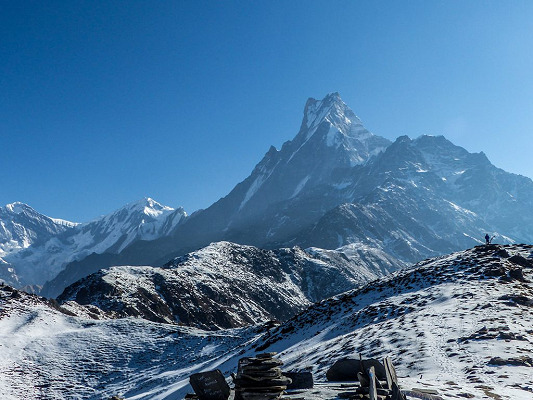
For trekkers who want Poon Hill-style short duration but a bit more altitude, wilder scenery, and far fewer crowds, the Mardi Himal Trek is the pick. Starting from Kande (about 45 minutes from Pokhara), the trail climbs through dense, quiet forest — a stark contrast to the more heavily trafficked Poon Hill route — before breaking above the tree line to reveal close-up views of Machhapuchhre (Fishtail), Annapurna South, and Hiunchuli.
The trek tops out at Mardi Himal Base Camp (4,500m), looking directly across at the peaks that ring the Annapurna Sanctuary — essentially the same amphitheater of mountains you'd see from Annapurna Base Camp, but from a quieter, less-developed side trail. Because the trek climbs to a genuinely high altitude in a short number of days, it carries a moderate difficulty rating, and Himalaya Heart Treks builds in a dedicated acclimatization approach (no more than 1,000m of net elevation gain overnight) to manage the risk.
Why choose it: A budget-friendly trek that still reaches serious high-altitude terrain, with a much quieter trail than Poon Hill or Annapurna Base Camp.
Good for: Trekkers with some hiking experience wanting solitude and a genuine high-altitude payoff without committing to two full weeks.
See the full Mardi Himal Trek itinerary and pricing →
Mid-Range Treks: Off-the-Beaten-Path Culture and Scenery
3. Khopra Danda Trek — 13 Days, From $1,115
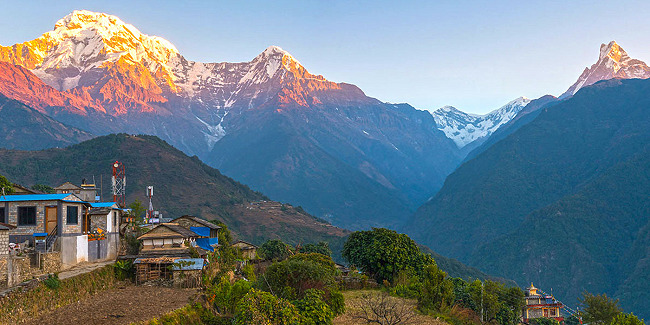
The Khopra Danda Trek is Annapurna's best-kept secret — a trek that shares the same starting trailheads and villages as the Poon Hill route (Ulleri, Ghorepani, Tadapani) but then branches off onto quieter trails toward Khopra Ridge (3,660m), a viewpoint with sweeping panoramas of Dhaulagiri, Annapurna South, Nilgiri, and Machhapuchhre that rival Poon Hill's views without the crowds.
What sets this trek apart is the option to add the side trip to sacred Khayer Lake, a high-altitude pilgrimage lake, and the natural hot springs at Tatopani on the way back — a genuinely relaxing way to close out the trek. The route also passes through Ghandruk, giving trekkers the same rich Gurung cultural exposure found on the Poon Hill trek, while spending far more time on trails most tourists never see.
Why choose it: Similar scenery to Poon Hill and Annapurna Base Camp, but on quieter trails, plus a genuine hot-spring reward at the end.
Good for: Trekkers with moderate fitness who've done a short trek before and want more solitude, photography opportunities, and cultural immersion without pushing into extreme altitude or difficulty.
See the full Khopra Danda Trek itinerary and pricing →
Classic Annapurna Adventures: The Signature Treks
These are the two treks most people mean when they say "I'm trekking Annapurna" — both run 14 days with Himalaya Heart Treks, and both are bucket-list classics for good reason.
4. Annapurna Base Camp Trek — 14 Days, From $1,100
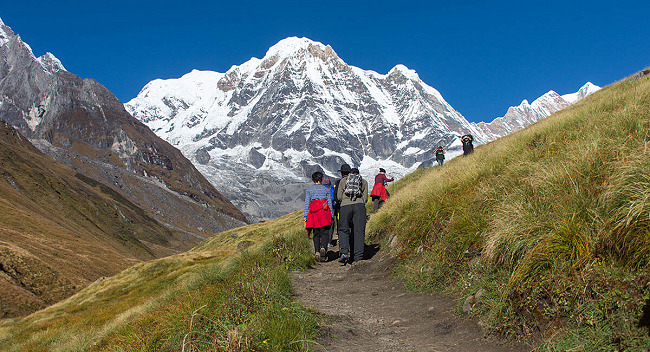
The Annapurna Base Camp Trek (also called the Annapurna Sanctuary Trek) is the region's headline trek, climbing to 4,130 meters at the foot of Annapurna I — the tenth-highest mountain on Earth. This particular 14-day package routes through Ghorepani and Poon Hill on the way in, meaning trekkers get the famous Poon Hill sunrise as a bonus before continuing on to Chhomrong, Machhapuchhre Base Camp, and finally the Sanctuary itself, where Annapurna I, Annapurna South, Gangapurna, Hiunchuli, and the sacred Machhapuchhre rise on all sides in one of the most dramatic mountain amphitheaters in the world.
Compared to its more famous cousin, Everest Base Camp, ABC tops out over 1,200 meters lower, which meaningfully reduces altitude sickness risk and makes it a realistic goal for a broader range of trekkers. It also starts overland from Pokhara rather than requiring a mountain flight into Lukla, removing a common source of weather delays.
Trekkers should note that this specific route is the longer, 14-day version via Ghorepani; Himalaya Heart Treks also offers 10-day and 12-day versions of ABC starting from different trailheads, so it's worth confirming which itinerary you're comparing when shopping between operators.
Why choose it: The single most iconic mountain amphitheater view in the Annapurna region, achievable at a lower altitude and with less logistical risk than Everest Base Camp.
Good for: Trekkers with reasonable fitness wanting the definitive Annapurna experience, including first-time high-altitude trekkers.
See the full Annapurna Base Camp Trek itinerary and pricing →
5. Annapurna Circuit Trek — 14 Days, From $1,265
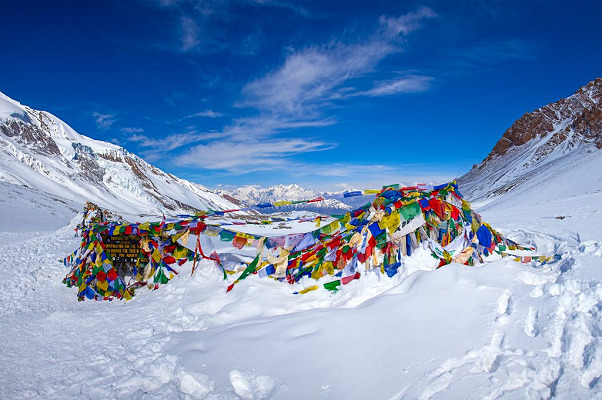
Nicknamed the "Apple Pie Trek" for how well-stocked its teahouses are, even at altitude, the Annapurna Circuit Trek takes trekkers on a full loop around the Annapurna massif, from lush lowland river valleys near Besisahar all the way up to the trek's crown jewel: crossing Thorong La Pass at 5,416 meters — the highest point of any trek on this list, and one of the highest trekking passes in the world.
The trail's variety is what makes it a classic: subtropical forest and terraced rice paddies at the start, semi-arid Tibetan-influenced villages like Manang and Braga in the middle, and a dramatic descent past the sacred pilgrimage town of Muktinath and into the Kali Gandaki Valley — the deepest gorge on Earth — on the way out. Along the way trekkers pass through the Manang district, home to communities with a strongly Tibetan Buddhist cultural identity, quite distinct from the Gurung villages lower down the valley.
Because of the altitude at Thorong La and the sustained trekking days required to get there, this is rated a difficult trek — a meaningful step up from Annapurna Base Camp — and Himalaya Heart Treks builds a dedicated acclimatization day into Manang before the pass crossing.
Why choose it: The most complete, varied single trek in Nepal — culture, landscape, and altitude all in one loop, crowned by one of the world's highest trekking passes.
Good for: Fit trekkers with some hiking experience who want the full classic Himalaya circuit experience and don't mind a genuinely challenging high-altitude day.
See the full Annapurna Circuit Trek itinerary and pricing →
Remote & Restricted-Area Treks: For Experienced Adventurers
These two treks require restricted-area permits, mandatory licensed guides, and — frankly — a bit more trekking experience under your belt. In exchange, they deliver landscapes and cultures found almost nowhere else on the standard Nepal trekking circuit.
6. Nar Phu Valley Trek — 11 Days, From $1,150
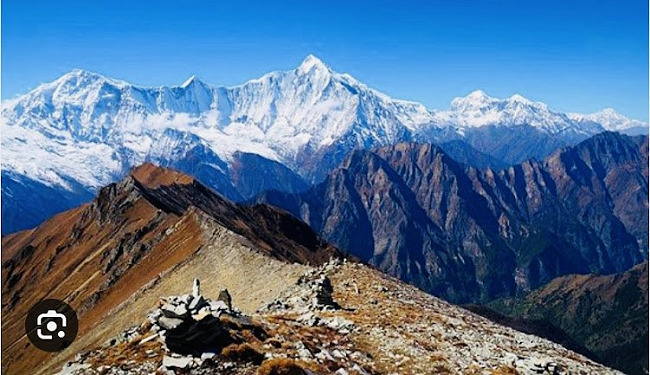
Tucked behind the Annapurna Circuit and hidden from foreign trekkers until the early 2000s, the Nar Phu Valley Trek is one of Nepal's most remote and culturally preserved trekking destinations. The trail follows part of the classic Annapurna Circuit route before branching off through Koto into the restricted Nar Phu Valley, where narrow canyons, suspension bridges, and high mountain desert give way to the medieval, stone-built villages of Phu (4,080m) and Nar (4,110m) — settlements whose Tibetan Buddhist culture, prayer flags, mani walls, and centuries-old monasteries (including the historic Tashi Lhakhang Monastery) have remained largely unchanged for generations.
The trek's signature challenge is crossing Kang La Pass at 5,320 meters, a demanding 9–10 hour day that rewards trekkers with sweeping views of the Annapurna and Manaslu ranges before descending into Ngawal and rejoining the Annapurna Circuit near Manang. Because Nar Phu is a government-designated restricted area, independent trekking isn't permitted — every trekker must be accompanied by a licensed guide, and a Restricted Area Permit (RAP) is required alongside the standard Annapurna Conservation Area Permit (ACAP).
Why choose it: Genuinely untouched Tibetan Buddhist culture and some of the quietest trails left in the Annapurna region, minus the crowds of the main Circuit.
Good for: Experienced trekkers who've already done a high-altitude trek like the Annapurna Circuit or Everest Base Camp and want something wilder and more culturally immersive.
See the full Nar Phu Valley Trek itinerary and pricing →
7. Upper Mustang Trek — 18 Days, From $2,100
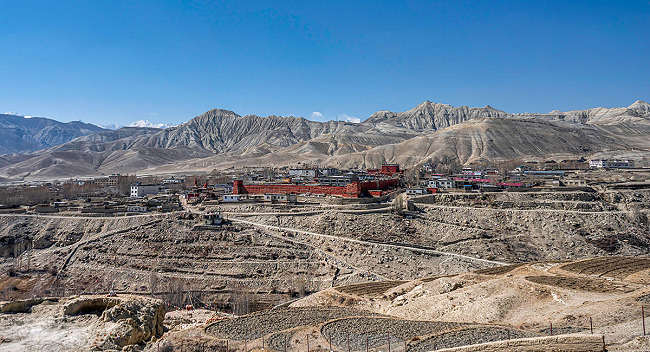
If the Annapurna Circuit and Nar Phu feel remote, Upper Mustang is a different world entirely. This former independent Buddhist kingdom, walled off from the rest of Nepal by geography and, until 1992, by government restriction, sits in the rain shadow of the Himalaya — an arid, wind-carved landscape of red sandstone cliffs, cave dwellings, and Tibetan-style villages that looks more like the Tibetan plateau than anywhere else in Nepal.
The 18-day trek flies from Pokhara to Jomsom, then treks north along the Kali Gandaki Valley through villages like Kagbeni, Chaile, and Ghami — passing Mustang's longest mani (prayer) wall, sacred cave monasteries, and dramatic wind-eroded rock formations — before reaching Lo Manthang, the walled capital of the former Kingdom of Lo, founded in 1380. Trekkers spend a full day exploring Lo Manthang's ancient gompas (Jhampa, Thupchen, and Chhoeda) and ochre-red monastery walls before retracing the route back toward Muktinath, a sacred pilgrimage site for both Hindus and Buddhists, and flying home via Pokhara.
Because Upper Mustang lies in the Himalayan rain shadow, it's one of the few Nepal treks that's genuinely excellent during the summer monsoon months (July–October), when most of the rest of the country is socked in with cloud and rain. It requires a special restricted-area permit, arranged in advance by the trekking agency.
Why choose it: A completely different landscape and culture from the rest of Nepal — closer in spirit to Tibet than to the green hills most people associate with Himalayan trekking.
Good for: Trekkers seeking history, culture, and dramatic desert-mountain scenery over pure alpine wilderness; a strong choice for a monsoon-season Nepal trip.
See the full Upper Mustang Trek itinerary and pricing →
How to Choose the Right Annapurna Trek for You
With seven solid options on the table, here's a simple way to narrow it down:
- Tightest budget, shortest trip: Mardi Himal Trek ($910, 10 days) edges out Poon Hill on price, though both are excellent value.
- Best for total beginners and families: Ghorepani Poon Hill Trek — the gentlest trail, the best-developed infrastructure, and a genuinely spectacular payoff at sunrise.
- Best "hidden gem" with big views: Khopra Danda Trek — Poon Hill-caliber scenery with a fraction of the foot traffic.
- The must-do bucket-list trek: Annapurna Base Camp Trek — the definitive Annapurna Sanctuary experience at a manageable altitude.
- The ultimate classic Himalayan adventure: Annapurna Circuit Trek — maximum variety and one of the world's great mountain passes.
- For experienced trekkers wanting solitude and culture: Nar Phu Valley Trek — remote, restricted, and richly Tibetan Buddhist.
- For something completely different: Upper Mustang Trek — arid, walled cities and centuries of untouched history, plus a rare monsoon-season option.
Best Time to Trek the Annapurna Region
Across nearly every trek on this list, the two prime windows are the same: spring (March–May) and autumn (September–November), when skies are clearest and temperatures are most stable across all elevations. December is workable on lower-altitude routes like Poon Hill and Khopra Danda but gets cold fast at higher elevations, while January–February and the June–August monsoon are generally best avoided on most routes — with the notable exception of Upper Mustang, which sits in the Himalayan rain shadow and trades reasonably well right through the monsoon months.
Final Thoughts
The beauty of the Annapurna region is that it doesn't force a single kind of Himalayan experience on every traveler. Whether you have ten days or eighteen, a modest budget or a bigger one, average fitness or serious trekking legs, there's a route on this list built for you — from a beginner-friendly sunrise hike above Ghorepani to a three-week journey into the walled, wind-carved kingdom of Upper Mustang.
Every package above is bookable directly with Himalaya Heart Treks & Expedition, including fixed group departures throughout 2026 and 2027 as well as flexible, custom-dated private treks. Reach out to their team to check current departure dates, confirm permit requirements for your chosen route, and start planning your 2026/27 Annapurna adventure.