
Everything you need to plan a Tsum Valley trek: day-by-day itinerary, real 2026 permit and cost breakdowns, difficulty level, and the best months to visit Nepal's "Hidden Valley of Happiness."
Why Trek to Tsum Valley?
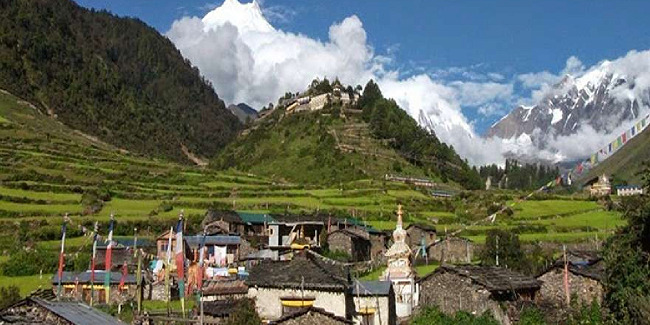
Tucked into a side valley north of the Manaslu region, hard against the Tibet border, Tsum Valley remained closed to outsiders until 2008. It's often called Beyul — a "hidden land" of spiritual sanctuary in Tibetan Buddhist tradition — and it still feels that way. While Everest Base Camp sees over 50,000 trekkers a year, Tsum Valley sees only a few thousand, and the difference shows in everything from the untouched monasteries to the villages where centuries-old customs, including polyandry in some communities, are still practiced.
This is a trek for people who want raw, remote, and deeply cultural terrain: ancient gompas built into cliffsides, mani walls stretching for kilometers, Tibetan-influenced villages, and close-up views of Ganesh Himal, Himalchuli, and Shringi Himal. It's frequently combined with the Manaslu Circuit for a longer, more complete Himalayan journey — but it also stands entirely on its own.
This guide covers the full route, itinerary, current 2026 permit rules and costs, difficulty rating, and the best season to go.
Tsum Valley Trek: Quick Facts
| Region | Tsum Valley, Gorkha District (north of the Manaslu region) |
| Duration | 14–18 days (round trip from Kathmandu), shorter 10–12 day versions possible |
| Trek difficulty | Moderate to challenging |
| Max altitude | 3,700 m (Mu Gompa); up to 5,093 m if extending to Ngula Dhojhyang Pass |
| Starting point | Soti Khola or Machha Khola (approx. 7–8 hours by road from Kathmandu) |
| Best season | March–May (spring) and September–November (autumn) |
| Permits needed | Restricted Area Permit (RAP) + Manaslu Conservation Area Permit (MCAP) + Chumnubri Rural Municipality Permit |
| Guide required | Yes, mandatory — solo trekking is not permitted |
| Total permit cost | Approx. USD 75–145+ per person, depending on season and trip length |
| Estimated trip cost | USD 850–1,900+ depending on style and duration |
Tsum Valley Trek Itinerary
Tsum Valley shares its opening stages with the Manaslu Circuit before branching east at Lokpa. Below is a representative 14-day itinerary; many operators offer versions from 10 to 18 days depending on pace and side trips.
Day 1: Kathmandu to Soti Khola (700 m)
Day 2: Soti Khola to Machha Khola
Day 3: Machha Khola to Jagat
Day 4: Jagat to Lokpa
Day 5: Lokpa to Chumling (2,386 m)
Day 6: Chumling to Chhokangparo (3,010 m)
Day 7: Chhokangparo to Nile (via Milarepa's Cave)
Day 8: Nile to Mu Gompa (3,700 m)
Day 9: Acclimatization / exploration day at Mu Gompa
Day 10: Mu Gompa back to Chhokangparo (via Rachen Gompa)
Day 11: Chhokangparo to Gumba Lungdang (3,200 m)
Day 12: Gumba Lungdang to Chumling / Domje
Day 13: Chumling to Jagat
Day 14: Jagat to Soti Khola, drive to Kathmandu
Shorter and longer options: Fit trekkers with tight schedules can compress the trip to around 10–12 days by cutting rest days and moving faster between villages, though this raises the difficulty. Those with more time frequently extend the trek by combining it with the full Manaslu Circuit and the Larkya La Pass (5,106 m), turning the trip into a 20–22 day Himalayan circuit.
How Difficult Is the Tsum Valley Trek?
Tsum Valley is rated moderate to challenging — noticeably tougher than well-trodden routes like Ghorepani Poon Hill or the standard Langtang Valley trek, though still achievable for fit beginners with the right preparation.
- No technical climbing on the standard route, but trails are rugged, narrow, and occasionally exposed along cliffside sections and landslide zones.
- Daily walking time. Expect 5–8 hours a day, with some days near Chhokangparo and Mu Gompa stretching to 8+ hours.
- Total distance and elevation. The round trip covers roughly 160–200 km, climbing from around 700 m at Soti Khola to 3,700 m at Mu Gompa — with some extended itineraries reaching 5,093 m near the Tibet border at Ngula Dhojhyang Pass.
- Remoteness is the real difficulty multiplier. Teahouses are basic and less frequent than in Everest or Annapurna, so some days require covering longer distances just to reach the next place to sleep. This makes fatigue management more important than on more developed routes.
- Altitude risk. Above 3,000 m, altitude sickness becomes a genuine concern. The built-in rest/exploration day at Mu Gompa is there for a reason — don't skip it.
- Preparation. Prior multi-day trekking experience at altitude is a real advantage here, though not strictly required. A solid fitness base — regular hiking, cardio, and stair training beforehand — will make a noticeable difference.
Tsum Valley Trek Permits
Tsum Valley sits inside a restricted area of Nepal, so it requires more paperwork than open treks like Annapurna or Langtang. All permits must be arranged through a registered, government-licensed trekking agency — independent trekkers cannot apply for them directly, and solo trekking is not permitted in the region.
1. Restricted Area Permit (RAP) for Tsum Valley
The main permit, priced by season and by how many days you spend inside the restricted zone:
- Autumn (September–November, peak season): approx. USD 40 for the first 7 days, plus USD 7 per additional day
- Off-season (December–August): approx. USD 30 for the first 7 days, plus USD 7 per additional day
(Note: some agencies quote the Manaslu-side RAP separately, at USD 75–100 for the first week in peak season — always confirm current combined pricing with your agency, as Tsum and Manaslu restricted-area fees are sometimes bundled or quoted differently depending on your full itinerary.)
2. Manaslu Conservation Area Project (MCAP) Permit
Required alongside the RAP. Unlike the RAP, it has no time restriction.
- Foreign nationals: NPR 3,000 (approx. USD 21–23)
- SAARC nationals: NPR 1,000
- Nepali citizens: NPR 100
3. Chumnubri Rural Municipality Permit
A local-level permit specific to the Tsum Valley route, arranged by your agency alongside the RAP and MCAP.
Total permit cost
For a standard 10–14 day itinerary, budget roughly USD 75–150 per person, depending on season and exactly how many days you spend inside the restricted zone. Longer combined Manaslu–Tsum trips can push total permit costs to USD 220–320.
Guide requirement
A licensed guide from a registered agency is mandatory — this is non-negotiable for restricted areas like Tsum Valley. As of a March 2026 regulation change, Nepal removed the previous requirement for a minimum of two trekkers to obtain restricted-area permits, so solo travelers can now legally trek Tsum Valley as long as they're accompanied by a licensed guide.
Tsum Valley Trek Cost
Tsum Valley costs more than open treks like Langtang or Poon Hill because of its restricted-area permit fees and the logistics of a longer, more remote route — but it remains good value next to premium routes given the depth of the experience.
| Trek style | Estimated cost | What's included |
|---|---|---|
| Standard group trek (14 days) | $850–$1,200 | Guide, permits, teahouse lodging, full board |
| Standard guided trek, promotional/solo rates | $999–$1,350 | Guide, porter, permits; solo travelers often pay a single-supplement fee on top |
| Combined Manaslu Circuit + Tsum Valley (20–22 days) | $1,900+ | Full permit set for both regions, guide, porter, Larkya La crossing logistics |
Cost breakdown
- Permits (RAP + MCAP + municipality fee): ~$75–150+ total, depending on season and days
- Guide: ~$25–35 per day
- Porter (optional but recommended given remoteness): ~$20–25 per day, or $10–15/day extra if bundled with guide fee
- Transport to/from Soti Khola or Machha Khola: local bus or jeep, several hours from Kathmandu, typically included in agency packages
- Food and lodging: basic teahouse accommodation with full board; expect fewer choices and slightly higher prices than better-connected regions due to remoteness
- Extras: device charging, hot showers, and Wi-Fi are less consistently available than in Everest or Annapurna — budget a similar $15–20/day buffer where available
Combining Tsum Valley with the Manaslu Circuit is the most cost-efficient way to see both regions, since guide, porter, and some transport costs are shared across a longer single trip.
Best Season for the Tsum Valley Trek
| Season | Months | Conditions |
|---|---|---|
| Autumn (best) | September–November | Peak season — clearest skies, stable weather, best mountain visibility; permit fees are highest in this window |
| Spring (best) | March–May | Blooming rhododendron forests, good visibility, milder off-season permit pricing |
| Off-season / shoulder | December–February | Quiet trails and lower permit costs, but cold temperatures and possible snow at higher elevations like Mu Gompa |
| Avoid | June–August (monsoon) | Heavy rain, leech-prone lower trails, landslide risk on the narrow Budhi Gandaki gorge sections, obscured views |
Autumn (September–November) is the classic choice for the clearest mountain views and most reliable trail conditions, though it comes with the highest restricted-area permit fees. Spring (March–May) is a strong, slightly cheaper alternative with the bonus of rhododendron blooms lower in the valley.
What Makes Tsum Valley Different from Manaslu, Langtang, or Everest?
- Deeper cultural immersion: Tsum Valley's Tibetan Buddhist culture has been preserved in relative isolation since the region only opened to trekkers in 2008 — practices like polyandry still exist in some communities, and monasteries here feel genuinely lived-in rather than curated for visitors.
- Far fewer trekkers: Where Manaslu sees around 6,000 visitors a year and Everest Base Camp over 50,000, Tsum Valley remains one of the quietest trekking corridors in Nepal.
- Monastery-to-monastery trekking: The route is built around a chain of significant gompas — Mu Gompa, Rachen Gompa, Gumba Lungdang, Milarepa's Cave — making it as much a pilgrimage route as a trek.
- Restricted-area logistics: Unlike Langtang or Annapurna, you cannot arrange this trek independently at all; permits and guides must go through a registered agency well before you arrive.
Final Tips Before You Go
- Book through a registered agency early, especially for autumn departures — restricted-area permits take processing time and cannot be arranged last-minute or independently.
- Pack for cold, variable conditions — nights at Mu Gompa and Chhokangparo drop well below freezing outside peak summer, even in the shoulder seasons.
- Budget extra days for weather and acclimatization — Tsum's remoteness means fewer bail-out options if you need to rest or wait out bad weather.
- Get travel insurance covering high-altitude trekking and emergency evacuation up to at least 5,500 m if you plan to explore beyond Mu Gompa.
- Carry cash (NPR) — there are no ATMs beyond the early stages of the route, and card payments are not an option on the trail.
- Consider combining with Manaslu Circuit if you have 3+ weeks — it's the single most complete high-altitude cultural trekking circuit in this part of Nepal.
Ready to plan your trek? Confirm your season first — spring or autumn — then start your permit paperwork with a registered agency at least a few weeks ahead, since the Restricted Area Permit can't be arranged on arrival.