
You've found the right guide to Lobuche East Peak's difficulty, climbing cost, and how it compares to Island Peak. Lobuche East (6,119 m / 20,075 ft) is one of Nepal's most rewarding technical trekking peaks — offering a genuine mountaineering challenge in the heart of the Khumbu, paired with what many climbers call the finest 360-degree summit panorama of any trekking peak in Nepal, with Everest, Lhotse, Nuptse, Ama Dablam, Makalu, and Pumori all visible from the top.
This complete guide covers everything you need to know about Lobuche East Peak Climbing in 2026/2027 — difficulty, itinerary, cost, permits, best season, required gear, and training tips. By the end, you'll know exactly how to prepare and book, and how Himalaya Heart Treks & Expedition can help you plan a safe, successful summit.
What Is Lobuche East Peak Climbing?
Lobuche is a mountain with two distinct summits — Lobuche East (6,119 m) and Lobuche West (6,145 m) — connected by a long, deeply notched ridge near the Khumbu Glacier, close to the Everest Base Camp trail. The two peaks are classified very differently: Lobuche East is registered as a trekking peak under the Nepal Mountaineering Association (NMA), making it accessible with a standard trekking peak permit, while Lobuche West requires a full expedition permit and significantly more advanced technical skill. Nearly all climbers attempt Lobuche East, and this guide focuses on that route.
Lobuche East sits conveniently along the classic Everest Base Camp trekking route, making it one of the most popular ways to combine a bucket-list trek with a genuine Himalayan summit. Many itineraries pass within close range of Everest Base Camp itself before branching off toward Lobuche High Camp.
Lobuche East Peak Climbing Difficulty
Lobuche East is graded Alpine PD to PD+ (Peu Difficile / "slightly to moderately difficult") — more technical than Island Peak or Mera Peak, making it a step up for climbers seeking a tougher, more genuine mountaineering experience.
What makes it challenging:
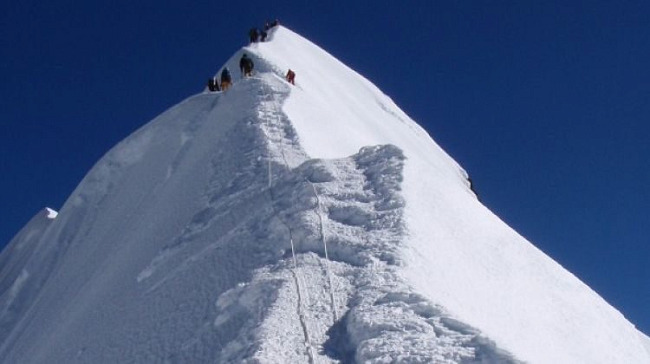
Technical Summit Ridge The final push to the summit involves steep snow and ice slopes, fixed ropes, exposed ridge sections, and glacier navigation. Climbers use crampons, an ice axe, and a jumar (ascender) on fixed lines, with real exposure along parts of the route. Some itineraries also note a notable descent between a false summit and the true summit, occasionally requiring a short rappel.
High Altitude At 6,119 meters, altitude sickness is a genuine risk, particularly since much of the approach follows the Everest Base Camp trail, keeping climbers above 3,000–4,000 meters for extended periods before the final push above 5,000 meters at High Camp.
Long, Demanding Summit Day Summit day typically begins around 1–2 AM, involving a long, cold ascent over technical terrain, followed by a full descent back to High Camp or Lobuche village — a genuinely tough day requiring stamina, focus, and mental resilience.
Extreme Cold High Camp (around 5,600 m) regularly sees overnight temperatures of -10°C to -20°C, with summit-day wind chill dropping as low as -25°C to -30°C, making proper cold-weather gear absolutely essential.
Who should attempt Lobuche East?
Unlike Island Peak or Mera Peak, Lobuche East is not typically recommended for complete first-time climbers. Prior experience with a multi-day high-altitude trek above 4,500 m (such as Everest Base Camp) is generally advised, along with a good level of physical fitness. That said, no advanced certification is required — full technical training on crampons, ice axe use, and fixed-rope technique is provided on-site by your guides before the summit push, and reported success rates run around 78–90% for climbers who follow proper acclimatization.
Lobuche East Peak Climbing Itinerary 2026/2027
Most itineraries combine Lobuche East with the classic Everest Base Camp trek for both acclimatization and the bucket-list EBC experience.
| Day | Route | Altitude |
|---|---|---|
| Day 1 | Arrival in Kathmandu | 1,400 m |
| Day 2 | Trek preparation, permit processing, gear check | 1,400 m |
| Day 3 | Fly Kathmandu to Lukla, trek to Phakding | 2,610 m |
| Day 4 | Trek Phakding to Namche Bazaar | 3,440 m |
| Day 5 | Acclimatization day in Namche Bazaar | 3,440 m |
| Day 6 | Trek Namche to Tengboche | 3,860 m |
| Day 7 | Trek Tengboche to Dingboche | 4,410 m |
| Day 8 | Acclimatization day in Dingboche | 4,410 m |
| Day 9 | Trek Dingboche to Lobuche | 4,940 m |
| Day 10 | Optional day hike to Everest Base Camp via Gorak Shep, return to Lobuche | 5,364 m (EBC) |
| Day 11 | Pre-climb training day near Lobuche (crampons, ice axe, rope skills) | 4,940 m |
| Day 12 | Trek Lobuche to High Camp | 5,600 m |
| Day 13 | Summit day: High Camp to Lobuche East summit (6,119 m), descend to Lobuche | 6,119 m (summit) |
| Day 14 | Contingency/buffer day for weather | — |
| Day 15 | Trek Lobuche to Pangboche | 3,930 m |
| Day 16 | Trek Pangboche to Namche Bazaar | 3,440 m |
| Day 17 | Trek Namche to Lukla | 2,860 m |
| Day 18 | Fly Lukla to Kathmandu, departure | 1,400 m |
Note: Shorter 14–15 day itineraries are available for climbers who skip the full EBC side trip, while some agencies offer 20–21 day versions with extra acclimatization or Gokyo Valley/Cho La Pass extensions. Always confirm your itinerary includes at least one contingency day for weather delays at High Camp.
Lobuche East Peak Climbing Cost 2026/2027
Cost varies significantly based on itinerary length, whether EBC is included, group size, and service level. Based on current 2026/2027 market rates:
- Budget packages: roughly $2,000 – $2,500 per person
- Standard packages (with EBC): roughly $2,500 – $3,500 per person
- Premium/private packages: roughly $3,500 – $4,500+ per person
What's typically included:
- Lobuche East Climbing Permit (NMA) and required trekking permits
- Kathmandu–Lukla–Kathmandu domestic flights
- Licensed climbing guide and porter services
- Teahouse accommodation during the trek, tented camp at High Camp
- All meals during the trek and climb
- Group climbing gear (fixed ropes, anchors) and pre-climb technical training
What's typically excluded:
- International airfare and Nepal visa fees
- Personal climbing gear (boots, crampons, harness — rentable in Kathmandu)
- Travel and medical insurance with high-altitude helicopter evacuation coverage (mandatory — most insurers require coverage up to 6,200m)
- Personal expenses: hot showers, Wi-Fi, bottled water, snacks
- Tips and gratuities for guides and porters
Lobuche East Peak Climbing Permits 2026/2027
Climbing Lobuche East requires permits processed exclusively through a registered trekking agency — individual climbers cannot apply directly, and a licensed guide is mandatory for the NMA to issue the permit.
Required permits:
- Lobuche East Climbing Permit (NMA) – Seasonal pricing: approximately $250 (spring), $125 (autumn), $70 (winter/summer)
- Sagarmatha National Park Entry Permit – Approximately $30 per person
- Khumbu Pasang Lhamu Rural Municipality Permit – Approximately $20 per person
Important permit notes:
- A licensed, government-registered climbing guide is required — solo attempts are strongly discouraged and permits are not issued without a guide
- Travel insurance covering high-altitude climbing and emergency helicopter evacuation up to 6,200m is mandatory for permit processing
- The TIMS card is no longer required for this route per recent regulation updates, but confirm current requirements with your agency
- Permit fees are revised annually, so always verify current rates before booking
Best Season for Lobuche East Peak Climbing
- Autumn (September–November): The most popular and reliable climbing season, with mid-September through late October offering the most stable weather, clearest skies, and highest summit success rates
- Spring (March–May): A strong second option, slightly warmer but busier on the trail, with April offering excellent conditions
- Winter (December–February): Not recommended — extreme cold and difficult snow navigation significantly increase risk
- Monsoon (June–August): Not recommended — slippery trails, poor visibility, and landslide risk make this the least favorable season
Essential Gear for Lobuche East Peak Climbing
- Insulated mountaineering boots rated for extreme cold
- Crampons, ice axe, climbing harness, helmet, and locking carabiners
- Ascender (jumar) and belay device for the fixed-rope sections
- A down suit or heavyweight down jacket rated -20°C or below
- Liner and outer gloves, balaclava, and glacier-rated UV sunglasses
- -20°C to -30°C rated sleeping bag for High Camp
Much of this technical gear can be rented in Kathmandu, which is often more practical than purchasing it for a single expedition.
Physical Fitness and Preparation for Lobuche East Peak Climbing
As a more technical trekking peak than Island Peak or Mera Peak, Lobuche East demands a higher baseline of physical readiness — combining sustained high-altitude endurance with genuine technical climbing on an exposed summit ridge. Proper preparation in the 2–3 months before departure meaningfully improves both safety and summit success.
Cardiovascular Fitness
Most itineraries involve 6 to 7 hours of daily walking along the Everest Base Camp trail before even reaching Lobuche village, so cardiovascular endurance is essential.
- Hike, run, cycle, or swim 5–6 days a week, gradually building duration and intensity
- Include at least one long hike (4+ hours) weekly on hilly or uneven terrain
- Add stair climbing or an inclined treadmill to simulate sustained ascents toward High Camp
Strength and Balance Training
Because Lobuche East's summit ridge involves real exposure and technical footwork, leg strength and balance matter more here than on less technical peaks.
- Squats, lunges, and step-ups 2–3 times a week to build leg endurance for consecutive high-altitude days
- Core exercises (planks, rotational work) to support stability on the exposed ridge and fixed-rope sections
- Grip and upper body strength — pull-ups, farmer's carries — since jumar ascension on fixed ropes relies heavily on arm and grip strength
Prior High-Altitude Experience
Unlike Island Peak or Mera Peak, Lobuche East is generally not recommended for complete first-time high-altitude climbers.
- A previous multi-day trek above 4,500m — such as Everest Base Camp — is strongly advised before attempting this climb
- If you haven't trekked at altitude before, consider building that experience on a separate trip first, rather than treating Lobuche East as your introduction to high-altitude trekking
Technical Skill Preparation
While full mountaineering certification isn't required, some prior exposure makes a real difference:
- Practice with crampons and an ice axe beforehand, even on a dry-land course or indoor ice wall
- Get comfortable with jumar (ascender) and fixed-rope technique, since these are used directly on the technical summit ridge
- If you've never worn a climbing harness or navigated exposed terrain, spend time building that comfort before your trip
Weighted Pack and Endurance Conditioning
- Train with an 8+ kg daypack on long hikes to simulate trekking conditions at altitude
- Practice steady, rhythmic breathing techniques to help manage exertion in thin air
- Build mental endurance through longer, more demanding training sessions, since summit day starts around 1–2 AM and involves sustained technical climbing in freezing cold
Health Considerations
- Climbers with pre-existing heart, lung, or blood pressure conditions should consult a doctor before attempting a 6,000m technical peak
- Schedule a general health check-up 1–2 months before departure
- Confirm your travel insurance covers high-altitude climbing and helicopter evacuation up to 6,200m — this is mandatory for permit processing, not optional
Timeline Recommendation
Start structured training at least 10–12 weeks before departure, given the added technical demands compared to Island Peak or Mera Peak, so your fitness and technical comfort both peak around your trek start date.
Bottom line: Lobuche East rewards climbers who arrive already comfortable with high altitude and basic technical movement — genuine cardiovascular fitness, strength, and prior high-altitude experience aren't just helpful here, they're what separates a safe, successful summit from a genuinely difficult day on the mountain.
How to Train for Lobuche East Peak Climbing
- Cardiovascular training: Running, cycling, swimming, or hiking 5–6 days a week for at least 2–3 months before departure
- Strength and balance training: Squats, lunges, step-ups, and core work to support stability on exposed ridge sections
- Prior high-altitude experience: A previous trek above 4,500m (like Everest Base Camp) is strongly recommended before attempting Lobuche East
- Weighted pack training: Carrying an 8+ kg daypack on long training hikes to build comfort with sustained weight at altitude
- Mental preparation: Since summit day involves cold, fatigue, and real exposure, building mental resilience through demanding training conditions genuinely helps on the mountain
Lobuche East Peak Climbing Tips
1. Build Prior High-Altitude Experience First
Unlike Island Peak or Mera Peak, Lobuche East isn't ideal for complete beginners. If possible, complete a demanding trek above 4,500m — like Everest Base Camp — before attempting this climb, so your body already has some altitude adaptation experience.
2. Don't Skip the Everest Base Camp Acclimatization Days
Since most itineraries follow the classic EBC route to Lobuche village, treat the built-in rest days at Namche Bazaar and Dingboche as essential, not optional. This gradual altitude exposure is what makes the technical summit push manageable.
3. Take the Pre-Climb Training Day Seriously
Guides provide on-site training near Lobuche covering crampon technique, ice axe use, and fixed-rope/jumar skills before the summit attempt. Even with prior trekking experience, pay close attention — these skills are directly applied on the exposed summit ridge.
4. Prepare Mentally for Real Exposure
Lobuche East's summit ridge involves genuine exposure and, on some routes, a notable descent between the false and true summit that may require a short rappel. Visualizing this in advance and staying calm under exposure matters as much as physical fitness.
5. Dress for Extreme Cold From the Start
High Camp temperatures can drop to -10°C to -20°C overnight, with summit-day wind chill reaching -25°C to -30°C. A down suit or heavyweight down jacket, liner and outer gloves, and a balaclava aren't optional extras — they're essential.
6. Pace Yourself on the 1–2 AM Summit Push
Summit day starts in the dead of night and involves technical terrain in freezing darkness. Move steadily, conserve energy for the fixed-rope sections, and trust your guide's pacing rather than rushing toward the ridge.
7. Stay Hydrated and Keep Fueling
Altitude suppresses appetite while increasing dehydration risk. Drink 3–4 liters of water daily during the trek and eat consistently, even without hunger — your body needs steady fuel for the long summit day.
8. Rent Technical Gear in Kathmandu
Down suits, crampons, ice axes, and harnesses are often more practical to rent locally than to buy for a single expedition — cost-effective, and guides can help confirm proper fit before you head into the mountains.
9. Confirm Your Insurance Covers 6,200m+ Evacuation
Standard travel insurance won't cut it here — permits require proof of coverage for high-altitude climbing and helicopter evacuation up to 6,200m. Sort this out well before departure, not last-minute in Kathmandu.
10. Choose an Itinerary With a Built-In Weather Buffer
Weather delays at High Camp are common on a route this technical. An itinerary with at least one contingency day meaningfully improves your odds of a safe, successful summit attempt.
11. Trek With an Experienced, Licensed Climbing Guide
Given the technical ridge, glacier navigation, and altitude combined, a skilled guide isn't just a permit requirement — they're central to safe pacing and critical go/no-go decisions on summit day.
12. Train Your Legs, Core, and Mental Resilience
Squats, lunges, step-ups, and core work build the physical base you need, but also train under uncomfortable conditions beforehand — cold, fatigue, and long hours are as much a mental test on Lobuche East as a physical one.
Lobuche East vs. Island Peak: Which Should You Choose?
Both are popular Everest-region trekking peaks, but Lobuche East is generally considered more technical and better suited to climbers with some prior high-altitude experience, while Island Peak is often recommended as the more beginner-friendly option. Lobuche East's summit ridge offers greater exposure and a more genuine alpine feel, along with what many consider superior panoramic views. Climbers who've already summited Island Peak or completed a demanding trek like EBC often choose Lobuche East as their next step up in difficulty.
Other Popular Peak Climbing Packages in Nepal
1. Mera Peak (6,476 m)
Nepal's highest trekking peak, offering non-technical snow climbing with incredible views of five 8,000m giants — Everest, Lhotse, Makalu, Kangchenjunga, and Cho Oyu — from the summit. Slightly higher than Island Peak but generally considered less technically demanding.
2. Chulu West Peak (6,419 m)
Located near the Annapurna Circuit route, this peak combines classic trekking with a moderately technical summit push, making it a great option for climbers already exploring the Manang region.
3. Pisang Peak (6,091 m)
Another Annapurna-region trekking peak, known for its accessible approach and rewarding summit views over the Annapurna and Manaslu ranges — a solid introductory climb for first-timers.
4. Yala Peak (5,732 m)
One of the easiest trekking peaks in Nepal, located in the remote Langtang region. Ideal for climbers wanting a genuine taste of mountaineering without the technical demands of Island Peak or Mera Peak.
5. Ama Dablam (6,812 m)
A serious step up — one of the most visually striking and technically demanding peaks in the Everest region, generally attempted only by climbers with prior mountaineering experience.
6. Tent Peak / Tharpu Chuli (5,663 m)
Located near Annapurna Base Camp, this is a relatively accessible peak offering close-up views of the Annapurna Sanctuary, often combined with the ABC trek itself.
7. Naya Kanga Peak (5,844 m)
A lesser-known but rewarding peak in the Langtang region, offering a quieter, less crowded climbing experience with moderate technical sections.
Frequently Asked Questions
1. How difficult is Lobuche East Peak climbing?
Lobuche East is graded Alpine PD to PD+ (moderately difficult), making it more technical than Island Peak or Mera Peak. It involves steep snow/ice slopes, fixed ropes, and an exposed summit ridge, requiring genuine mountaineering skills alongside high-altitude fitness.
2. How much does Lobuche East Peak climbing cost?
Costs typically range from $2,000 to $4,500 per person depending on itinerary length, group size, and whether Everest Base Camp is included, with most standard 18-day packages falling between $2,500 and $3,500 per person.
3. What permits are required for Lobuche East Peak climbing?
You need a Lobuche East Climbing Permit from the Nepal Mountaineering Association (NMA), a Sagarmatha National Park Entry Permit, and a Khumbu Pasang Lhamu Rural Municipality Permit — all processed through a registered trekking agency.
4. Is Lobuche East Peak suitable for beginners?
Generally not recommended for complete first-time climbers. Prior experience with a high-altitude trek above 4,500m, such as Everest Base Camp, is strongly advised before attempting this technical peak.
5. What is the best season to climb Lobuche East Peak?
Autumn (September–November) is the most reliable season, with mid-September through late October offering the most stable weather. Spring (March–May) is a strong second option.
6. How many days does Lobuche East Peak climbing take?
Itineraries typically range from 14 to 21 days, with an 18-day route being most common when combined with the Everest Base Camp trek for acclimatization.
7. What is the highest point of Lobuche East Peak climbing?
The true summit sits at 6,119 meters (20,075 ft), typically reached after a pre-dawn summit push starting around 1–2 AM.
8. Do I need prior climbing experience for Lobuche East?
No formal certification is required — full technical training on crampons, ice axe use, and fixed-rope technique is provided on-site by guides before the summit attempt. However, prior high-altitude trekking experience is strongly recommended.
9. What's the difference between Lobuche East and Lobuche West?
Lobuche East (6,119m) is classified as a trekking peak and is the standard climbing route. Lobuche West (6,145m) requires a full expedition permit and significantly more advanced technical skill, so it's rarely attempted.
10. Is Lobuche East harder than Island Peak?
Yes, most climbers and guides consider Lobuche East more technical than Island Peak, with greater ridge exposure and a steeper learning curve, making it a common "next step" for climbers who've already summited Island Peak or Mera Peak.
11. Can Lobuche East be combined with Everest Base Camp?
Yes, most itineraries follow the classic EBC trekking route to Lobuche village, and many include an optional side trip to Everest Base Camp itself before the climb.
12. What kind of accommodation is available during the trek?
Accommodation is in teahouses along the standard EBC route, transitioning to a tented camp at High Camp (around 5,600m) for the summit push.
13. Is travel insurance required for Lobuche East Peak climbing?
Yes, travel insurance covering high-altitude climbing and helicopter evacuation up to 6,200m is mandatory for permit processing, not just recommended.
14. What should I pack for Lobuche East Peak climbing?
Essentials include a down suit or heavyweight down jacket (-20°C rated), crampons, ice axe, harness, helmet, liner and outer gloves, a balaclava, and a -20°C to -30°C rated sleeping bag for High Camp.
15. What is the summit success rate for Lobuche East Peak?
Reported success rates run around 78–90% for climbers who follow proper acclimatization schedules and prior high-altitude preparation, with a licensed guide managing pacing and safety decisions.
Book Your Lobuche East Peak Climb with Himalaya Heart Treks & Expedition
At Himalaya Heart Treks & Expedition, we design Lobuche East itineraries built around proper acclimatization through the classic Everest Base Camp trail, experienced climbing guides who know the technical ridge and High Camp conditions inside out, and thorough on-site training before your summit push. Whether you're progressing from Island Peak or Mera Peak, or looking for your first genuinely technical Himalayan summit, our team is ready to help you prepare, train, and climb safely.
👉 Ready to book your climb? Check out our Lobuche East Peak Climbing package for the full itinerary, cost breakdown, and everything you need to plan your 2026/2027 expedition with Himalaya Heart Treks & Expedition.
Planning your next Himalayan climbing challenge? Reach out to Himalaya Heart Treks & Expedition for expert guidance on permits, training, gear, and everything you need for a safe and successful Lobuche East Peak Climbing expedition in 2026/2027